
As a homeowner, you should know that regular electrical inspections help prevent hazards like fires, shocks, or outages by catching issues early. These inspections involve visual checks and specialized tests to guarantee your system meets current safety standards, especially in older homes. Upgrading outdated wiring and adding safety devices can also prevent costly problems later. Staying proactive protects your loved ones and your investment—stick with me to find out how inspections can keep your home safe and efficient.

Get backup power and energy gear delivered free with Prime
- Fast, free delivery on millions of items
- Prime Video, Amazon Music and more included
- Member-only deals all year
Key Takeaways
- Regular inspections identify wiring issues, prevent hazards, and ensure compliance with electrical codes for household safety.
- Visual and specialized assessments detect wear, overheating, corrosion, and outdated components early.
- Upgrading outdated wiring and safety devices enhances system reliability and prevents overloads or fires.
- Professional electricians ensure comprehensive, code-compliant evaluations, avoiding the risks of DIY repairs.
- Routine inspections save money by preventing costly repairs, reducing energy costs, and protecting home safety.
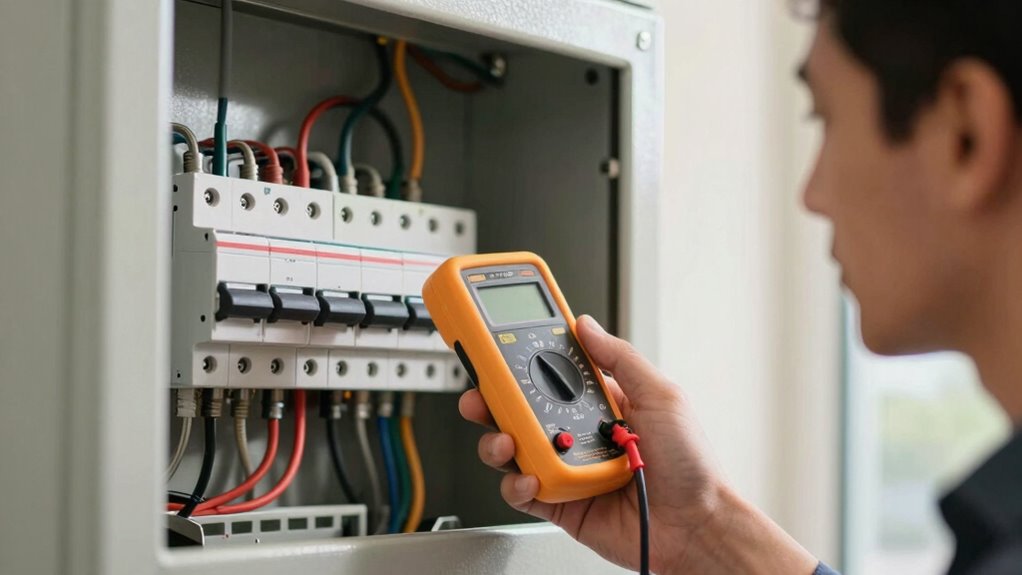
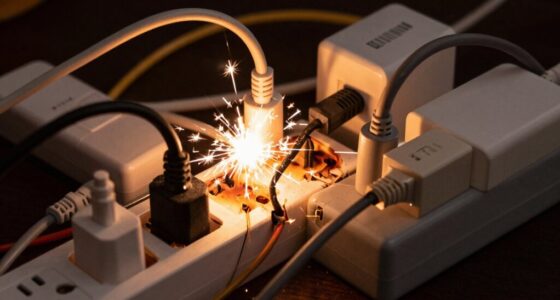
Have you ever wondered why regular electrical inspections are vital for your home’s safety? Keeping up with these inspections isn’t just about compliance; it’s a key step in guaranteeing your household remains safe from electrical hazards. One of the primary reasons for inspections is to maintain circuit safety. Over time, wiring can degrade, connections can loosen, and components may become outdated or damaged. If left unchecked, these issues can lead to shorts, sparks, or even fires. An electrical inspection helps identify weak points in your system before they turn into serious problems, giving you peace of mind and protecting your loved ones.
Regular electrical inspections prevent hazards by identifying wiring issues early, ensuring your home stays safe and up to code.
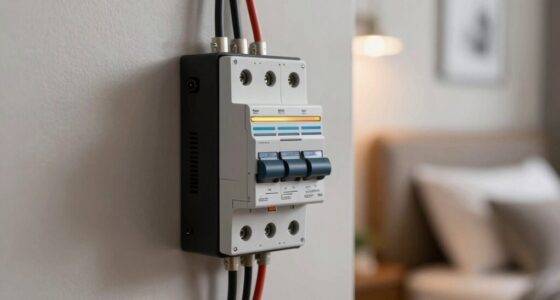
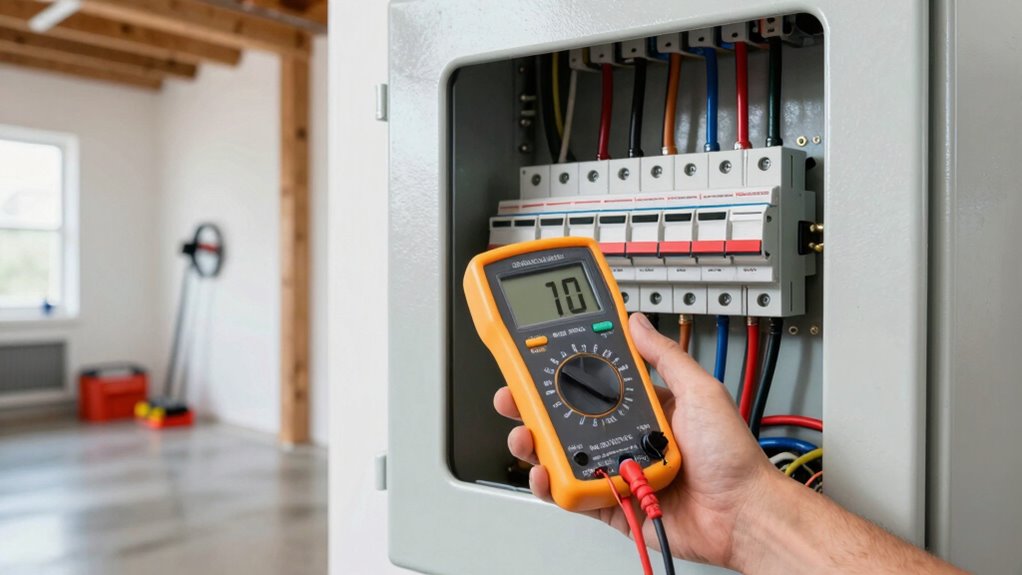
Understanding the inspection process can make you more confident when scheduling an appointment with a licensed electrician. It typically starts with a visual examination of your electrical panels, outlets, switches, and wiring. The technician looks for signs of wear, overheating, corrosion, or improper installations. They also verify that your system complies with current electrical codes and standards, which evolve over time to improve safety. After the visual check, the inspector conducts tests using specialized equipment to assess circuit safety more thoroughly. These tests include checking for proper grounding, verifying circuit continuity, and ensuring that safety devices like circuit breakers and ground-fault circuit interrupters (GFCIs) function correctly.
During the inspection process, the electrician might also recommend upgrading outdated wiring or installing additional safety devices. For example, if your home has aluminum wiring, it might need to be replaced or properly handled to prevent corrosion and fire risks. If your electrical system is old, it might not be equipped to handle modern power demands, increasing the likelihood of overloads or short circuits. The inspection process is a proactive approach that helps you catch these issues early, before they escalate into emergencies. Additionally, understanding the importance of electrical system safety can motivate homeowners to prioritize regular inspections. Regular inspections also help ensure your system remains compliant with evolving electrical codes, which is essential for safety and insurance purposes. Staying informed about wiring degradation and other potential hazards can empower you to take preventive steps and work proactively with professionals.
It’s important to understand that electrical systems are complex and require expert evaluation. Attempting to fix issues yourself can be dangerous and might void warranties or insurance coverage. You should also be aware that electrical hazards can pose serious risks to your home and family if not properly addressed. Instead, rely on licensed professionals who understand the nuances of circuit safety and the inspection process. Regular inspections, especially if your home is older or you’re planning renovations, are an investment in your safety. They not only help prevent electrical fires but also ensure your system works efficiently, saving you money on energy costs and repairs in the long run. Ultimately, staying proactive with electrical inspections keeps your home safe and your family protected from preventable hazards.
Products Worth Considering

Philips Hue Secure Wired Video Doorbell, 2K, Black

Levoit Core 600S-P Smart Air Purifier for Large Rooms

Dyson Ball Animal 3 Extra Upright Vacuum
As an affiliate, we earn on qualifying purchases.
Frequently Asked Questions
How Often Should I Schedule Electrical Inspections for My Home?
You should schedule electrical inspections every 3 to 5 years for ideal home safety, especially if you notice flickering lights or frequent circuit breaker trips. Inspection frequency depends on your home’s age, wiring condition, and recent renovations. Regular inspections help catch potential hazards early, ensuring your electrical system stays safe and up to code. Don’t wait for problems to arise—staying proactive with inspections keeps your home secure and prevents costly repairs later.
What Are Common Issues Found During Residential Electrical Inspections?
During a residential electrical inspection, you’ll often find issues related to wiring safety and code compliance. Common problems include outdated or damaged wiring, loose connections, overloaded circuits, and missing ground faults. These issues can pose fire hazards or electrical shocks. Addressing them guarantees your home meets safety standards and adheres to local codes, protecting you and your family. Regular inspections help catch these problems early before they turn into costly repairs.
Do Electrical Inspections Affect Home Insurance Policies?
Think of your home’s electrical system as the foundation of a sturdy house. Electrical inspections can influence your insurance, as insurers may require proof that your wiring meets safety standards. If issues are found, you might face coverage adjustments or increased premiums. Staying proactive with inspections guarantees your home remains insurable, keeping your coverage intact and your family safe. It’s an essential step to protect your investment and peace of mind.
Can I Perform a Basic Electrical Inspection Myself?
You can perform a basic electrical inspection yourself, but prioritize DIY safety. Use simple inspection tools like a voltage tester or outlet tester to check outlets, switches, and visible wiring for issues. However, avoid tampering with the main panel or complex wiring, as improper handling can be dangerous. For a thorough assessment, it’s best to hire a professional electrician, especially if you’re unsure about safety or need an in-depth inspection.
What Are the Costs Associated With Professional Electrical Inspections?
The cost for professional electrical inspections typically ranges from $200 to $400, depending on your home’s size and complexity. A clear cost breakdown includes inspection fees, any necessary repairs, and potential upgrades. The benefits of these inspections include identifying hazards early, ensuring code compliance, and preventing future electrical failures. Investing in an inspection provides peace of mind, safety, and can save you money by catching issues before they escalate.
Conclusion
Now that you know what to look for during an electrical inspection, imagine the peace of mind you’ll have knowing your home’s wiring is safe and up to code. But don’t wait too long—hidden issues could be lurking behind the walls, ready to cause surprises. Stay proactive, schedule that inspection, and stay ahead of potential problems. After all, when it comes to your home’s safety, you don’t want to leave anything to chance.