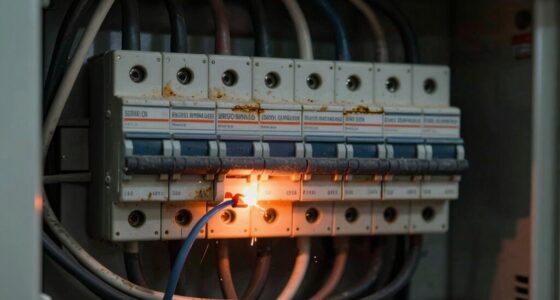
A tripped breaker often points to an underlying issue rather than the main problem itself. It may trip due to overloaded circuits, faulty appliances, or damaged wiring, which need attention. Resetting the breaker without addressing these causes can be risky and just temporary. To stay safe and avoid future trips, you should investigate deeper. Keep exploring to discover how to identify the real issues behind breaker trips and protect your electrical system effectively.

Get backup power and energy gear delivered free with Prime
- Fast, free delivery on millions of items
- Prime Video, Amazon Music and more included
- Member-only deals all year
Key Takeaways
- A breaker trip may indicate an underlying electrical fault rather than a malfunction of the breaker itself.
- Frequent trips can result from issues like damaged wiring or faulty appliances, not the breaker.
- Breakers are designed to trip as a safety measure, so a trip doesn’t always mean the breaker is defective.
- Overloaded circuits or hidden short circuits often cause trips, necessitating professional diagnosis.
- Resetting a breaker without addressing the root cause can mask serious electrical problems.

Have you ever reset a circuit breaker only to find it trips again shortly afterward? It’s frustrating, isn’t it? When this happens, your first instinct might be to blame the breaker itself. But a tripped breaker isn’t always the root of the problem. Often, it’s a symptom of a deeper electrical issue that needs your attention. Understanding why a breaker trips and how to approach breaker maintenance is vital for guaranteeing electrical safety in your home or workplace.
A tripped breaker often signals a deeper electrical issue requiring inspection and proper maintenance for safety.
A circuit breaker’s primary role is to protect your electrical system from overloads and short circuits. When it detects a problem, it trips to prevent potential hazards like fires or damage to appliances. However, if a breaker trips frequently without an obvious cause—such as an overloaded circuit—it could be signaling an underlying issue. For example, aging wiring, faulty appliances, or a short circuit somewhere in the circuit can all cause the breaker to trip repeatedly. Simply resetting the breaker without investigating these possible causes can be dangerous, as it might be masking a serious electrical fault.
Breaker maintenance is essential, especially if you notice frequent trips. Regular inspections by qualified electricians can identify worn-out components, loose connections, or damaged wiring that could compromise electrical safety. When you call in a professional, they’ll check the breaker itself for signs of wear or corrosion and assess the entire circuit for faults. This proactive approach helps prevent electrical fires and prolongs the lifespan of your system. Remember, a breaker that trips often isn’t necessarily faulty; it might be doing its job properly by protecting you from hazardous conditions.
If you’re comfortable doing some basic checks, start by unplugging devices on the affected circuit and resetting the breaker. If it trips again immediately, it’s time to consult a professional. Never attempt to bypass or disable a breaker—that’s a serious safety risk. A qualified electrician can conduct detailed testing to identify the cause, whether it’s faulty wiring, a damaged appliance, or an overloaded circuit. They’ll also perform breaker maintenance to confirm the breaker itself is functioning correctly and replace it if necessary. Additionally, understanding electrical system safety can help you recognize warning signs early and prevent serious problems. Being aware of common electrical issues can further aid in maintaining a safe and reliable electrical system. Regular electrical inspections are crucial for identifying potential hazards before they become emergencies. Furthermore, understanding the role of circuit breakers can help you appreciate their importance in overall electrical safety.
Products Worth Considering

Philips Hue Secure Wired Video Doorbell, 2K, Black

Google Nest Cam Indoor (Wired, 3rd Gen) – Security Camera – Snow

Ring Alarm 14-Piece Wireless Security System Kit
As an affiliate, we earn on qualifying purchases.
Frequently Asked Questions
Can a Breaker Trip Without an Overload or Short Circuit?
Yes, a breaker can trip without an overload or short circuit. Sometimes, issues like a ground fault or a faulty breaker itself cause the trip. When this happens, you should inspect your electrical panel and perform circuit testing to identify the real problem. Don’t ignore a tripped breaker; it might signal a more serious electrical issue that needs professional attention to prevent further damage or hazards.
How Often Should I Reset a Tripped Breaker?
Think of resetting a tripped breaker as waking a sleeping guardian—do it too often, and it might ignore your call. You should reset it only once or twice, giving time to observe if the issue recurs. Beware of circuit breaker myths that suggest frequent resets are harmless; they’re not. Proper power surge prevention and understanding your breaker’s signals help guarantee safety and prevent unnecessary trips.
What Are Signs of a Faulty Breaker?
You might notice signs of a faulty breaker through frequent trips, flickering lights, or a breaker that won’t reset properly. Regular breaker maintenance and circuit testing can help spot these issues early. If a breaker feels hot or shows signs of physical damage, replace it promptly. Ignoring these signs risks electrical fires or damage to connected appliances, so stay vigilant and perform routine inspections to keep your system safe and reliable.
Can External Factors Cause a Breaker to Trip?
Yes, external factors can cause a breaker to trip. A sudden power surge from storms or faulty appliances can overload your electrical panel, triggering the breaker. Conducting circuit testing helps identify if external influences are the culprit. You should inspect for damage or unusual activity outside your home’s wiring system. If you suspect external factors, consider calling a professional to evaluate your electrical panel and guarantee safety.
When Should I Call an Electrician for Breaker Issues?
Did you know that over 60% of electrical fires start in the home’s electrical panel? You should call an electrician if your breaker trips repeatedly, if you notice burning smells, or if your panel shows signs of damage. Regular electrical panel maintenance and understanding different circuit breaker types help prevent issues. Don’t delay—professional help guarantees safety and proper functioning, especially when dealing with persistent breaker problems.
Conclusion
So, next time your breaker trips, don’t rush to blame the breaker itself. Ironically, it’s often just a warning sign, not the culprit. You might think you’ve fixed the issue by resetting it, but the real problem could still be lurking elsewhere—like a hidden short or overloaded circuit. Sometimes, the breaker’s just doing its job. So, while you’re busy blaming the breaker, remember, it’s probably just trying to protect you from something more serious.