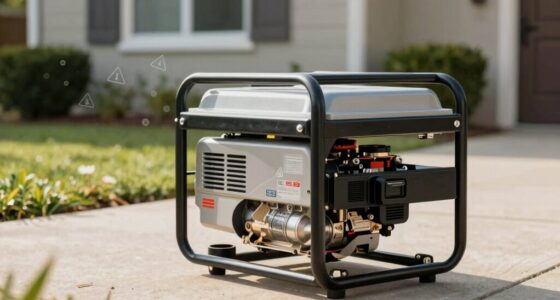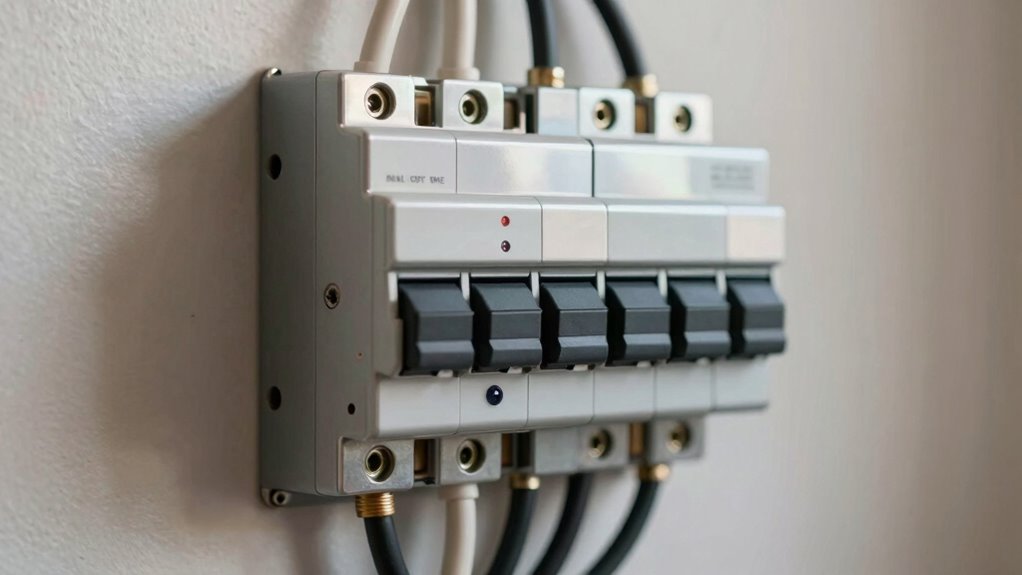
A transfer switch automatically detects when your main power supply fails and quickly switches your home or business from the grid to a backup generator. It disconnects your property from the utility to prevent backfeeding, protecting utility workers and your system. The switch guarantees a seamless shift, so you don’t experience power interruptions or surges that could damage electronics. To understand how this device keeps your power stable and safe, keep exploring its functions and safety features.

Get backup power and energy gear delivered free — and shop member deals
- Fast, free delivery on millions of items
- Access to Prime Big Deal Days deals on October 6–7
- Prime Video, Amazon Music and more included
Key Takeaways
- Detects when the main power fails and automatically switches to backup power sources like generators.
- Disconnects your home or business from the utility grid during outages to prevent backfeeding.
- Connects electrical loads to a backup generator seamlessly and rapidly.
- Protects electronics and appliances from power surges and fluctuations during transfer.
- Ensures safe and reliable operation by preventing electrical hazards and ensuring proper power switching.
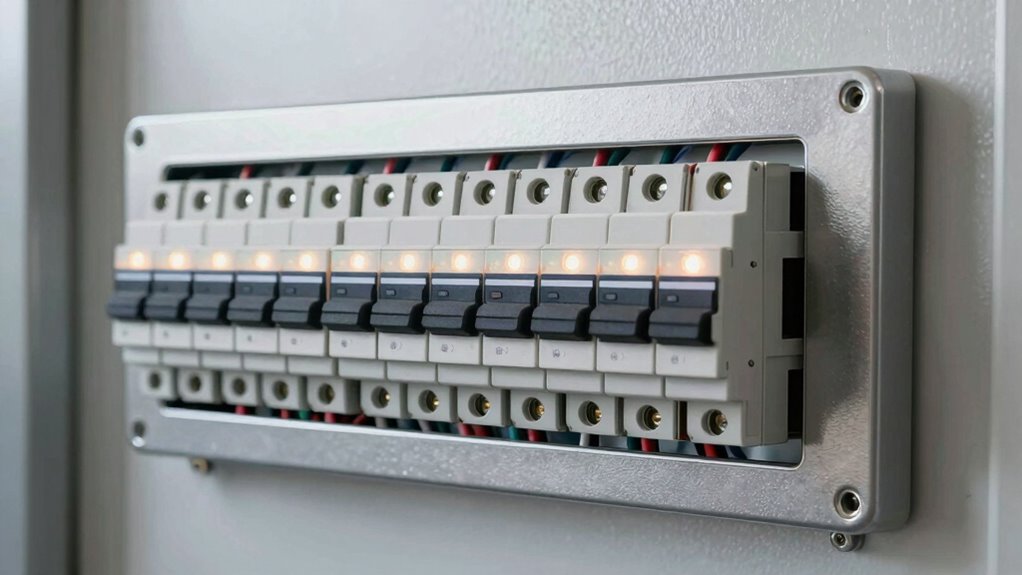
Have you ever wondered how your backup power system switches seamlessly during an outage? The answer lies in a device called a transfer switch. This essential component ensures that when the power grid fails, your generator kicks in smoothly without any manual intervention. It acts as the key link between your main power source and your backup generator, making power outage management efficient and safe. That’s why generator safety is a top priority with these systems.
Transfer switches ensure safe, automatic power transfer during outages, preventing backfeeding and protecting your equipment.
When the main power supply drops, the transfer switch automatically detects the outage and disconnects your home or business from the grid. It then rapidly connects your electrical loads to the generator, allowing your appliances and systems to keep running without interruption. This shift is quick and precise, preventing power surges or outages that could harm sensitive electronics. The entire process is designed to be automatic, so you don’t need to stand by and flip switches manually during emergencies. This automation enhances safety, reduces downtime, and guarantees continuous operation when you need it most.
In addition to facilitating smooth shifts, transfer switches play a key role in maintaining generator safety. They prevent the generator from feeding power back into the grid, which could endanger utility workers repairing lines nearby. They also help protect your electrical system from damage caused by sudden power fluctuations. Proper transfer switch operation is crucial for ensuring the safety and efficiency of your backup power setup. Properly functioning transfer switches also contribute to system reliability by ensuring consistent power transfer during outages. Additionally, understanding affiliate disclosure can help users become more aware of how their equipment recommendations might be influenced by third-party partnerships. This reliability is further supported by adherence to extension cord standards and proper weatherproofing for outdoor connections. By managing these shifts properly, transfer switches minimize risks associated with power outage management, making your backup system more reliable and safe to operate.
automatic transfer switch for generator
As an affiliate, we earn on qualifying purchases.
As an affiliate, we earn on qualifying purchases.
Frequently Asked Questions
Can a Transfer Switch Be Installed Outdoors?
Yes, you can install a transfer switch outdoors. Look for one with an outdoor installation feature and a weatherproof design to withstand the elements. These switches are built to resist moisture, dirt, and temperature changes, ensuring reliable operation during storms or harsh weather. Just make sure to follow the manufacturer’s instructions and local codes for a safe, durable setup that keeps your power system protected outside.
How Long Does It Take to Install a Transfer Switch?
Installing a transfer switch typically takes a few hours, depending on your home’s setup and the complexity of your backup power system. You’ll appreciate the safety features it offers, preventing dangerous back-feeding. Coincidentally, a quick installation guarantees you’re ready for outages faster, giving you peace of mind. Properly installed, it seamlessly switches your power source, providing reliable backup power when you need it most.
Are Transfer Switches Compatible With All Generator Types?
Transfer switches are generally compatible with most generator types, but you need to check generator compatibility to guarantee proper connection. Always consider safety considerations, such as grounding and load capacity, before installation. Some switches are designed specifically for portable or standby generators, so verifying compatibility prevents damage and ensures safe operation. Consulting a professional helps confirm that your transfer switch matches your generator type and adheres to safety standards.
Do Transfer Switches Require Regular Maintenance?
Yes, transfer switches do require regular maintenance. You should follow a maintenance schedule that includes routine inspection procedures to guarantee proper operation. This involves checking for corrosion, loose connections, and abnormal wear. Regular inspections help identify potential issues early, preventing failures during power outages. Staying consistent with maintenance and inspection procedures ensures your transfer switch functions reliably when you need it most, extending its lifespan and maintaining safety.
What Is the Cost Range for Installing a Transfer Switch?
The cost to install a transfer switch typically ranges from $300 to $1,500, depending on factors like transfer switch type, capacity, and installation complexity. Basic models are more affordable, while automatic switches with higher capacity or special features can increase costs. You’ll also want to take into account labor, wiring, and any necessary permits, which all influence the overall expense. Consulting a professional helps guarantee proper installation and accurate pricing.
outdoor weatherproof transfer switch
As an affiliate, we earn on qualifying purchases.
As an affiliate, we earn on qualifying purchases.
Conclusion
A transfer switch keeps your power running smoothly, keeps you safe, and keeps your home protected. It automatically switches your power source, simplifies your backup power system, and saves you from unexpected outages. It’s your safeguard, your solution, and your peace of mind all in one. When you choose a transfer switch, you choose reliability, convenience, and security. Because staying powered, staying safe, and staying prepared isn’t just a choice — it’s your priority.
home backup generator transfer switch
As an affiliate, we earn on qualifying purchases.
As an affiliate, we earn on qualifying purchases.
Fall Picks
fall essentials
As an affiliate, we earn on qualifying purchases.