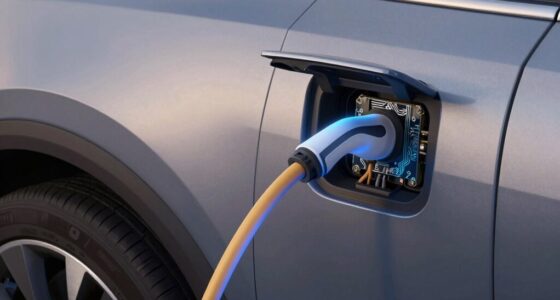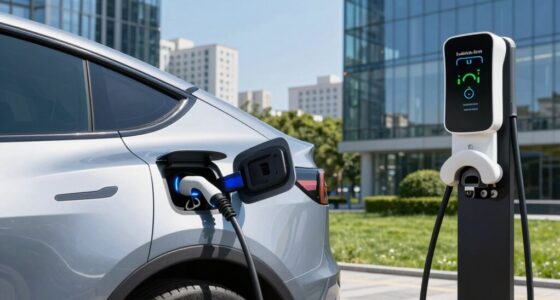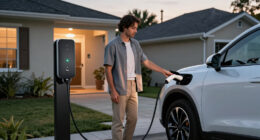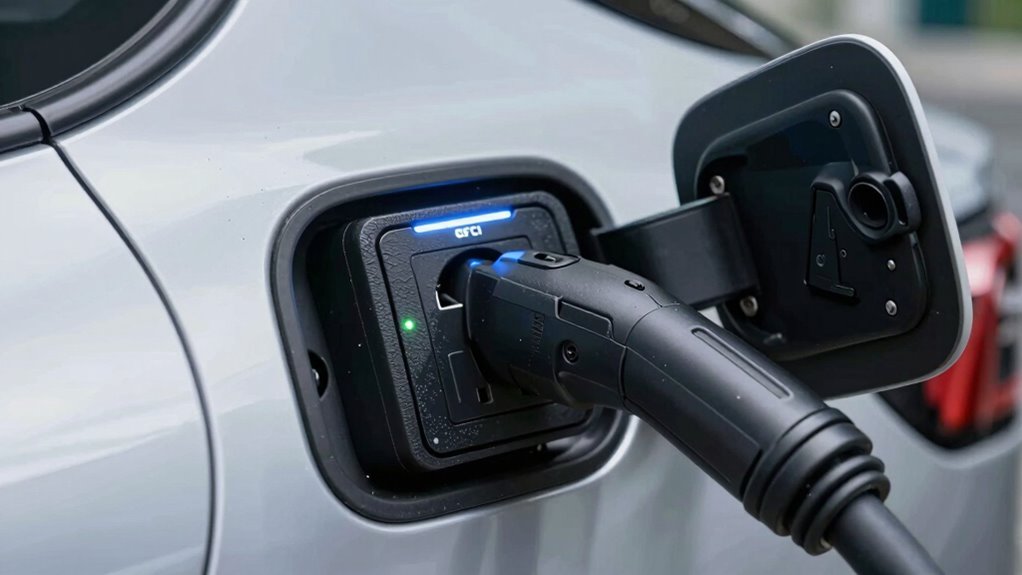

GFCI issues in EV charging circuits often happen because environmental factors like moisture, dirt, or electrical noise trigger false trips. Sensitivity settings that are too high or too low can cause the device to either miss real ground faults or trip unnecessarily. Poor installation or low-quality units also weaken reliability. If you want to understand how to prevent these problems and ensure safe, consistent charging, there’s more to take into account.

Get backup power and energy gear delivered free with Prime
- Fast, free delivery on millions of items
- Prime Video, Amazon Music and more included
- Member-only deals all year
Key Takeaways
- Environmental factors like moisture, dirt, and electrical noise can cause false GFCI trips during EV charging.
- Improper calibration or overly sensitive settings may lead to unnecessary tripping from normal fluctuations.
- Low-quality GFCIs or poor installation can reduce detection accuracy, increasing false alarms.
- Electrical interference from nearby appliances can mimic ground faults, triggering trips.
- Variability in charging station conditions and circuit environment affects GFCI reliability.

Electric vehicle (EV) charging circuits often rely on Ground Fault Circuit Interrupters (GFCIs) to prevent electrical shocks and guarantee safety. These devices detect ground faults—unexpected electrical leaks to the ground—and shut off power swiftly. But sometimes, GFCIs trip unexpectedly or fail to trip when they should, causing frustration and potential safety concerns. Understanding why these issues happen requires a look into ground fault detection mechanisms and circuit breaker sensitivity.
Ground fault detection is at the core of a GFCI’s function. It continuously monitors the current difference between the hot and neutral wires. When the GFCI senses a small imbalance—often as little as 4 to 6 milliamps—it interprets this as a ground fault. This can be a tiny leak, such as moisture on the connector or a damaged wire, or a more significant issue. However, the sensitivity of the circuit breaker plays a big role in how reliably it performs. If the GFCI is overly sensitive, it might trip during normal operation, such as when there’s a slight fluctuation in current due to electrical noise or interference. Conversely, if it’s not sensitive enough, it might fail to trip during a genuine ground fault, risking safety.
In EV charging environments, these sensitivity issues are common. For instance, moisture or dirt on connectors can cause false trips, especially if the GFCI is set with high sensitivity. Similarly, electrical noise from nearby appliances or interference from other electrical systems can be misinterpreted as a ground fault. Sometimes, the problem is rooted in the circuit breaker’s design itself. If the sensitivity settings are not properly calibrated or if the breaker’s internal components are worn or defective, it can lead to inconsistent performance. This is particularly problematic with fast-charging stations, where fluctuations are more common. Ensuring the proper circuit breaker calibration can help mitigate these issues. Additionally, the quality of the GFCI device itself influences its reliability, as higher-quality units tend to have more precise detection circuits. Paying attention to ground fault detection mechanisms is essential for maintaining safe operation.
Another factor is the quality of the GFCI device. Lower-quality units may have less precise ground fault detection circuits, making them prone to false trips or failures to trip. Proper installation and regular maintenance are vital to guarantee the GFCI operates as intended. Confirming the circuit breaker sensitivity matches the specific requirements of your EV charging setup can help reduce unnecessary trips and improve overall safety. When issues persist, it’s often a sign that either the GFCI is faulty or the circuit environment has variables that need addressing. It’s also beneficial to understand the influence of electrical noise on GFCI performance, as this can significantly impact their operation. In such cases, consulting a qualified electrician to examine the sensitivity settings and ground fault detection circuitry is the best course of action to keep your charging station safe and reliable.
GFCI outlet for EV charging stations
As an affiliate, we earn on qualifying purchases.
As an affiliate, we earn on qualifying purchases.
Frequently Asked Questions
Can GFCI Issues Affect All Types of EV Chargers Equally?
GFCI issues don’t affect all EV chargers equally because of circuit compatibility and ground fault sensitivities. Some chargers are designed with advanced ground fault detection that can be more prone to false trips, especially if there’s wiring or insulation issues. You might notice problems more with certain models or setups, but understanding ground fault risks and ensuring proper circuit compatibility can help reduce these issues across different EV chargers.
How Often Should GFCI Devices Be Tested in EV Circuits?
You should test your GFCI devices at least once a month to guarantee proper circuit protection against grounding faults. It’s ironic how something so simple can prevent dangerous electrical issues, yet many skip this step. Regular testing keeps your EV charging circuit safe, catching potential problems early. By doing so, you actively protect yourself and your vehicle, ensuring that circuit protection functions flawlessly whenever you need it.
Are Specific Environmental Conditions More Likely to Cause GFCI Trips?
Environmental conditions like moisture buildup and temperature fluctuations can increase the likelihood of GFCI trips in EV charging circuits. You should watch out for high humidity or water exposure, which can cause false trips due to moisture. Additionally, extreme temperature changes can affect the GFCI’s sensitivity, leading to unnecessary disconnections. To prevent this, make certain of proper insulation, ventilation, and regular testing, especially in outdoor or exposed environments.
What Are Common False Triggers of GFCI Devices in EV Setups?
False triggers of GFCI devices in EV setups often stem from ground faults, wiring faults, or electrical noise. You might notice the GFCI trips when moisture, dirt, or corrosion creates unintended paths, mimicking a ground fault. Wiring faults, like loose or damaged connections, also send false signals. Additionally, electrical noise from nearby devices or wiring interference can cause the GFCI to trip unexpectedly, disrupting your charging process.
How Do GFCI Issues Impact EV Charging Speed and Efficiency?
GFCI issues can slow down your EV charging speed and reduce efficiency because a ground fault might cause the circuit protection to trip unexpectedly. When the GFCI detects a ground fault, it interrupts the power flow to prevent hazards, but this interruption delays charging progress. Frequent false triggers can also lead you to reset the GFCI unnecessarily, disrupting your charging schedule and potentially causing inconvenience or incomplete charging sessions.
weatherproof GFCI circuit breaker
As an affiliate, we earn on qualifying purchases.
As an affiliate, we earn on qualifying purchases.
Conclusion
Understanding why GFCI issues sometimes appear in EV charging circuits helps you troubleshoot effectively and stay safe. Did you know that nearly 40% of electrical fires in homes involve GFCI-related problems? By recognizing common causes and maintaining your charging setup, you reduce risks and guarantee reliable charging. Staying proactive not only protects your investment but also keeps your home and loved ones safe. Keep learning and inspecting regularly—you’re in control of your safety.
As an affiliate, we earn on qualifying purchases.
EV charging station GFCI troubleshooting kit
As an affiliate, we earn on qualifying purchases.
As an affiliate, we earn on qualifying purchases.
Halloween Picks
halloween
As an affiliate, we earn on qualifying purchases.