
TL;DR

Get backup power and energy gear delivered free with Prime
- Fast, free delivery on millions of items
- Prime Video, Amazon Music and more included
- Member-only deals all year
A GreenBuildingAdvisor report traced a household’s higher heat-pump water-heater electricity use in 2024 and 2025 to at least two contributing factors: more hot-water use after a family member moved in, and dust that dirtied the unit’s filter and coil during a basement renovation. The owner could not determine the exact share attributable to each factor because monthly hot-water use was not separately measured.
A homeowner’s heat-pump water heater used substantially more electricity in 2024 and 2025, and a review of monthly records pointed to two contributing factors: increased hot-water use by a new household member and dust buildup on the unit during a basement renovation. The account, published by GreenBuildingAdvisor, shows why a rise in a home energy bill may have more than one cause—and why annual totals alone can mislead.
The homeowner, building-science writer Allison A. Bailes III, said annual electricity use for the water heater in 2024 was 89% higher than in 2020. Use also remained abnormally high in 2025. The report describes the figures as the water heater’s electricity consumption, rather than total household energy use.
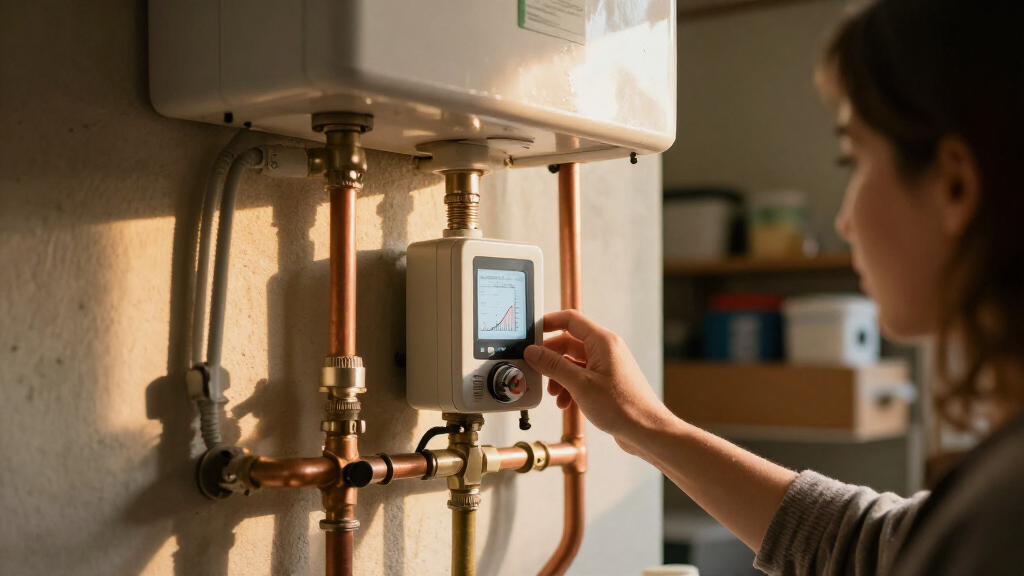
Bailes initially suspected dust from a basement renovation that began in February 2024. The work put airborne dirt and drywall dust near the heat-pump water heater, and he said he did not always cover or turn off the unit. By January 2025, its filter was visibly dirty. He later cleaned the coil in April 2025; monthly data showed a sharp drop in use in July, which at first appeared to support the theory that cleaning was the main explanation.
Looking further back changed the picture. The monthly increase began in late 2023, before the renovation, and coincided with Bailes’s stepson moving into the home in August 2023. The stepson preferred baths and stayed for two years, leaving at the end of July 2025. The water-heater use returned to its usual range after that. Bailes said the extra hot-water demand and dirty filter and coil both contributed, but the available records could not quantify each factor’s share.
How Household Demand Changed the Pattern
The report matters to households trying to explain a higher electricity bill because a water heater’s consumption can reflect both equipment condition and how much hot water people use. A dirty filter or coil may impair a heat-pump unit’s operation, but a change in residents’ bathing habits can raise demand even when the equipment itself has not changed.
In this case, the timing of monthly use helped distinguish the possible causes. The rise began before the renovation, while the later decline followed the stepson’s move-out. That sequence supports a role for household demand, but does not prove an exact breakdown. The report also cautions against treating a single improvement—such as cleaning a coil—as proof that it explains an entire multi-year increase.
For readers, the practical implication is to compare energy records with changes in occupancy, hot-water habits, maintenance, and the conditions around the equipment. That can help identify what to check before assuming a higher bill reflects a failing water heater or a single maintenance problem.
Products Worth Considering

eufy Security eufyCam C37 4-Camera Kit with 360° Pan and Tilt

Levoit Vital 100S-P Air Purifier

LEVOIT Vital 200S-P Smart Air Purifier for Large Rooms
As an affiliate, we earn on qualifying purchases.
Renovation, Dust and Basement Conditions
Bailes said the home’s water-heater records were part of a broader effort to track energy use, including electricity bills dating back to the household’s move in 2019. From 2020 through mid-2023, monthly use followed a fairly regular seasonal pattern: about 60 kilowatt-hours (kWh) per month in winter and roughly 20 to 30 kWh per month in summer. Those figures describe this home and are not presented as a typical-use benchmark.
The basement project created a plausible maintenance issue because a heat-pump water heater draws heat from surrounding indoor air. Dust in that air can collect on its filter and other components, according to the report. But the renovation also changed the unit’s setting in a potentially beneficial way: it placed the water heater in fully conditioned basement space. Before winter 2024–25, the basement was unheated. Bailes said the warmer surrounding air likely improved efficiency and kept winter peaks from being higher, although he did not quantify that effect.
The competing effects make the timeline harder to interpret: renovation dust may have reduced performance, while warmer air may have helped it. The article’s account is a homeowner’s analysis of one system, not a controlled test isolating each variable.
“The jump in energy use began when my stepson moved in and then went back to normal after he moved out.”
— Allison A. Bailes III, in the GreenBuildingAdvisor report
The Causes Cannot Be Separated Precisely
The report does not establish how much of the higher electricity use came from additional baths and hot-water demand, how much came from the dirty filter and coil, or how much the warmer basement offset the dust-related effect. The homeowner did not have monthly measurements of hot-water volume alongside the energy data, and the account describes no controlled comparison with the same household demand under clean and dirty equipment conditions.
It is also unclear whether the same pattern would occur in other homes. Heat-pump water heaters, household routines, installation conditions, and maintenance differ. The reported 89% comparison is specific to this home and compares 2024 use with 2020; it should not be read as a general estimate of how much a dirty filter or added resident increases energy consumption.
Monitoring Can Clarify Future Spikes
Bailes recommends homeowners with heat-pump water heaters check and clean filters regularly, clean the coil and other components when they become dirty, and cover or turn off the unit during dusty work such as remodeling, following the manufacturer’s instructions. Owners should also monitor energy consumption and note changes in household occupancy or hot-water routines.
Those records may help narrow down a future increase, but the report does not announce a further test or a quantified follow-up result. For this case, the published explanation remains that household demand and dirty components both contributed, with their individual effects unresolved.
Key Questions
Why did the water heater use more electricity?
The report points to at least two factors: a family member who preferred baths moved into the home, increasing hot-water demand, and renovation dust dirtied the heat-pump water heater’s filter and coil. The owner could not measure each factor’s separate contribution.
Did cleaning the coil solve the problem?
Use dropped sharply in July 2025, after the coil was cleaned in April, but the report does not establish that cleaning alone caused the decline. The stepson also moved out at the end of July, and household hot-water use was not measured separately.
How large was the reported increase?
For this home, annual water-heater electricity use in 2024 was reported as 89% higher than in 2020. That is a comparison between those two years, not a general estimate for other homes or a measure of the increase caused by any one factor.
What should owners check if their heat-pump water heater uses more energy?
Check the unit’s filter and follow its maintenance instructions for cleaning the coil and other components. Review occupancy and hot-water habits, and compare energy use across months rather than relying only on annual totals. During dusty renovation work, follow the manufacturer’s guidance on protecting or shutting down the equipment.
Source: greenbuildingadvisor.com