TL;DR

Get backup power and energy gear delivered free with Prime
- Fast, free delivery on millions of items
- Prime Video, Amazon Music and more included
- Member-only deals all year
Akaysha Energy’s Fiona Fagan has called for Australia to create system-security contracts that recognise grid-forming battery storage, alongside clearer service rules and procurement. The call comes as batteries grow rapidly, but key capabilities and revenue streams remain unproven or uncertain.
Akaysha Energy has called on Australian market bodies and governments to establish contracts for system-security services from grid-forming batteries, arguing the technology has undergone extensive trials but needs clearer rules and procurement pathways. Fiona Fagan, Akaysha’s head of policy and government relations, said the arrangements are needed as the battery fleet expands and coal generators retire.
Fagan set out four proposed changes: formal recognition of the services in market rules, consistent service definitions across states, structured and transparent procurement, and clearer accountability across market bodies’ governance frameworks. She said several issues were under consideration through rule-change processes at the Australian Energy Market Commission (AEMC). Her stated aim was that “by the middle of next year, we’re starting to demonstrate that these services can be provided at scale.”
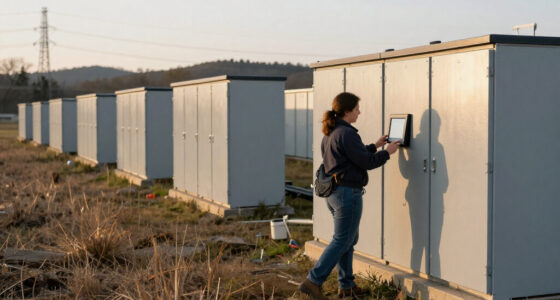
She pointed to Akaysha’s Waratah Super Battery in New South Wales as an example of storage supporting the network. The project is linked to the state’s System Integrity Protection Scheme (SIPS) and discharges when transmission operator Transgrid requires it. Fagan said the arrangement can “increase transmission line output without building new transmission lines.” She said similar questions about transmission capacity would be relevant in Victoria as debate over future network construction continues.
Fagan also called for federal legislation for the Electricity Services Entry Mechanism (ESEM), the proposed replacement for the Capacity Investment Scheme, and for state plans that provide a clearer signal about coal plant closures. The federal government has opened consultation on draft ESEM legislation and a market-making obligation. Fagan said delayed coal closures, alongside new capacity entering the market, had contributed to softer price spreads. AEMO data cited in the report showed Victoria’s average battery energy storage system (BESS) price spread fell 41% to AU$86/MWh in the first quarter of 2026.
Contracts Could Reward Grid Support
Grid-forming batteries are designed to help manage aspects of grid stability, but projects need a recognised way to provide and be paid for those services. Contracts could give developers and lenders a clearer basis for valuing the contribution, rather than relying only on electricity price differences or existing support schemes. That matters as Australia adds storage and prepares for the retirement of coal-fired generation.
The scale of the planned build-out makes the policy question material. Fagan said Australia had about 8GW of utility-scale batteries, compared with a 2016 forecast of 3MW operating in 2026. She said the fleet would need to reach 40GW to 50GW by 2040. Separately, AEMO’s 2026 Integrated System Plan calls for almost 40GW of storage by 2050, including 5GW of long-duration storage, and anticipates most remaining coal generation withdrawing by 2038.
These are projections and targets, not guarantees that projects will be built or that proposed services will be available when required. A procurement framework could influence investment decisions, but its effect would depend on the final rules, contract design and whether projects can demonstrate the required technical performance.
Products Worth Considering

Bose SoundLink Plus Portable Bluetooth Speaker, Wireless Outdoor Speaker, Up to 20 Hours Battery Life, Waterproof and Dustproof, Black

LEVOIT Air Purifier for Home, Pets, Bedroom, Smart WiFi

Levoit Vital 100S-P Air Purifier for Home and Pets
As an affiliate, we earn on qualifying purchases.
A Growing Battery Pipeline
Grid-forming inverters are included in around 74% of the 33.2GW BESS pipeline in the National Electricity Market, according to AEMO data cited by Energy-Storage.News. That figure describes projects in the pipeline, not installed capacity. Progress in establishing services from these batteries has been uneven: Transgrid has opened a pathway for up to 900MW of grid-forming BESS to count toward New South Wales’ minimum system-strength requirements.
At the same time, AEMO has said grid-forming batteries have not yet been confirmed to provide protection-quality fault current and is conducting a trial. The distinction is central to Fagan’s argument: broad deployment and trial activity do not, by themselves, establish that every proposed service has been technically validated or is ready for procurement across the market.
Other speakers at the event raised related investment concerns. Envision Energy’s Doris Spielthenner said fewer power purchase agreements had come through in recent months and financial close had been delayed, partly because developers lacked a system-security market against which to value revenue. She called for stronger mechanisms for both four- and eight-hour batteries, saying the extra capital cost of longer-duration systems needs additional revenue. Tesla executive Shane Bannister described demand for eight-hour batteries as “completely artificial” when dependent on government underwriting.
““The market mechanisms are simply not there yet.””
— Doris Spielthenner, Envision Energy’s head of battery energy storage systems
Technical Tests and Market Rules
It remains unclear what services would qualify for contracts, how they would be priced, and which body would oversee procurement and performance. The AEMC rule-change processes are ongoing, and the federal government is consulting on draft ESEM legislation; neither process, as described in the report, establishes a completed system-security contract framework.
Technical capability is also not settled across all services. AEMO’s trial concerning protection-quality fault current is evidence that at least one proposed grid-support function still requires assessment. The pipeline share of projects with grid-forming inverters should not be read as proof that those projects can already supply every service needed by the system.
More broadly, the final outlook for battery revenues depends on policy decisions, coal retirement schedules, market prices and project financing. The reported decline in Victoria’s first-quarter 2026 price spread is a specific market measure; it does not by itself establish the expected returns for every battery project or duration.
Consultation and Service Demonstrations
The federal government’s consultation on draft ESEM legislation and a market-making obligation is one near-term policy step. AEMC rule-change processes will also shape whether and how services are formally recognised. The report does not give a final decision date for either process.
Transgrid’s pathway for up to 900MW of grid-forming BESS and AEMO’s technical trial provide practical tests of how batteries may contribute to system needs. Fagan’s proposed milestone is to begin demonstrating the services at scale by mid-2027. Whether that timeline is met will depend on technical results, market-rule decisions and procurement arrangements that are still developing.
Key Questions
What is Akaysha asking policymakers to do?
Akaysha wants system-security services from grid-forming batteries recognised in market rules and supported by consistent service definitions, transparent procurement and clearer accountability.
Have grid-forming batteries been confirmed to provide all required services?
No. AEMO has said grid-forming BESS has not yet been confirmed to provide protection-quality fault current and is conducting a trial. The status of other services depends on their technical requirements and the relevant assessments.
What is the Waratah Super Battery example?
Akaysha’s Waratah Super Battery is linked to the New South Wales System Integrity Protection Scheme. Fagan said it can discharge when Transgrid needs it, helping increase transmission line output without constructing new transmission lines.
How much battery storage does Australia have or plan to build?
Fagan said Australia had about 8GW of utility-scale batteries. She said the fleet would need to reach 40GW to 50GW by 2040; AEMO’s 2026 plan calls for almost 40GW by 2050. These figures refer to different timelines and are targets or projections, not completed capacity.
When could battery system-security services be demonstrated at scale?
Fagan said the aim should be to start demonstrating the services at scale by mid-2027. That is her proposed goal, not a confirmed market-body deadline.
Source: energy-storage.news