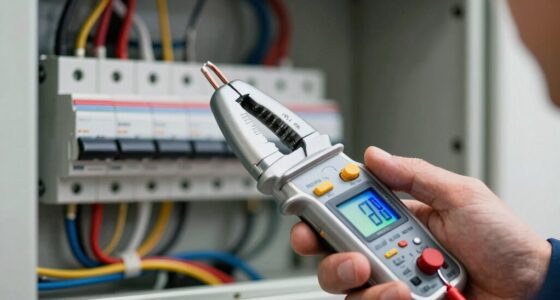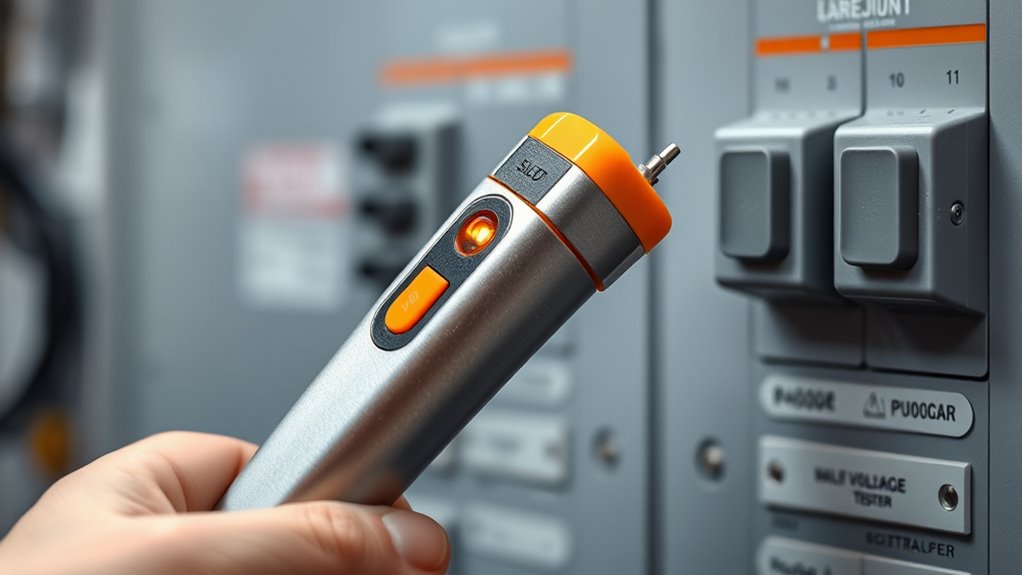

Non-contact voltage testers detect live wires by sensing electromagnetic fields around conductors without touching them, relying on specialized sensors and signal processing. While they’re handy for quick safety checks, false positives can occur due to environmental interference or device sensitivity. To stay safe, follow proper techniques and verify results with multiple methods. Keep reading to learn how to use these tools effectively and guarantee reliable, accurate measurements every time.
Key Takeaways
- Non-contact testers detect live wires by sensing electromagnetic fields without physical contact, ensuring safe voltage verification.
- Proper testing techniques, including selecting correct points and verifying device functionality, help prevent false readings.
- Indicators like LEDs or alarms confirm voltage presence, but results should be cross-checked with alternative methods for accuracy.
- Environmental factors, sensor sensitivity, and external interference can cause false positives; understanding limitations is crucial.
- Choosing reputable brands with appropriate features ensures reliable, safe, and effective non-contact voltage testing.

Klein Tools NCVT1P Voltage Tester, Non-Contact Low Voltage Tester Pen, 50V to 1000V AC, Audible and Flashing LED Alarms, Pocket Clip
NON-CONTACT DETECTION of AC voltage in cables, cords, circuit breakers, lighting fixtures, switches, non-tamper-resistant outlets, and wires
As an affiliate, we earn on qualifying purchases.
As an affiliate, we earn on qualifying purchases.
How Non-Contact Voltage Testers Detect Live Wires
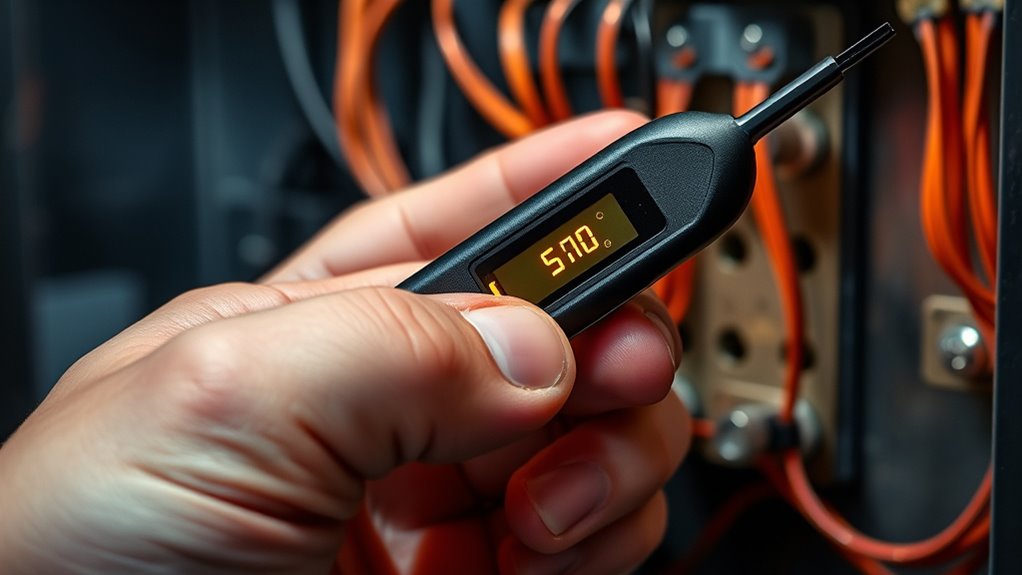
Non-contact voltage testers detect live wires by sensing the electric field around the wire without making direct contact. They use advanced sensors that pick up the electromagnetic field generated when current flows through a wire. Some models incorporate wireless communication technology, allowing you to receive alerts or data remotely via an app, which enhances safety and convenience. To operate effectively, these testers rely on battery power, so battery life becomes vital for uninterrupted use, especially on long jobs. Modern testers often feature energy-efficient components, extending battery life and ensuring you don’t lose functionality when you need it most. By sensing the electric field and maintaining reliable power, these devices help you identify live wires quickly and safely, without risking contact or damage.

ERICKHILL EMF Meter, Detects Electric and Magnetic Fields, Handheld Digital EMF Detector with LCD Display, Sound-Light Alarm, Rechargeable Battery for Home, Office, and Appliances (Blue)
True EMF protection starts with detection. Our emf meter helps you: 1) Find dangerous radiation hotspots in your…
As an affiliate, we earn on qualifying purchases.
As an affiliate, we earn on qualifying purchases.
Components and Technology Behind Non-Contact Voltage Detectors
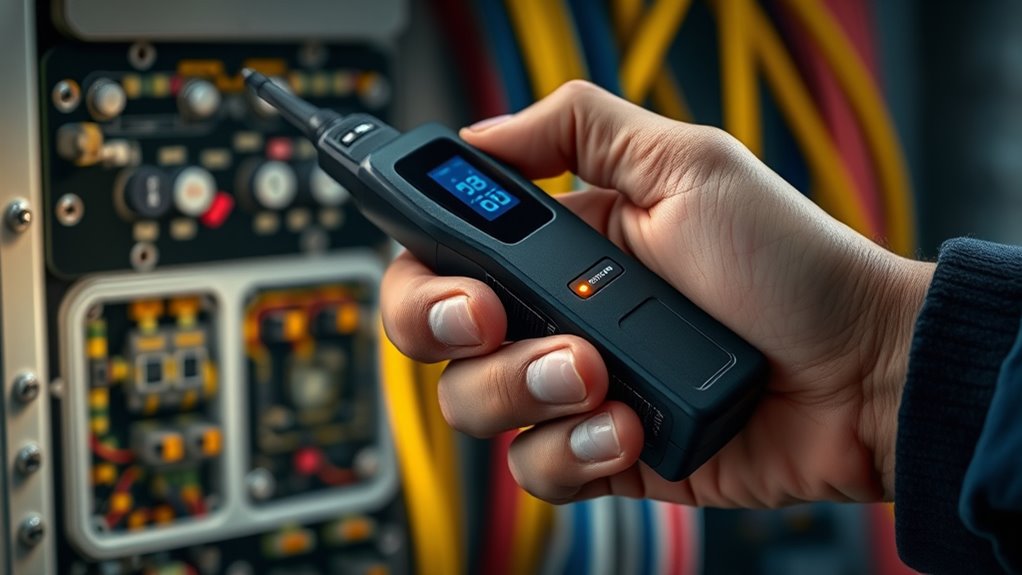
Understanding the components and technology behind non-contact voltage detectors helps you see how they work reliably. You’ll find different sensor types and designs, each suited for specific applications. Additionally, signal processing methods, power sources, and indicators play key roles in their effectiveness. Modern devices may also incorporate Bluetooth connectivity for advanced features and firmware updates. Knowledge of sensor technology is essential for appreciating how these devices detect voltage without direct contact. Furthermore, advancements in miniaturization contribute to more ergonomic and portable designs, enhancing user convenience and safety. Recognizing the importance of electrical safety standards ensures that these tools meet necessary regulations and perform accurately in various environments. An understanding of testing procedures can further improve confidence in their reliable operation.
Sensor Types and Design
The core of non-contact voltage testers relies on specialized sensors that detect electric fields without physical contact. These sensors vary in type, with some using capacitive or electric field sensing to measure voltage presence. Sensor sensitivity is vital; it determines how accurately you can detect live wires, even at low voltage levels. High sensitivity improves reliability, but too much can cause false alarms, so a good balance is essential. Manufacturers incorporate different sensor technologies, balancing sensitivity with durability and ease of use. Additionally, advances in sensor design have enhanced the overall performance and reliability of these devices. Innovations in sensor calibration have allowed for more consistent and precise voltage detection across various conditions. The integration of advanced sensing materials has further improved the durability and responsiveness of sensors in diverse environments. Ultimately, well-designed sensors enable you to quickly and safely verify voltage without risking contact, making your testing both effective and user-friendly.
Signal Processing Methods
Signal processing methods are the key to turning raw sensor signals into accurate voltage readings in non-contact testers. These methods help distinguish genuine electrical signals from background disturbances, improving test accuracy. Data encoding is also vital; it converts the processed signals into digital formats that your device can interpret and display clearly. By efficiently encoding data, the tester provides quick, precise voltage detection without false alarms or missed readings. Together, signal filtering and data encoding form the backbone of effective signal processing, enabling you to trust your non-contact voltage tester’s results. Additionally, advanced sensor calibration techniques ensure the accuracy and consistency of voltage detection over time. This combination ensures that you get dependable, real-time information about the presence of voltage without direct contact.
Power Supply and Indicators
Power supply and indicators are fundamental components that keep your non-contact voltage tester operating reliably and providing clear, immediate feedback. The power source, usually batteries, impacts voltage sensitivity, ensuring the device detects voltage accurately without false alarms. A long battery life means less frequent replacements, so you can trust your tester during extended use. Indicators, such as LED lights or audible alerts, quickly confirm the presence of voltage, giving you confidence in your readings. Some models include low-battery alerts to prevent surprises during critical tasks. Efficient power management and clear indicators work together to ensure your tester remains responsive and dependable. Additionally, proper maintenance of your tester ensures ongoing accuracy and reliability over time. Understanding the power supply and indicators helps users select the most reliable device suited to their needs, especially in critical safety situations. Regular checks of battery performance can further enhance overall reliability and safety. Incorporating quality components can also reduce the likelihood of malfunctions and increase durability, especially when considering device durability in various work environments.

KAIWEETS Electrical Test Kit KIT01, Digital Multimeter, Smart Non-Contact Voltage Tester & GFCI Outlet Tester with LCD, Complete Set with Carrying Case & Batteries for Electrician, DIY & HVAC
1 Kit, 3 Essential Tools – Unzip it to reveal your complete diagnostic setup: a digital multimeter, non-contact…
As an affiliate, we earn on qualifying purchases.
As an affiliate, we earn on qualifying purchases.
Limitations and Common Causes of False Readings
Non-contact voltage testers can sometimes give false readings due to various limitations. Ground faults or electromagnetic interference can cause your tester to signal voltage where there isn’t any, leading to false positives. These issues often stem from nearby energized wires or electrical noise affecting the device’s sensor. Additionally, environmental factors like moisture or dust can impair accuracy. Being aware of electromagnetic interference can help you interpret readings more accurately and avoid misdiagnosis. Recognizing sensor sensitivity issues is essential for proper testing. It’s important to understand these limitations to avoid misdiagnosis. Proper testing procedures can help minimize errors and improve reliability. Furthermore, understanding how sound waves influence brain activity can enhance your approach to troubleshooting and interpreting electrical signals. Considering testing environment factors is also crucial for obtaining accurate results.
Klein Tools NCVT1P Voltage Tester, Non-Contact Low Voltage Tester Pen, 50V to 1000V AC, Audible and Flashing LED Alarms, Pocket Clip
NON-CONTACT DETECTION of AC voltage in cables, cords, circuit breakers, lighting fixtures, switches, non-tamper-resistant outlets, and wires
As an affiliate, we earn on qualifying purchases.
As an affiliate, we earn on qualifying purchases.
Proper Techniques for Using a Non-Contact Voltage Tester
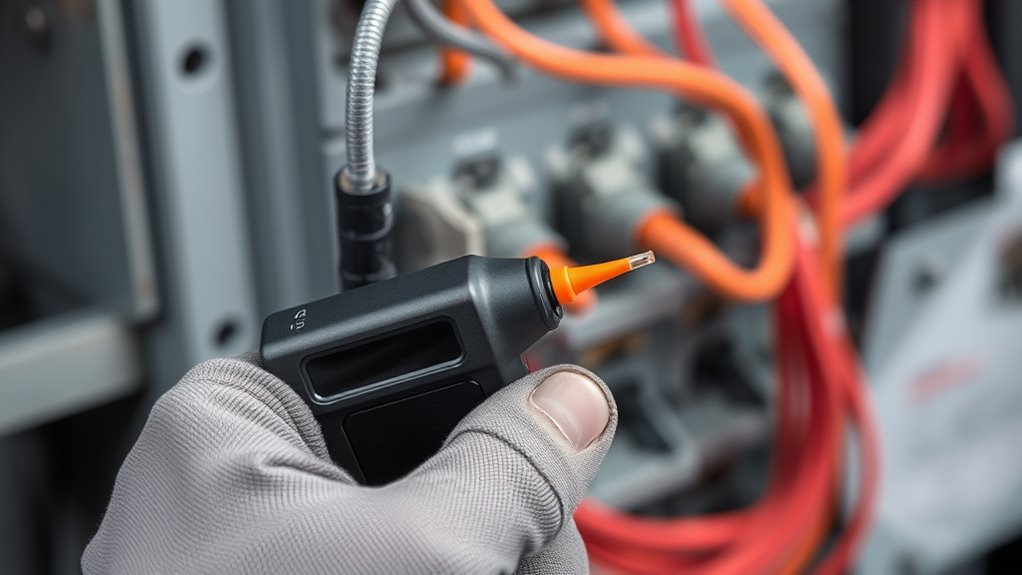
To get accurate readings, you need to select the correct test point each time. Handle the device carefully to maintain safety and make certain of proper contact. Paying attention to these techniques helps you avoid false readings and stay safe. Ensuring the device is properly vetted for safety enhances reliability during testing.
Correct Test Point Selection
Choosing the correct test point is essential for accurate and safe voltage detection. When performing test point selection, focus on areas where electrical contact is reliable, such as exposed conductors or terminal points. Avoid touching insulated parts or areas with complex wiring, as this can lead to false readings or safety risks. Make certain your tester’s sensing tip is close enough to detect voltage without making direct contact with live components. Proper test point selection helps prevent accidental electrical contact, reducing the risk of shocks or short circuits. Always verify the test point’s accessibility and cleanliness before testing. Remember, a well-chosen test point improves accuracy and enhances your safety while working with energized systems.
Proper Device Handling
Handling a non-contact voltage tester properly is essential for ensuring accurate readings and your safety. Always start with a fresh battery to prevent false results, and regularly check device calibration according to the manufacturer’s instructions. When using the tester, hold it firmly by the handle, avoiding contact with metal parts, and keep your fingers away from the sensing tip. Before testing, verify the device’s function on a known live source. Regularly inspecting your equipment helps maintain measurement accuracy, which is crucial for safety. To enhance safety, familiarize yourself with device specifications so you understand its operational limits. Understanding market trends and technological advancements can help you select the right tester for your needs. Store it in a dry, cool place to preserve battery life and device integrity. Remember, improper handling can lead to inaccurate readings or device damage. Proper handling techniques are crucial for reliable results and device longevity. Use the table below to help keep your tester in top condition:
| Proper Handling Step | Why It Matters | Tip |
|---|---|---|
| Check Battery | Ensures power | Replace as needed |
| Calibrate Regularly | Maintains accuracy | Follow manufacturer guidelines |
| Handle Carefully | Prevents damage | Avoid dropping |
| Store Properly | Preserves device | Keep in a safe, dry place |
Interpreting the Results: When to Trust and When to Double-Check
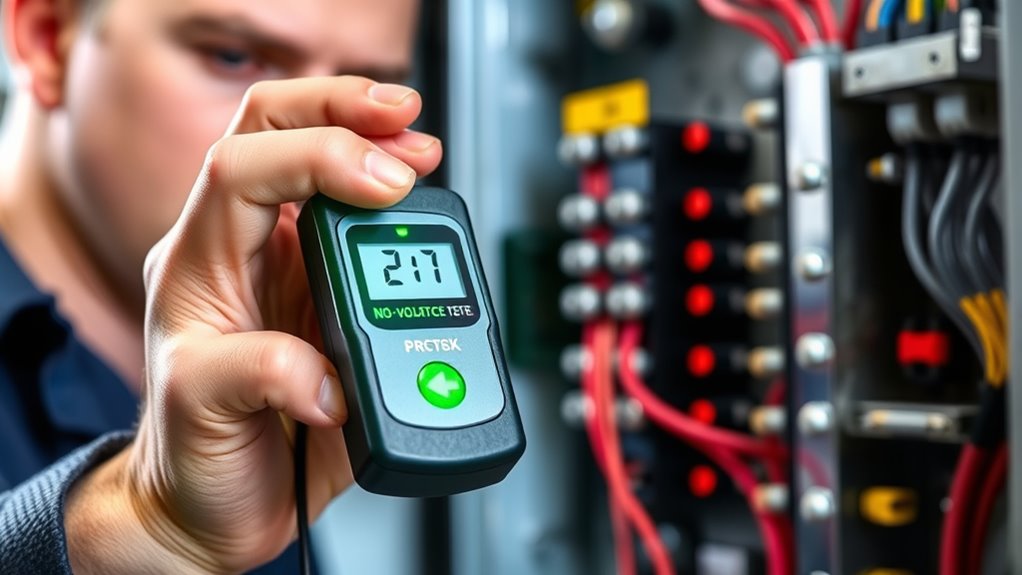
When using non-contact voltage testers, it’s essential to know when to trust the readings and when to double-check. If you get a positive reading, consider possible grounding issues that might cause false positives. Environmental interference, like nearby electrical devices or static, can also affect accuracy. If the tester shows no voltage but you suspect a live wire, double-check with a different device or method. Look for inconsistent readings or ones that don’t align with the situation; these are signs to verify further. Always remember, these testers are handy tools but aren’t infallible. When in doubt, double-check with a multimeter or consult a professional to guarantee safety and accuracy. Trust your experience, but verify to prevent mistakes.
Safety Precautions When Working With Electrical Systems
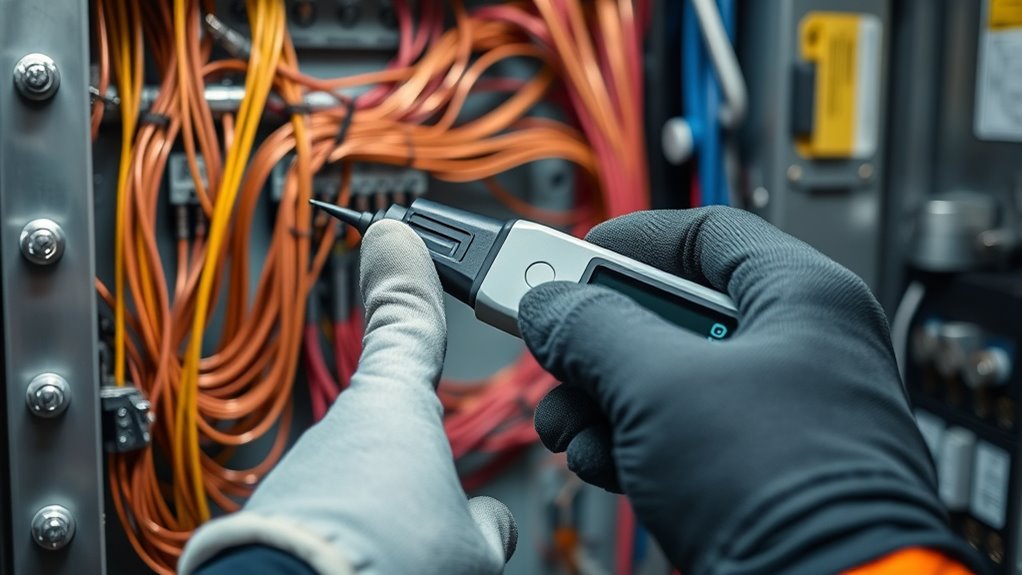
Working safely around electrical systems requires more than just reliable testing tools; it demands strict adherence to safety precautions. Before working, verify the insulation resistance of wires and equipment is intact to prevent shocks. Use your non-contact voltage tester to confirm the absence of live voltage, but don’t rely solely on it—double-check with proper testing methods. Ground fault detection is essential; it helps identify leakage currents that could pose shock risks. Always turn off power before servicing or inspecting electrical components, and wear appropriate personal protective equipment. Keep your workspace dry and organized to prevent accidents. Remember, even with the best tools, following safety protocols minimizes risks and protects you from electrical hazards.
Comparing Different Brands and Models of Voltage Testers
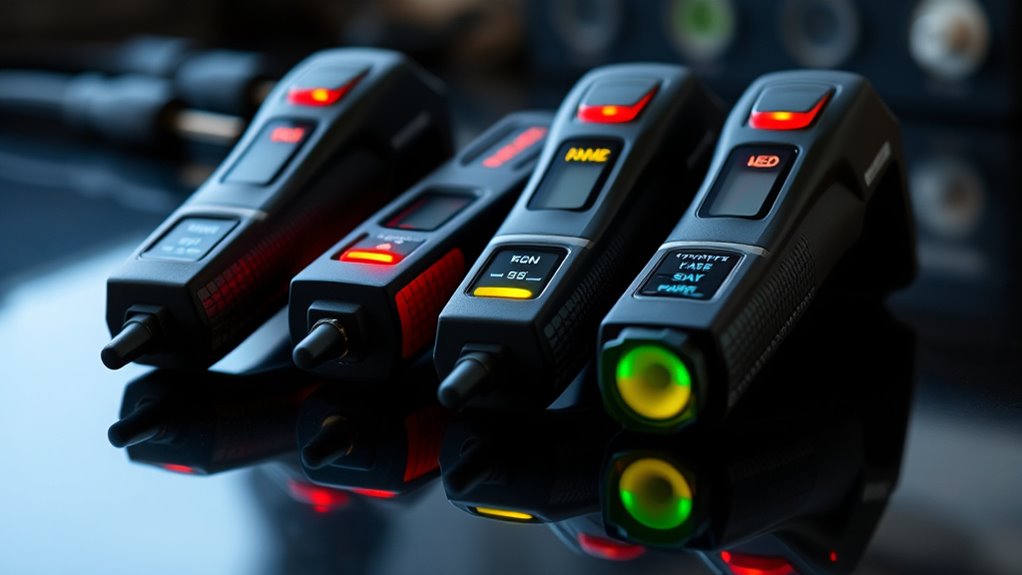
Choosing the right voltage tester depends on your specific needs and budget, as different brands and models offer varying features and levels of reliability. When comparing brand comparisons, focus on reputation, accuracy, and user reviews to gauge dependability. Look at model features like LED indicators, audible alarms, and detection range to ensure the tester fits your tasks. Some brands emphasize durability, while others prioritize ease of use or advanced sensitivity. Price differences often reflect build quality and additional functions. It’s essential to evaluate whether a model’s features align with your safety standards and work environment. By examining brand comparisons and carefully considering model features, you can select a non-contact voltage tester that offers both reliability and value, giving you confidence on every electrical job.
Supplementary Methods to Confirm Electrical Presence
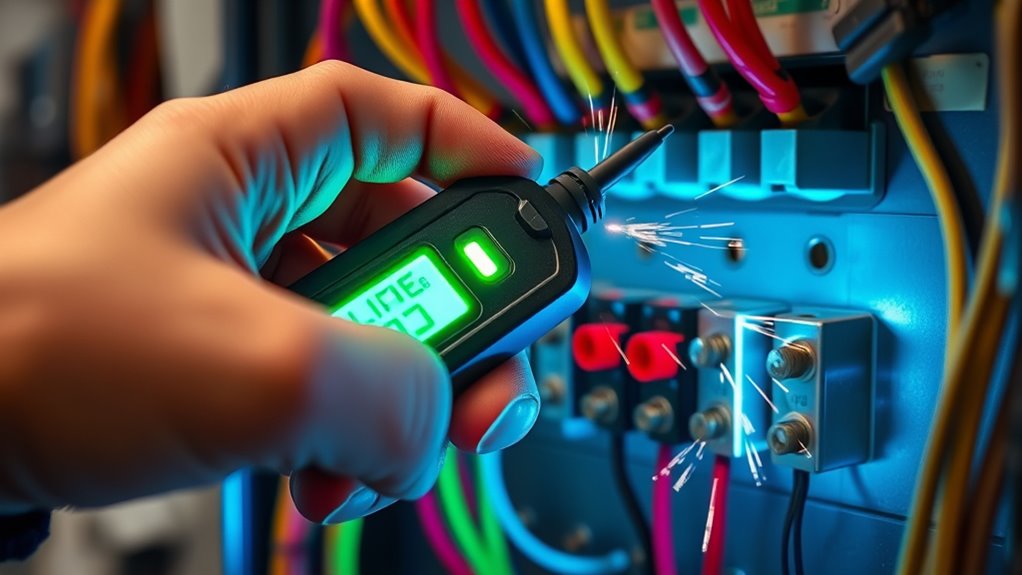
To guarantee an electrical circuit is truly de-energized, relying solely on a non-contact voltage tester may not always be enough. Grounding issues can cause false readings, and electromagnetic interference may disrupt signals. To confirm electrical presence, consider using a multimeter to check for voltage directly at the outlet or wire. Additionally, inspect grounding connections and ensure they are secure; poor grounding can lead to misleading test results. Using a clamp meter can help detect stray currents caused by electromagnetic interference. Cross-checking with multiple methods reduces risk. Here’s a quick comparison:
| Method | Benefit |
|---|---|
| Multimeter | Precise voltage measurement |
| Visual Inspection | Identifies grounding issues |
| Clamp Meter | Detects stray currents and EMI |
| Confirmatory Testing | Ensures accurate reading |
| Grounding Checks | Prevents false positives |
Tips for Maintaining and Calibrating Your Voltage Tester
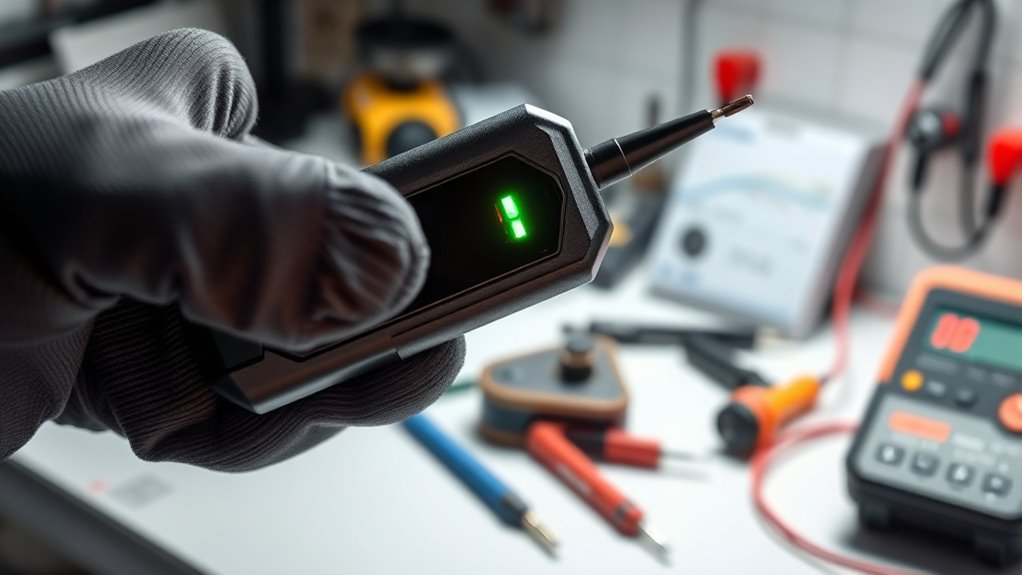
Regularly maintaining and calibrating your voltage tester guarantees it provides accurate readings, especially after troubleshooting electrical circuits. Follow simple maintenance routines, such as cleaning the tester’s tips and ensuring the battery is fresh, to keep it functioning properly. Calibration procedures should be performed periodically, according to the manufacturer’s instructions, to guarantee accuracy. Use known voltage sources or calibration tools to verify the tester’s readings. If discrepancies occur, recalibrate or replace the tester as needed. Keep detailed records of maintenance and calibration dates to track performance over time. Proper upkeep helps prevent false readings, enhances safety, and extends your device’s lifespan. Consistent attention to these steps ensures your voltage tester remains a reliable tool for your electrical work.
Frequently Asked Questions
How Long Does a Typical Non-Contact Voltage Tester Battery Last?
A typical non-contact voltage tester’s battery lasts around 6 to 12 months with regular use. The battery lifespan depends on power consumption, which varies based on the tester’s features and how often you use it. To guarantee accuracy, you should check the battery regularly and replace it when it weakens. Proper maintenance helps keep your tester reliable and ready whenever you need it.
Can Non-Contact Voltage Testers Detect Voltage in Underground or Concealed Wiring?
You can’t judge a book by its cover, and the same applies to underground detection. Your non-contact voltage tester can often detect voltage in underground or concealed wiring, but results vary depending on the device. Keep in mind, many testers struggle with deeply buried or well-insulated wiring. Always verify with additional tools or professional help to guarantee safety. Never rely solely on one test for critical work.
Are There Specific Environments Where Non-Contact Voltage Testers Are Less Effective?
You’ll find non-contact voltage testers less effective in environments with high humidity or when testing underground wiring. Moist conditions can cause false readings or diminish sensitivity, making it harder to detect voltage accurately. Similarly, underground wiring often has insulation or shielding that interferes with the tester’s signals. In these situations, it’s best to use more reliable methods like contact testers or professional tools to ensure safety and accuracy.
What Certifications Should I Look for in a Quality Voltage Tester?
Imagine your tool as a trusty shield—look for certification standards like UL, IEC, or ETL to guarantee it’s built for battle. Safety approvals are your badge of trust, proving it meets rigorous standards. When selecting a voltage tester, prioritize those with recognized certifications, so you can confidently navigate electrical work, knowing your device is reliable and safe. A certified tester is your guarantee of accuracy and protection.
How Do Temperature and Humidity Affect the Performance of These Testers?
Temperature and humidity can impact your non-contact voltage tester’s performance due to environmental sensitivity. High temperatures may cause calibration challenges, leading to inaccurate readings, while humidity can affect internal components, making the device less reliable. To guarantee accurate results, store your tester in a controlled environment, avoid extreme conditions, and regularly check calibration. This way, you maintain the tester’s effectiveness despite environmental factors.
Conclusion
Remember, non-contact voltage testers are handy but not infallible. Nearly 30% of false readings happen due to environmental factors or improper use. Always verify with a secondary method before working on any electrical circuit. By trusting but verifying, you prevent accidents and ensure safety. Keep your tester well-maintained and follow proper techniques—because when it comes to electricity, a cautious approach can make all the difference.