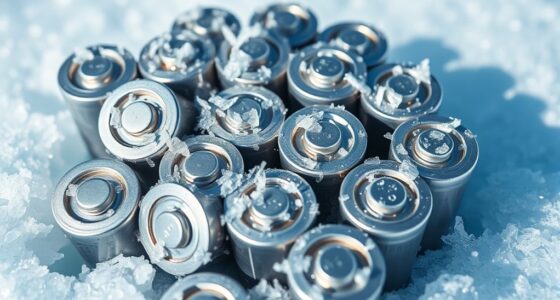

C-rate measures how fast you can charge or discharge your battery relative to its capacity. For example, a 1C rate means fully charging or discharging in one hour, while higher C-rates like 2C or 5C can speed up the process but may increase wear and risk overheating. The ideal C-rate depends on your battery type and thermal management. If you want to understand how to maximize performance and lifespan, keep exploring the details below.
Key Takeaways
- The C-rate indicates how quickly a battery charges or discharges relative to its capacity; for example, 1C means full capacity in one hour.
- Higher C-rates enable faster charging/discharging, but can increase heat and wear, potentially reducing battery lifespan.
- Typical lithium-ion batteries handle 0.5C to 2C safely, allowing charging to 80% in about 30 minutes at higher rates.
- Excessively high C-rates risk overheating, thermal runaway, and damage, so proper thermal management is essential.
- Managing the C-rate according to battery chemistry and conditions optimizes charging speed and preserves battery health.

FASTPRO 20V Lithium Ion Battery, 1.5-Amp Hour, 1 Pack
20V Lithium Ion Battery, 1.5-Amp Hour, 1 Pack
As an affiliate, we earn on qualifying purchases.
As an affiliate, we earn on qualifying purchases.
Understanding the Basics of C-Rate

Have you ever wondered what the C-rate really means when talking about batteries? It’s a way to measure how quickly a battery charges or discharges relative to its capacity. The C-rate depends heavily on the battery chemistry, as different chemistries handle high or low rates differently without damaging the cell. For example, lithium-ion batteries often allow higher C-rates compared to older chemistries, enabling faster charging. battery chemistry is also affected by the C-rate, as high rates can sometimes lead to uneven charge distribution within the cell. However, pushing the C-rate too high can reduce the number of charging cycles a battery can endure over its lifespan. Understanding the basics of C-rate helps you balance charging speed with battery longevity. Essentially, the C-rate gives you a clear idea of how much current a battery can safely handle during operation, based on its chemistry and design. battery chemistry plays a crucial role in determining the safe and effective C-rate for any given battery. Additionally, advancements in heat pump technology aim to improve energy efficiency and environmental impact, reflecting ongoing innovation in sustainable solutions. Moreover, ongoing research into battery management systems seeks to optimize charging protocols, further enhancing battery performance and lifespan. A good grasp of Vacuums for LVP floors can help you choose gentle cleaning options that protect sensitive surfaces while maintaining cleanliness.

EBL LCD 8 Bay Battery Charger, AA AAA C D Rechargeable Battery Charger for Rechargeable Batteries Ni-MH AA AAA C D Batteries with 2A USB Port, Type C Input
Independent Battery Charger – EBL recchargeable LCD AA AAA C D battery charger, independent charging channels, 8 bays…
As an affiliate, we earn on qualifying purchases.
As an affiliate, we earn on qualifying purchases.
How C-Rate Affects Charging Speed

The C-rate directly influences how quickly a battery can be charged, with higher rates enabling faster charging times. Your battery chemistry determines its ability to handle these rates safely, affecting overall charging speed. Faster charging demands robust charging infrastructure to supply the necessary power without risking damage. Additionally, understanding the compatibility of your battery materials with high C-rates is vital for maintaining safety and efficiency. Proper thermal management is essential to prevent overheating during high-rate charging, ensuring longevity and safety. Recognizing the relationship between C-rate and battery lifespan can help optimize charging practices for better durability. Moreover, considering the historical development of battery technology can provide insights into current limitations and future advancements. Implementing standardized testing protocols can further ensure that batteries perform reliably at various C-rates.
Thermal Management System for Lithium-Ion Batteries
As an affiliate, we earn on qualifying purchases.
As an affiliate, we earn on qualifying purchases.
Discharging and the C-Rate Factor
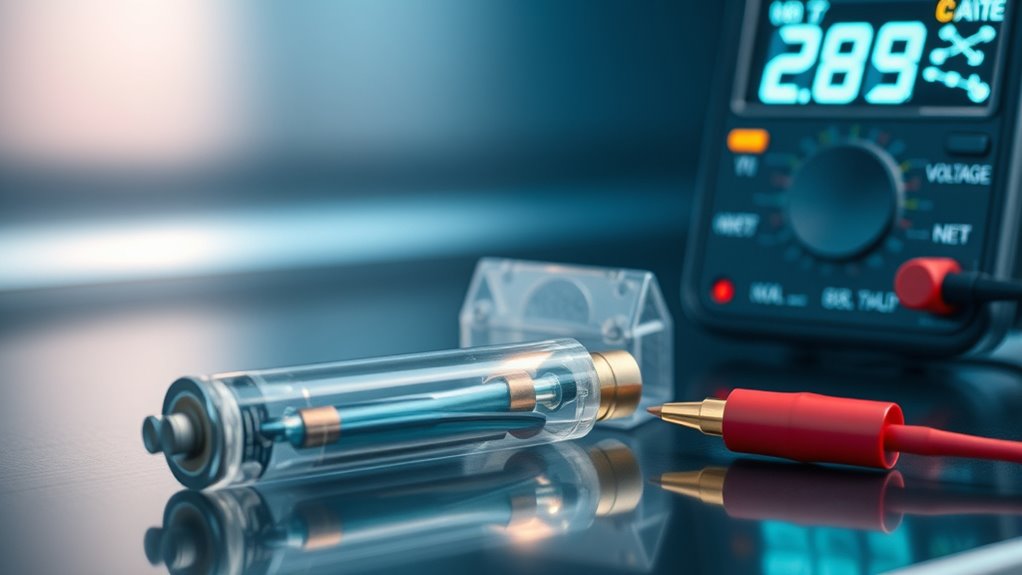
Discharging a battery at different C-rates considerably impacts its performance and lifespan. Higher C-rates draw more current quickly, which can cause increased heat and stress on the battery chemistry. This thermal stress can accelerate degradation if not properly managed. Additionally, rapid discharging can lead to voltage drops that affect device performance, emphasizing the importance of understanding voltage stability. This accelerated discharge may boost power output temporarily but risks damaging the battery over time. Effective thermal management becomes essential to prevent overheating and preserve battery health during high-rate discharges. Different battery chemistries respond uniquely to rapid discharging; for instance, lithium-ion batteries handle higher C-rates better than some lead-acid types. Recognizing the discharge limits of your battery chemistry helps prevent unexpected failures. Understanding how C-rate influences discharge helps you balance performance with longevity. Proper battery maintenance is vital for ensuring safety and optimal performance when operating at high C-rates. By managing thermal conditions and selecting appropriate battery chemistry, you can optimize discharging processes, ensuring your battery delivers reliable power without compromising its lifespan. Additionally, battery safety measures should be carefully considered when operating at high C-rates to minimize risks of failure or hazards.

CyberPower OR1500LCDRT2U Smart App LCD UPS System, 1500VA/900W, 8 Outlets, AVR, 2U Rack/Tower
1500VA/900W Smart App LCD Battery Backup Uninterruptible Power Supply (UPS) System offers guaranteed power protection for departmental servers,…
As an affiliate, we earn on qualifying purchases.
As an affiliate, we earn on qualifying purchases.
Calculating the Actual Charge and Discharge Times
Calculating the actual charge and discharge times is essential for understanding how long your battery will last under specific conditions. To do this, you need to know your battery’s capacity, measured in amp-hours (Ah), and the current rate, or C-rate, at which you’re charging or discharging. Divide the capacity by the current to get the time in hours. Keep in mind that energy density impacts this calculation: higher energy density batteries store more energy in a smaller space, affecting how quickly they can be charged or discharged. For example, a battery with a capacity of 10 Ah discharging at 2C will take about 0.5 hours. Accurate calculations help optimize battery storage and ensure you’re working within safe, efficient limits. Additionally, understanding remote hackathons can facilitate collaborations that improve battery technologies through diverse expertise. Recognizing the C-rate limits of a battery is crucial to prevent overheating and potential damage during fast charging or discharging. Moreover, being aware of the safety features included in battery systems can help mitigate risks associated with rapid charge or discharge cycles. Properly managing these performance parameters ensures longevity and reliability of your batteries during intensive use, especially when considering the energy density and its influence on charging times.
The Importance of C-Rate in Battery Lifespan

Because operating a battery at high C-rates can accelerate wear and tear, understanding the impact of C-rate on lifespan is crucial. Different battery chemistries respond uniquely; some tolerate high C-rates better, prolonging their life, while others degrade faster under stress. Charging stations that support fast charging often push batteries to higher C-rates, which can shorten their overall lifespan if used frequently. Maintaining ideal C-rates, especially during regular charging, helps preserve battery health and extends usability. Proper battery management systems can help regulate C-rate and prevent unnecessary stress on the battery. Being aware of your battery’s chemistry and choosing appropriate charging stations ensures you don’t unintentionally reduce its longevity. Proper management of C-rate is essential for maximizing battery performance and lifespan. Additionally, understanding AI safety measures can help develop smarter management systems that optimize charging protocols. Implementing advanced monitoring techniques further supports maintaining optimal C-rates and prolongs battery life. For example, using thermal management systems can reduce heat buildup during fast charging, which is vital for battery longevity. Ultimately, managing C-rate carefully can save you money and keep your battery performing well over time.
Practical Examples of C-Rate in Use
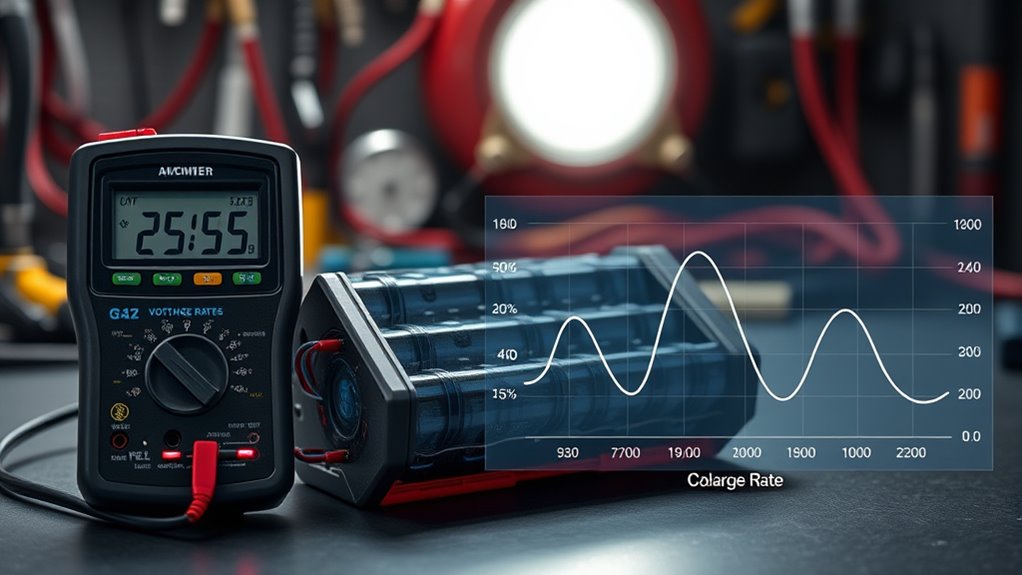
You’ll notice how C-rate affects EV charging speeds, with higher rates enabling quicker charges. Keep in mind that charging too fast can also impact your battery’s overall lifespan. Understanding these practical examples helps you make smarter decisions about balancing speed and longevity.
EV Charging Speeds
Ever wondered how C-rate translates into real-world charging speeds for electric vehicles? When you use fast charging, a high C-rate means your battery charges quickly—often reaching 80% in 30 minutes or less. For example, a 1C rate on a 60 kWh battery means charging at 60 kW, which is typical for rapid charging stations. However, pushing batteries at high C-rates can accelerate battery degradation over time, reducing overall lifespan. Manufacturers balance the desire for quick charges with battery health considerations, often recommending lower C-rates for regular charging to extend battery life. So, while high C-rates deliver fast charging, they also demand careful management to prevent long-term damage, ensuring your EV remains reliable and efficient.
Battery Life Impact
While high C-rates enable rapid charging, they can also accelerate battery wear if used excessively. This is especially true given the battery chemistry involved; some chemistries, like lithium-ion, are more sensitive to stress from high C-rates. Charging or discharging too quickly generates heat, making thermal management essential. Overheating can degrade electrode materials and electrolyte stability, shortening your battery’s lifespan. To optimize longevity, manufacturers often recommend lower C-rates for regular use, reserving higher rates for quick, occasional charges. Maintaining proper thermal management—cooling systems and ventilation—helps mitigate heat buildup. By understanding your battery’s chemistry and managing heat effectively, you can balance the benefits of high C-rates with the need to preserve your battery’s health over time.
Risks of Charging or Discharging Too Fast
Charging or discharging a battery too quickly can cause serious damage and reduce its lifespan. When you push the C-rate too high, your battery may overheat, risking thermal runaway and permanent damage. Rapid charging or discharging can also compromise voltage stability, leading to fluctuations that harm internal components. Over time, these stresses degrade battery materials, decreasing overall capacity and reliability. Battery overheating not only shortens lifespan but can also pose safety hazards, including fires or explosions. Additionally, unstable voltage during fast charge or discharge cycles can trigger protective mechanisms or cause device malfunctions. To protect your battery’s health and ensure safety, avoid excessively high C-rates that push your battery beyond recommended limits. Proper management of charge and discharge speeds is essential for longevity and safe operation.
Choosing the Right C-Rate for Your Device

Choosing the right C-rate for your device is essential to balance performance and battery health. The ideal C-rate depends on your battery’s chemistry and thermal management. For example, lithium-ion batteries typically handle moderate C-rates well, but exceeding recommended levels can cause overheating. Consider the table below to pick the best C-rate:
| Battery Chemistry | Suitable C-Rate Range | Thermal Management Needs |
|---|---|---|
| Lithium-ion | 0.5C – 2C | Adequate cooling needed |
| Nickel-metal hydride | 1C – 5C | Moderate cooling |
| Lead-acid | 0.2C – 1C | Minimal cooling |
Matching your device’s chemistry and ensuring proper thermal management helps optimize performance without risking battery damage.
Tips for Safe and Efficient Battery Usage
To guarantee your battery performs at its best and lasts longer, adopting safe and efficient usage habits is essential. Start with proper thermal management; avoid overheating by keeping the device in cool environments and using appropriate cooling methods. This prevents thermal stress that can degrade battery health. Be mindful of battery recyclability by disposing of batteries responsibly and recycling them according to local regulations. Regularly monitoring charge levels and avoiding deep discharges help maintain ideal performance. Use chargers compatible with your device’s specifications to prevent damage. Limiting high C-rate charging and discharging cycles also extends battery life. By combining good thermal management, responsible disposal, and mindful charging habits, you optimize battery safety, efficiency, and longevity.
Frequently Asked Questions
How Does Temperature Affect the Optimal C-Rate?
You should consider that temperature substantially impacts the ideal C-rate due to thermal effects. As temperature drops, batteries become less efficient, so you need to reduce the C-rate to prevent overheating and damage. Conversely, higher temperatures allow for faster charging and discharging, but still require temperature regulation to avoid thermal runaway. Maintaining an appropriate temperature range ensures safe, efficient performance, balancing power output with thermal management.
Can High C-Rates Cause Battery Overheating?
High C-rates can turn your battery into a hot potato, causing overheating risks. When you push the battery too hard, it generates excessive heat, risking thermal runaway. Proper thermal management is essential to keep safety concerns at bay, ensuring the battery stays cool and functions effectively. Ignoring this can lead to damage or dangerous failures, so always monitor and control the charging and discharging rates carefully.
What Is the Impact of C-Rate on Battery Warranty?
High c-rates can negatively impact your battery warranty, as they often lead to increased wear and reduced longevity. Manufacturers may restrict c-rate usage to protect warranty coverage, since frequent high-rate charging or discharging accelerates degradation. If you regularly push your battery at high c-rates, it could shorten its lifespan and void warranty claims. To guarantee warranty validity and maximize longevity, follow recommended c-rate guidelines carefully.
Are Different Battery Chemistries Compatible With the Same C-Rate?
Different battery chemistries aren’t always compatible with the same C-rate because of chemistry compatibility and voltage considerations. You need to check each chemistry’s specifications, as some chemistries can handle higher C-rates without damage, while others may degrade faster. Always consider voltage ranges and temperature effects to guarantee safe and ideal performance. Matching the C-rate to the chemistry’s capabilities helps extend battery life and maintain safety.
How Do C-Rates Influence Fast-Charging Technology Compatibility?
Oh, the charming dance of fast-charging standards and C-rates! You’ll find that higher C-rates demand sophisticated battery management systems to prevent overheating and degradation. When your battery’s C-rate aligns with fast-charging protocols, it’s like a perfect duo—quick recharge without sacrificing lifespan. But ignore this, and you risk frying your tech or, at best, prolonging the charging saga. Keep C-rates in check for seamless, speedy, and safe charging adventures.
Conclusion
Understanding C-rate helps you charge and discharge batteries safely and efficiently. Did you know that charging a battery at a 1C rate can fill it in an hour? Charging too fast might save time but risks damaging your battery, shortening its lifespan. By choosing the right C-rate, you guarantee your device stays reliable longer. Keep safety in mind, and you’ll get the most out of your batteries without compromising performance.