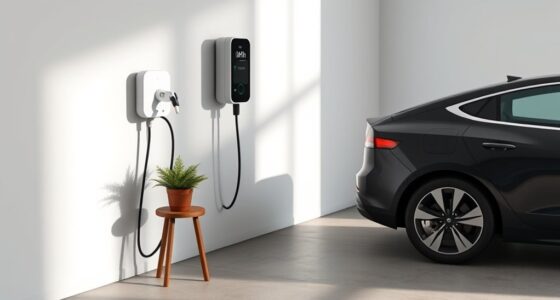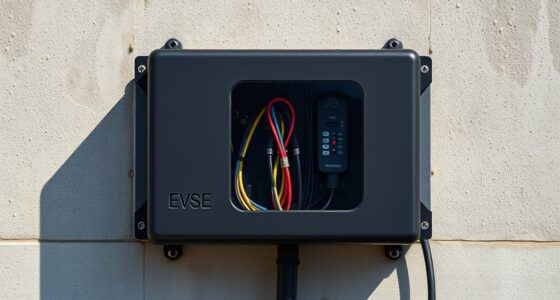
To avoid GFCI breaker trips on your EV circuit, make certain it’s properly installed and compatible with your system’s electrical requirements. Regularly test the breaker using the built-in button and keep wiring connections tight and free of corrosion. Use quality breakers rated for your circuit’s amperage, and verify that your grounding system is sound, as poor grounding can cause false trips. If you want to learn more about maintaining safe and reliable EV charging, keep exploring these important tips.
Key Takeaways
- Ensure proper grounding and wiring connections to prevent false trips caused by grounding issues.
- Regularly test GFCI breakers using the built-in test button to confirm correct operation.
- Use high-quality GFCI breakers rated for your EV circuit’s amperage and voltage to ensure reliability.
- Avoid overloading the circuit by adhering to recommended charging current and not connecting multiple devices.
- Verify that the installation follows manufacturer instructions and local electrical codes to reduce trip risks.

When installing electric vehicle (EV) charging circuits, using GFCI breakers is essential for safety. These devices are designed to protect you from electrical faults by providing ground fault detection, which quickly shuts off power when a leak or imbalance occurs. Proper breaker installation ensures that your EV charging setup remains safe and reliable, preventing potential electrical shocks or fire hazards. If a ground fault develops, the GFCI breaker detects even small current leaks to ground, cutting power in milliseconds. This rapid response is crucial, especially considering the high currents involved in EV charging. By paying close attention to breaker installation, you ensure the GFCI functions correctly, avoiding unnecessary trips and maintaining continuous charging sessions.
Ground fault detection is the cornerstone of GFCI breaker safety. It constantly monitors the current flowing through the circuit, comparing the live and neutral wires. When it detects a discrepancy, indicating current leakage to ground, it trips instantly. This feature is especially important in EV charging, where moisture, damaged cords, or faulty connections can cause ground faults. You want the breaker to trip only when necessary, so correct breaker installation is vital. This involves securely connecting the breaker to the panel, ensuring proper wiring, and verifying that the GFCI function tests are passed. An incorrectly installed breaker might not detect faults properly or could trip prematurely, disrupting your charging process. Additionally, understanding the importance of grounding systems and their proper setup can significantly influence the effectiveness of GFCI protection.
When installing GFCI breakers on EV circuits, always follow manufacturer instructions and local electrical codes. Use high-quality, compatible breakers rated for your circuit’s amperage and voltage. Proper breaker installation also includes ensuring that the grounding system is sound, as this is fundamental for ground fault detection. If your grounding is inadequate, the GFCI may not operate correctly, increasing safety risks. Additionally, keep the circuit clean, tight, and free from corrosion to prevent false trips or failure to trip when needed. Regular testing of your GFCI breaker, typically once a month, can confirm it’s functioning properly. Most GFCIs have a test button; pressing it should trip the breaker, confirming the ground fault detection system works.
Frequently Asked Questions
Can GFCI Breakers Be Installed Outdoors for EV Charging?
Yes, you can install GFCI breakers outdoors for EV charging, but make certain they are specifically rated for outdoor installation. Look for weather-resistant models designed to withstand moisture, dirt, and temperature changes. These breakers are built with protective enclosures and corrosion-resistant materials, making them suitable for outdoor use. Proper installation and regular inspections help prevent trips and ensure safe, reliable EV charging in outdoor environments.
Are GFCI Breakers Compatible With All EV Charging Stations?
GFCI breakers aren’t universally compatible with all EV charging stations due to differences in circuit integration requirements. You should check the specific manufacturer’s guidelines to confirm compatibility, as some stations may require dedicated circuit types or additional safety features. Always verify that the GFCI breaker you choose supports your station’s power needs and wiring setup, ensuring safe, reliable operation without risking trips or circuit issues.
How Often Should GFCI Breakers Be Tested on EV Circuits?
Think of testing your GFCI breaker like checking your smoke alarm—it’s crucial for safety. You should test your GFCI on EV circuits monthly, following safety guidelines. Regular testing ensures it trips correctly when needed, preventing potential electrical hazards. If you notice it doesn’t trip during testing, consult an electrician. Staying proactive keeps your EV charging setup safe and reliable, just like maintaining other essential safety devices in your home.
Do GFCI Breakers Affect Charging Speed or Efficiency?
GFCI breakers don’t affect your charging speed or power efficiency directly. Their main role is safety, preventing electrical shocks by monitoring current leaks. While they might trip if there’s a ground fault, they don’t slow down your charging process or reduce overall efficiency. If a GFCI trips frequently, it could indicate an issue with the circuit or your EV charger, but it won’t impact how quickly or efficiently your EV charges.
What Are the Signs of a Faulty GFCI Breaker on an EV Circuit?
Think of a faulty GFCI breaker as a watchdog with a faulty nose, constantly barking at non-existent ground faults. Signs include frequent breaker tripping, especially during charging, or a persistent inability to reset the breaker. You might notice a ground fault indicator light stays on, or the breaker feels hot to the touch. These clues signal your breaker’s losing its grip on safety, risking electrical issues.
Conclusion
To keep your EV charging safe and hassle-free, always verify your GFCI breakers are properly installed and maintained. Regular checks can prevent unnecessary trips, just like you’d avoid a soggy telegram in a rainstorm. Remember, safety isn’t just a modern concern—think of it as your trusty knight’s shield, protecting you and your vehicle from unexpected shocks. Stay vigilant, and your EV charging experience will stay smooth as a well-oiled gear.