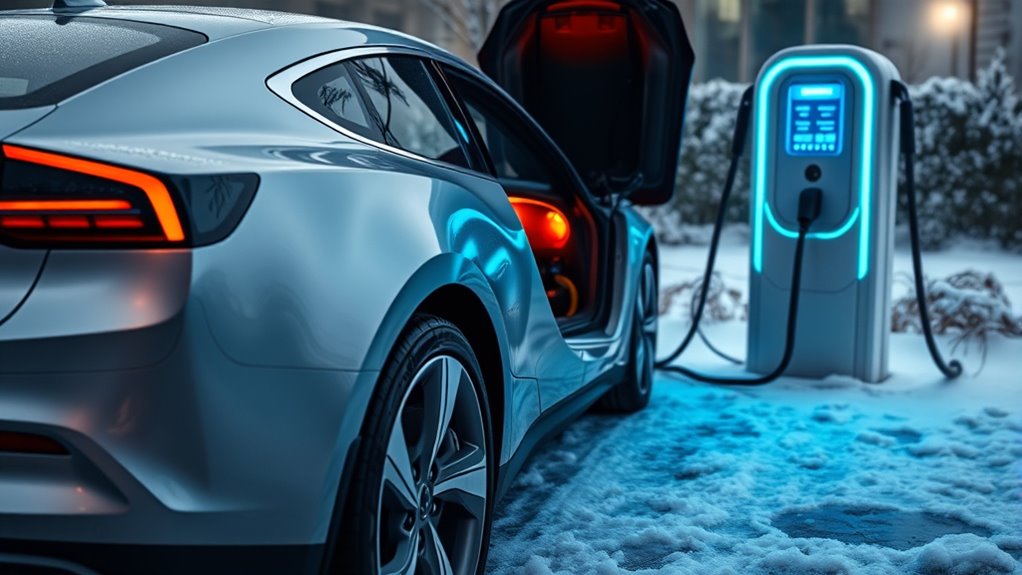

Preconditioning and battery warmup help you charge faster during cold winter days by warming the battery to its ideal temperature. Many EVs let you activate preconditioning remotely or schedule it in advance, so your battery is ready before you start charging. This process reduces charging times, improves efficiency, and helps protect your battery from cold damage. Keep exploring to discover how modern thermal systems make winter driving and charging even easier.
Key Takeaways
- Preconditioning heats the battery before charging, improving acceptance and reducing charging time in cold weather.
- Remote or scheduled preconditioning can be activated via smartphone app to optimize battery temperature before charging.
- Warming the battery enhances fast-charging efficiency, minimizing wait times at public charging stations.
- Proper thermal management prevents cold-related battery damage, extending battery lifespan and maintaining performance.
- Using preconditioning strategies ensures reliable, faster winter charging and maximizes EV range during cold conditions.
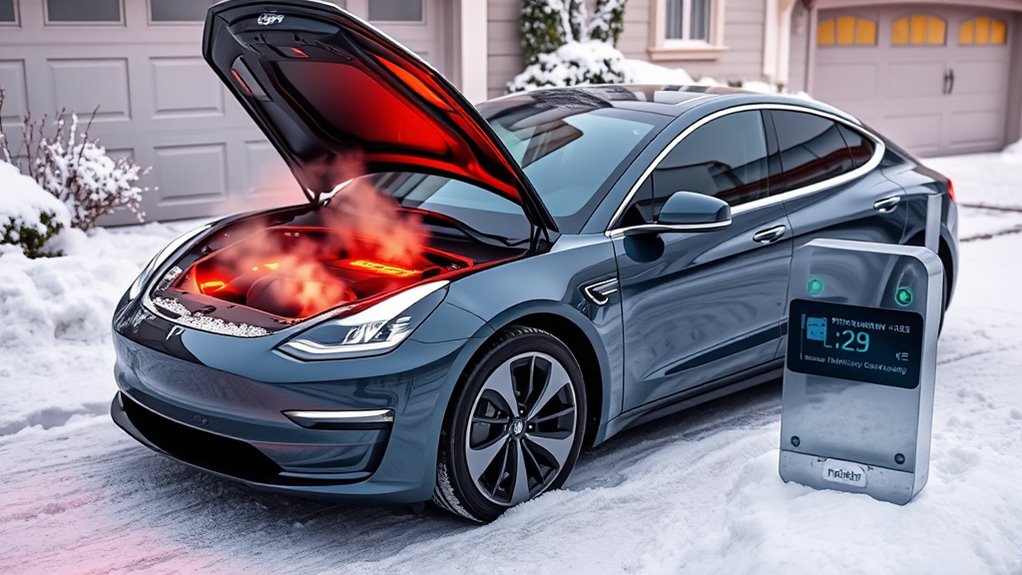
When cold weather hits, your electric vehicle’s battery can struggle to perform at its best, leading to reduced range and longer charging times. This is because low temperatures affect the battery’s chemistry, making it less efficient and more resistant to current flow. To combat this, preconditioning and battery warmup are essential strategies. By actively managing the battery’s temperature through thermal management systems, you help maintain ideal energy efficiency, ensuring your vehicle operates smoothly despite the cold.
Preconditioning involves warming up your EV’s battery before you start driving or charging. Many electric vehicles offer remote or scheduled preconditioning features, allowing you to activate the process via a smartphone app or vehicle settings. When you do this, the vehicle uses its thermal management system to gently heat the battery to a more suitable temperature. This not only improves energy efficiency by reducing the amount of energy needed to charge the battery but also guarantees that you get the most range possible on a cold day. When the battery is preheated, it accepts charge more readily, resulting in faster charging times and less strain on the power system.
Preconditioning warms your EV’s battery for better efficiency and faster charging on cold days.
Battery warmup is especially essential when you’re preparing for a fast charge at a public station. Cold batteries take longer to reach the ideal temperature for high-speed charging, which can greatly extend your wait. By prewarming your battery, you enable faster, more efficient charging sessions. This saves you time and reduces the overall energy consumption needed to replenish your battery. Plus, maintaining proper thermal management during the warmup process helps prevent potential damage caused by extreme cold, prolonging your battery’s lifespan. Additionally, understanding your vehicle’s thermal management system can help you optimize warmup procedures for better performance.
Incorporating preconditioning into your routine is a smart move, especially during winter months. It’s a proactive way to maximize your vehicle’s performance and energy efficiency, making sure you’re not throwing away energy just to get the battery warm enough to operate effectively. Not only does this help you get back on the road sooner, but it also conserves battery health, which is essential for the longevity of your EV. Overall, leveraging thermal management systems for battery warmup isn’t just about comfort — it’s a practical tactic to improve efficiency, reduce charging time, and guarantee your electric vehicle performs reliably, no matter how cold it gets outside.
Frequently Asked Questions
How Does Preconditioning Affect Overall Battery Lifespan?
Preconditioning can positively affect your battery lifespan by reducing battery degradation caused by extreme cold. When you precondition, it optimizes thermal management, keeping the battery at an ideal temperature. This prevents stress and wear that cold temperatures can cause, ultimately extending your battery’s overall health. By maintaining proper thermal management through preconditioning, you help preserve your battery’s capacity and longevity over time.
Can Preconditioning Be Done Remotely via Smartphone App?
Sure, you can remotely control preconditioning through your smartphone app if your vehicle supports it. Many modern EVs offer app compatibility, making it easy to schedule or activate battery warmup before your trip. Just verify your car’s system is compatible and that you have a reliable internet connection. With remote control, you’ll enjoy a warmer battery, quicker charging, and a smoother winter driving experience, all at your fingertips.
What Are the Energy Costs Associated With Battery Warmup?
The energy costs of battery warmup mainly involve increased energy consumption from the vehicle’s heating system to boost heating efficiency. You’ll use more electricity, which can slightly raise your energy bills, especially in cold weather. However, this warmup helps your battery perform better and charge faster, potentially offsetting costs with improved efficiency. While it does use extra energy, the benefits of quicker, more efficient winter charging often outweigh the additional energy expenses.
Does Warmup Significantly Improve Charging Time?
Think of your battery as a marathon runner warming up before the race. When you warm up the battery, it reaches a ideal temperature, improving battery temperature and boosting charging efficiency. This means your charging time is considerably reduced, especially in cold weather. So, yes, warming up your battery can make charging faster, as it helps the battery operate more efficiently, allowing quicker energy flow and less downtime during winter.
Are There Different Preconditioning Methods for Various EV Models?
Yes, different EV models use various preconditioning methods, often involving built-in heating systems or battery insulation. Some vehicles activate preconditioning automatically through their app or settings, warming the battery before charging or driving. Others may require manual adjustments or specific routines. These methods help optimize battery temperature, ensuring faster charging times and better performance in cold weather. Always check your vehicle’s manual for tailored preconditioning options.
Conclusion
By preconditioning and warming your battery, you’re revealing the secret to faster winter charging, much like the alchemist turning cold lead into golden energy. Just as a well-prepared traveler avoids storms, your vehicle’s warmup guarantees smoother, more efficient charging in cold weather. Embrace these practices, and you’ll navigate winter’s chill with the ease of a seasoned explorer, turning frosty mornings into opportunities rather than obstacles—transforming your EV experience into a seamless journey through the seasons.