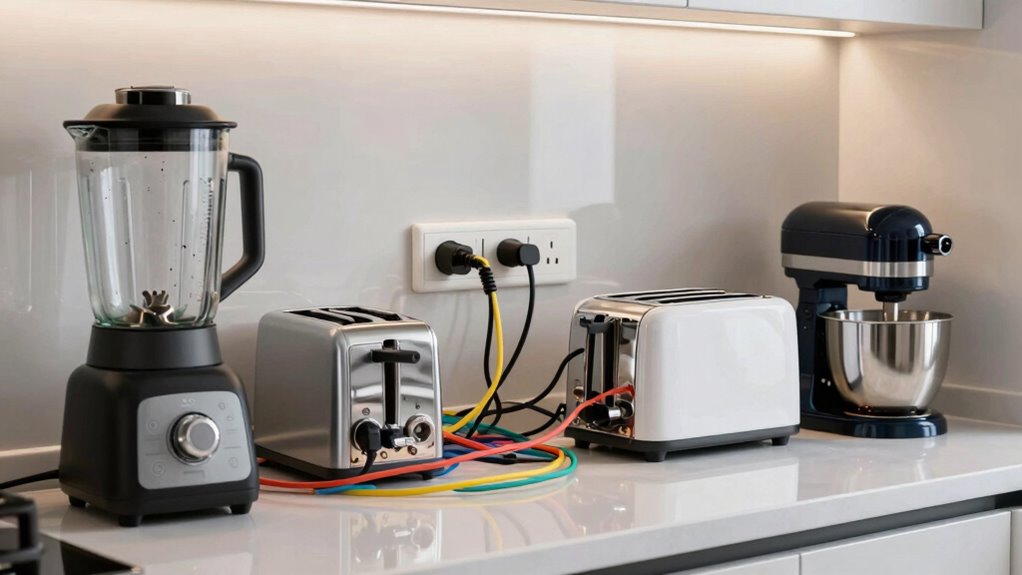

You might think planning kitchen circuits is simple, but it’s more complex than it looks. Proper planning guarantees safety, prevents overloads, and allows your system to handle current and future appliances. It requires understanding power needs, balancing loads, and designing dedicated circuits for high-power devices. This prevents hazards like overheating and costly rewiring later on. Keep going, and you’ll discover how thorough planning can save you time, money, and potential risks in the long run.
Key Takeaways
- Proper planning ensures circuits can safely handle varying appliance loads, preventing overloads and electrical hazards.
- Strategic wiring and breaker sizing accommodate future appliance additions, reducing costly rewiring.
- Dedicated circuits for high-power appliances like ovens improve safety and system reliability.
- Overlooking detailed planning can lead to code violations and increased risk of electrical fires.
- Thoughtful circuit design enhances overall efficiency, safety, and long-term durability of the kitchen electrical system.

Are you planning to update or install new circuits in your kitchen? If so, you might think that simply running wires and installing outlets is enough. But in reality, proper planning is essential to ensure safety, efficiency, and future-proofing your space. One of the most critical aspects to consider is appliance safety. Kitchen appliances—like refrigerators, dishwashers, microwaves, and ovens—draw varying amounts of current, and if circuits aren’t designed with this in mind, it can lead to dangerous situations. You need to make certain each circuit can handle the load of the appliances connected to it, preventing overheating or electrical fires. This involves understanding the power requirements of your appliances and planning circuits accordingly, rather than just adding outlets where you think they look good.
Proper kitchen circuit planning ensures safety by accommodating appliance power needs and preventing overloads and hazards.
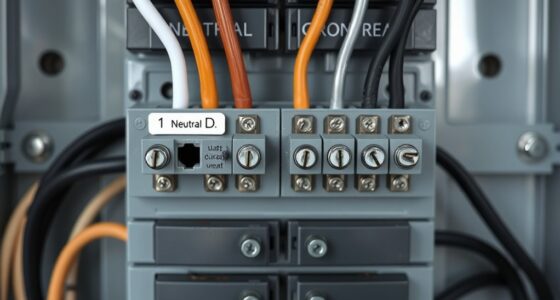
Another key reason why kitchen circuits demand more planning is to avoid circuit overload. Overloading occurs when too many appliances are connected to a single circuit, exceeding its capacity. This is dangerous because it can trip circuit breakers or, worse, cause wires to overheat. To prevent this, you should assess the total wattage of all appliances that will be on each circuit and make sure the wiring and breakers are rated appropriately. For example, high-power appliances like ovens or garbage disposals should have dedicated circuits to avoid overloading shared circuits with smaller devices. Proper planning guarantees you don’t just rely on the existing wiring or circuit breakers, which might not be sufficient for your upgraded needs.
Thinking ahead is also indispensable in your planning process. Kitchens are dynamic spaces, and your electrical needs might change over time. Installing circuits with some extra capacity or future outlets in mind can save you headaches later. This foresight can prevent you from having to redo wiring or upgrade your electrical system soon after initial installation. Additionally, you should consider appliance safety standards and local codes, which often specify minimum circuit requirements for certain appliances or areas. Ignoring these can lead to safety violations or insurance issues. Properly understanding the circuit capacity and how to distribute the load evenly helps ensure your system remains reliable under increased demand. Including future expansion considerations during planning can further support your long-term needs.
In short, you can’t just install new circuits in your kitchen on a whim. Proper planning involves understanding appliance safety, preventing circuit overload, and thinking ahead about future needs. Taking the time now to plan thoroughly will help you create a safer, more reliable, and more efficient kitchen environment. It’s an investment that pays off in peace of mind and long-term convenience.
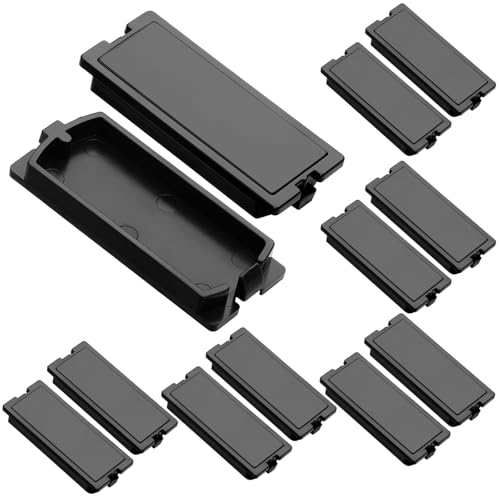
Kingdder 10 Pack Breaker Filler Plate, Circuit Breaker Panel Cover Knockout Filler Plate Box Cover Black
10 Pack Breaker Filler Plates for Enhanced Safety: get 10 durable circuit breaker covers made from fireproof, moisture…
As an affiliate, we earn on qualifying purchases.
As an affiliate, we earn on qualifying purchases.
Frequently Asked Questions
How Do I Determine the Correct Circuit Breaker Size for My Kitchen?
To determine the correct circuit breaker size for your kitchen, first calculate the circuit load by adding up the wattage of all appliances and outlets. Make certain the breaker is compatible with your wiring and appliances, typically 15 or 20 amps. Always follow local electrical codes and consult a professional if you’re unsure, as proper breaker sizing ensures safety and prevents overloads.
Can I Install Additional Outlets Without Rewiring the Entire Kitchen?
Yes, you can install additional outlets without rewiring your entire kitchen. Studies show most kitchens have unused capacity, making it easier than you think. To do this successfully, consider your appliance placement and lighting layout. Proper planning ensures outlets are conveniently located, safe, and code-compliant. Always consult an electrician to assess your existing circuits, avoid overloads, and guarantee the new outlets integrate seamlessly with your current wiring system.
What Are the Code Requirements for GFCI Outlets in Kitchens?
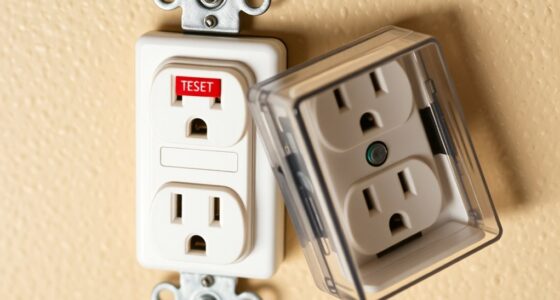
The code requires GFCI outlets in kitchens to be installed within 6 feet of sinks and any wet areas. You should regularly perform GFCI testing to guarantee they trip correctly for safety. Proper outlet placement is essential, so position GFCIs where they’re accessible yet compliant. This prevents electrical hazards, especially around water, and makes sure your kitchen meets safety standards. Remember, a well-planned setup simplifies future maintenance.
How Does Countertop Material Affect Circuit Planning?
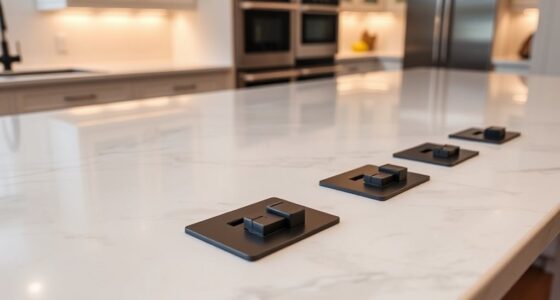
Countertop materials influence circuit planning because they determine electrical compatibility and accessibility. For example, granite or quartz require special precautions, while laminate surfaces allow easier wiring placement. You need to take into account how each material affects outlet installation, cable routing, and safety measures. By planning around your countertop’s durability, weight, and surface type, you ensure your kitchen’s electrical system is both functional and safe, avoiding future complications.
What’s the Best Way to Plan for Future Electrical Needs?
To plan for future electrical needs, you should consider appliance placement and lighting zones now. Think about where you might add larger appliances or additional lighting later, and allocate extra circuit capacity accordingly. Map out positions for outlets and switches, ensuring flexibility for upgrades. This proactive approach minimizes costly rewiring, helps prevent overloads, and keeps your kitchen prepared for evolving needs, making your space both functional and safe.

RKURCK Thermal Circuit Breaker 20 Amps, Thermal Overload Protector L1 Series 125-250V AC 50V DC Push Button Manual Reset Circuit Breaker 20A 2 Pcs
Compact, single pole, push-to-reset thermal circuit breakers
As an affiliate, we earn on qualifying purchases.
As an affiliate, we earn on qualifying purchases.
Conclusion
Think of your kitchen circuits as the backbone of your culinary space—simple to overlook until they fail. Proper planning might seem tedious now, but it’s what keeps your appliances running smoothly, your mornings stress-free, and your evenings cozy. Without it, you risk chaos, delays, and costly fixes. So, invest a little extra time now; it’s the foundation that turns your kitchen from a chaotic workspace into a haven of efficiency and comfort.

in Wall Cable Management Kit,Recessed Outlet Box for Wall Mount TV, Outlet Relocation Kit for Relocating Unreachable Electrical Outlets,2 AC Outlets,in Wall Extension Cord
End the Struggle with Hard-to-Reach Outlets:Tired of outlets hiding behind heavy furniture? Our kit effortlessly connects to these…
As an affiliate, we earn on qualifying purchases.
As an affiliate, we earn on qualifying purchases.
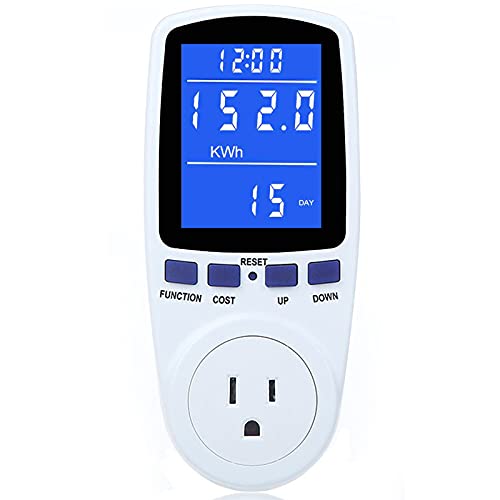
Upgraded Watt Power Meter Plug Home Electrical Usage Monitor Consumption, Energy Voltage Amps Kill Tester with Backlight, Overload Protection, 7 Modes Display
Various Monitoring Parameters: The power meter plug can monitor the power (W), energy (kWh), volts, amps, hertz, power…
As an affiliate, we earn on qualifying purchases.
As an affiliate, we earn on qualifying purchases.