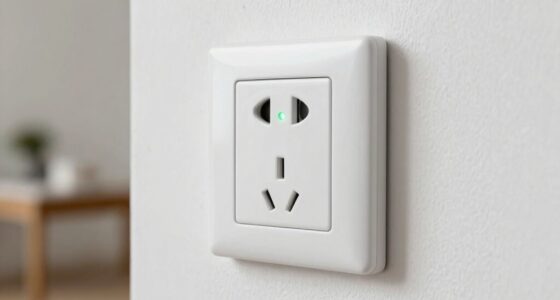
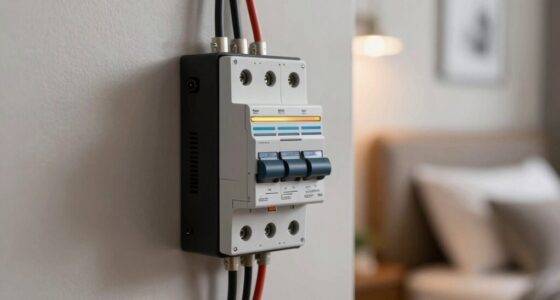
Overloading outlets is a common mistake that crucially increases fire risks in your home. When you connect too many devices or high-wattage appliances to a single outlet or power strip, wires can overheat, insulation can melt, and sparks can ignite fires behind your walls. Recognizing the signs early and spreading out your electrical load can prevent hazards. To learn how to protect your home and avoid these dangers, keep exploring this essential safety topic.

Get backup power and energy gear delivered free — and shop member deals
- Fast, free delivery on millions of items
- Access to Prime Big Deal Days deals on October 6–7
- Prime Video, Amazon Music and more included
Key Takeaways
- Overloading outlets causes wires to heat, increasing fire risk and potential damage inside walls.
- Using too many devices on one outlet or power strip can overload circuits beyond safe capacity.
- Signs like warm outlets, flickering lights, or burning smells indicate hidden electrical overloads.
- Proper distribution of appliances across circuits prevents excessive load and reduces fire hazards.
- Regular electrical inspections help identify overloads early and prevent fires within wall wiring.
surge protector with overload protection
As an affiliate, we earn on qualifying purchases.
As an affiliate, we earn on qualifying purchases.
Understanding How Overloading Outlets Occurs

Overloading outlets happens when you plug in too many devices or appliances into a single electrical outlet or power strip, exceeding its capacity. This occurs because each circuit has a specific capacity, called circuit capacity, which limits how much electrical load it can handle safely. When you add multiple devices, especially high-wattage ones, you strain this capacity. Additionally, poor outlet distribution plays a role—concentrating many devices into one outlet or power strip overloads it quickly. To prevent this, you should spread out your appliances across different outlets, ensuring you respect the circuit capacity. Proper outlet distribution helps avoid overloading and reduces the risk of electrical issues, keeping your home safer. Being aware of electrical load management can help you identify potential overload situations before they happen. Recognizing how circuit capacity impacts your electrical system is essential for preventing overloads and maintaining safety. Understanding these factors is key to avoiding dangerous overload situations and can be supported by understanding electrical safety principles to ensure your home remains protected. Additionally, using appropriate power strips with built-in overload protection can further safeguard your electrical system.
multi-outlet power strip with circuit breaker
As an affiliate, we earn on qualifying purchases.
As an affiliate, we earn on qualifying purchases.
The Dangers of Overloading: Fire Hazards Explained

When you overload an outlet, you put too much power through a single circuit, which can cause wires to heat up dangerously. Overheated wires increase the risk of electrical fires that can quickly spread throughout your home. Understanding these fire hazards helps you take steps to prevent potential disasters before they happen. Additionally, organic and natural juices are often used to promote overall health and wellness, but it is crucial to ensure electrical safety in your home to maintain a safe environment for healthy living. Recognizing the importance of personality traits can also help in understanding how individuals react to safety concerns and emergencies. Proper load‑planning and adherence to safety guidelines are essential in avoiding overloads and ensuring your home’s electrical system remains safe. Regular inspections and following manufacturer guidelines for devices like electric heated mattress pads can further reduce fire risks associated with electrical overloads. Being aware of fire safety measures and implementing them can significantly enhance your home’s overall safety.
Excessive Circuit Load
Have you ever wondered what makes a circuit dangerously overloaded? It’s usually because you’ve exceeded the circuit capacity, forcing wires and components beyond their safe limits. Overloading occurs when you plug in too many devices or high-wattage appliances on the same circuit. This stresses the wiring standards designed to handle specific loads, increasing the risk of overheating. To prevent this, watch for signs like frequent breaker trips or dimming lights. Keep in mind:
- Overloading can cause wires to heat up dangerously
- It strains breaker systems, risking failure
- Excessive load increases fire potential
- Proper distribution of devices helps maintain safety
- Recognizing circuit overload signs can be a form of spiritual guidance to better understand energy balances and personal readiness for change.
Staying within the recommended circuit capacity is key. Always follow wiring standards and consider professional advice for additional outlets or high-power needs. Electrical safety regulations are in place to help prevent such hazards and ensure your home remains secure.
Overheating Wires Risks
Exceeding a circuit’s capacity can cause wires to heat up rapidly, creating a serious fire hazard. When wires overheat, their insulation can degrade or melt, exposing the live conductors and increasing the risk of sparks or short circuits. Overloading outlets pushes current beyond what the wire insulation is designed to withstand, weakening its protective barrier. Modern circuit breakers are meant to trip and cut power when they detect overloads, but if they fail or are outdated, overheating wires become more dangerous. It’s essential to verify your wiring and circuit breakers are properly rated and maintained. Additionally, sector performance metrics can help identify when electrical systems might be at increased risk of failure. Regular inspections and avoiding overloading outlets are key to preventing this hidden hazard. Recognizing signs of overloaded circuits, such as frequent tripping or warm outlets, can also help prevent dangerous situations before they escalate. Implementing home safety measures can further reduce the risk of electrical fires caused by overloaded circuits.
Increased Fire Probability
Overloading outlets considerably raises the chances of a fire starting in your home. When you overload circuits, the wiring heats up beyond safe limits, increasing the risk of electrical failure. Poor electrical maintenance can exacerbate this danger, as worn or damaged wiring is more prone to sparking and overheating. To protect your home, guarantee proper circuit protection by using appropriately rated circuit breakers and avoiding daisy-chaining multiple devices. Overloading outlets also puts stress on your electrical system, which can cause circuit breakers to trip repeatedly or fail altogether. Regular inspections and mindful usage reduce these risks, keeping your home safer. Remember, keeping electrical loads within recommended limits is essential to prevent fires caused by overloaded circuits and compromised wiring. Utilizing efficient general ledger coding can help track electrical system maintenance and ensure safety standards are met.
As an affiliate, we earn on qualifying purchases.
Recognizing Signs of Electrical Overload in Your Home

Electrical overloads often show subtle signs before causing serious damage, so paying attention to these warning indicators can help you prevent fires. Start by checking your circuit breaker labels to verify circuits aren’t overloaded and that each breaker matches the correct area. During outlet inspection, look for warm or discolored outlets, which can signal excess heat. Flickering lights or frequent breaker trips also indicate overloads. Unusual buzzing sounds or a burning smell are urgent warning signs. Keep an eye on how many devices you plug into a single outlet—overloading can happen even if outlets seem fine initially. Recognizing these signs early allows you to take action before a fire risk develops, making your home safer. Regular inspections and awareness are your best defenses against electrical hazards. Additionally, understanding electrical load capacity helps prevent overloads and maintains home safety. Properly managing your electrical systems, including load balancing, can help you avoid dangerous overload situations and prevent electrical fires.
As an affiliate, we earn on qualifying purchases.
Common Devices and Practices That Increase Fire Risk

Using overloaded power strips or plugging multiple devices into a single extension cord can quickly create a fire hazard. Running high-wattage appliances on the same outlet increases the risk even further. Being mindful of these practices helps keep your home safe from electrical fires. Additionally, understanding the power load capacity of your outlets and devices can prevent overloads and potential hazards. Recognizing home electrical safety principles can further reduce the risk of fires caused by electrical overloads. Regularly inspecting your electrical system and avoiding overloaded circuits further minimizes fire risks in your home. Staying informed about family photoshoot fails humorously illustrates how unexpected issues can arise from overlooked hazards.
Overloaded Power Strips
Power strips are convenient, but plugging in too many devices can turn them into fire hazards. Overloading a power strip causes overheating and increases the risk of electrical fires. To stay safe, look for strips with surge protection, which can prevent damage from power surges that might ignite wires or components. Avoid daisy-chaining multiple strips together, and ensure outlets are spaced properly to avoid crowding. Keep these practices in mind:
- Limit the number of devices plugged into a single power strip
- Choose strips with built-in surge protection
- Avoid overloading beyond the rated capacity
- Ensure outlet spacing allows for safe, unobstructed connections
Frequent Extension Cord Use
Relying heavily on extension cords can considerably increase fire risks, especially when they’re used with high-wattage devices or kept running for long periods. Extension cord hazards include overheating, fraying, and damaging outlet wiring, which can ignite fires. To minimize risks, avoid daisy-chaining cords or using them as permanent solutions. Always follow outlet safety tips: use cords rated for your device’s power, unplug when not in use, and inspect cords regularly for damage. Remember, overloading outlets with multiple extension cords can cause overheating and increase fire danger.
| Safe Practices | Risks of Improper Use |
|---|---|
| Use cords rated for devices | Overloading leads to overheating |
| Unplug when idle | Damaged cords cause short circuits |
| Avoid daisy-chaining | Fire from frayed wiring |
| Regularly inspect cords | Using cords for permanent wiring |
High-Wower Appliance Load
High-wattage appliances like space heaters, hair dryers, and electric ovens draw significant current, which can easily overload outlets if not managed properly. These devices have high appliance wattage that quickly exceeds your circuit capacity, increasing fire risk. To stay safe, avoid plugging multiple high-wattage appliances into a single outlet or extension cord. Be aware of your circuit’s limits, typically 15 or 20 amps, and never push it beyond its capacity. Also, consider these practices:
- Using dedicated outlets for high-wattage devices
- Checking appliance wattage labels before plugging in
- Distributing heavy appliances across different circuits
- Replacing damaged cords or outlets immediately
Proper management of appliance wattage and circuit capacity helps prevent overheating and reduces the risk of electrical fires.
Preventative Measures to Protect Your Home

To reduce the risk of electrical fires caused by overloaded outlets, taking proactive steps is essential. Start with wiring upgrades if your home has outdated or damaged wiring, which can handle less current and increase fire risk. Modern wiring systems improve safety and capacity. Regular circuit breaker maintenance is equally important; ensure your breakers are functioning properly and trip when overloaded. This prevents excessive current from flowing through overloaded outlets. Avoid daisy-chaining multiple extension cords or plugging in too many devices into a single outlet. Use surge protectors and avoid overloading power strips. These simple measures help distribute electrical load evenly and protect your home from potential fire hazards. Staying vigilant and maintaining your electrical system considerably enhances your home’s safety.
When to Call a Professional Electrician

Knowing when to call a professional electrician is essential for your safety and to prevent electrical problems from worsening. If you notice signs like frequently tripped circuit breakers, burning smells, flickering lights, or outlets that feel warm, it’s time to seek expert help. As a homeowner, awareness of these warning signs helps you respond promptly. Guarantee the electrician you contact has proper qualifications, licenses, and experience to handle your electrical needs safely. Don’t try to fix complex issues yourself, especially if you’re unsure of the cause. Call a professional when:
- You experience persistent electrical faults
- Outlets or switches are damaged or malfunctioning
- You’re planning any significant renovations involving wiring
- You’re unsure about the safety or condition of your electrical system
Prompt action protects your home and loved ones.
Tips for Safe Use of Electrical Outlets

Using electrical outlets safely is key to preventing hazards like overloading and fires. Follow shared household tips and safe electrical practices to protect your home. Avoid plugging too many devices into one outlet, and never force multiple plugs into a single socket. Use power strips with built-in overload protection when needed. Regularly check outlets for signs of damage or overheating.
| Tip | Why it’s Important | How to Implement |
|---|---|---|
| Limit device connections | Prevents overloading outlets | Use fewer devices per outlet |
| Use proper extension cords | Avoid fire hazards from cheap cords | Choose quality cords & avoid daisy-chaining |
| Schedule inspections | Detect hidden risks early | Have a professional check your wiring periodically |
Frequently Asked Questions
How Can I Safely Add More Outlets Without Overloading Existing Circuits?
You can safely add more outlets by planning a circuit extension or outlet relocation. First, determine your current circuit load and avoid overloading it. If needed, hire a licensed electrician to install a new circuit or extend an existing one. They’ll ensure proper wiring and safety measures are in place, reducing fire risks. Always avoid DIY solutions that could compromise your home’s electrical safety and lead to dangerous overloads.
Are Surge Protectors Effective in Preventing Outlet Overload Fires?
Imagine plugging multiple high-power devices into a surge protector, thinking it’s enough. Surge protectors do help prevent damage from voltage spikes, but they have limitations and don’t prevent outlet overloads. To effectively prevent outlet overload fires, you should avoid overloading circuits and use proper outlet distribution. Relying solely on surge protectors isn’t enough; they’re designed for voltage surges, not overload prevention. Proper wiring and circuit management are essential for safety.
What Specific Household Devices Most Commonly Cause Electrical Overloads?
You often cause appliance overloads when plugging multiple devices into one outlet, especially high-power appliances like space heaters, microwaves, and hairdryers. Power strip hazards arise when you overuse extension cords or daisy-chain multiple strips, increasing fire risk. To stay safe, avoid connecting many high-wattage devices to a single outlet and never overload power strips. Distribute your appliances across different outlets to prevent dangerous overloads and reduce fire risks.
How Often Should I Have My Home’s Electrical System Inspected?
You should have your home’s electrical system inspected every 3 to 5 years. For example, if your electrical panel hasn’t been checked recently, outdated wiring or faulty circuit breakers could pose fire risks. Regular electrical panel maintenance and circuit breaker upgrades help guarantee safety. An inspection can catch issues early, prevent overloads, and keep your home safe from hidden fire hazards. Stay proactive to protect your loved ones and property.
Can Overloading Outlets Cause Long-Term Damage to My Electrical Wiring?
Overloading outlets can cause long-term damage to your electrical wiring, leading to faster outlet lifespan and wiring degradation. When you frequently overload, the excess heat weakens the wiring insulation and connections, increasing the risk of shorts or fires. To protect your home, avoid overloading outlets and have a professional inspect your electrical system regularly. This helps guarantee your wiring stays safe and functional over time.
Conclusion
If you ignore the signs and keep overloading your outlets, you’re playing with fire—literally risking a house fire that could destroy everything you love! Just one overloaded outlet could turn your home into a blazing inferno in the blink of an eye. Don’t gamble with safety—take action now, unplug those devices, and call a professional if needed. Protect your home, your family, and your life before it’s too late.
Fall Picks
fall essentials
As an affiliate, we earn on qualifying purchases.