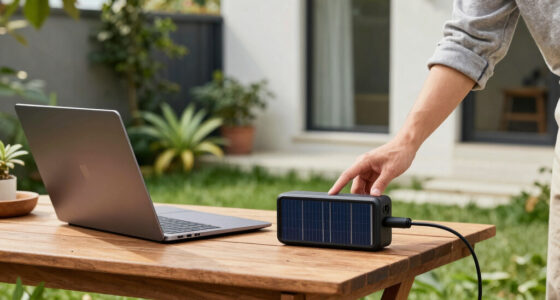
Choosing between MPPT and PWM controllers depends on your solar setup and energy goals. MPPT units adapt to variable sunlight, extracting more power, especially in partial shading or larger systems, but they cost more upfront. PWM controllers are simpler and cheaper, ideal for small, basic systems. Your decision impacts efficiency and battery health. Keep exploring to discover which controller best fits your needs and how to get the most energy savings.

Get backup power and energy gear delivered free with Prime
- Fast, free delivery on millions of items
- Prime Video, Amazon Music and more included
- Member-only deals all year
Key Takeaways
- MPPT controllers continuously track the maximum power point, extracting more energy from solar panels than PWM under variable conditions.
- PWM controllers are simpler and less expensive but less efficient, especially in partial shading or fluctuating sunlight.
- MPPT systems adapt to different voltages, maximizing energy harvest and improving battery health over time.
- For large or expandable setups, MPPT offers higher long-term savings despite higher initial costs.
- PWM is suitable for small, basic systems, while MPPT is ideal for maximizing efficiency in complex or demanding environments.
As an affiliate, we earn on qualifying purchases.
Understanding How MPPT and PWM Controllers Work

To understand how MPPT and PWM controllers work, recognizing that both manage the flow of power from your solar panels to your batteries, but they do so in different ways, is essential. With PWM controllers, you connect your solar panel wiring directly to the batteries, and the controller uses a switch to regulate power, which is simple but less efficient. MPPT controllers, on the other hand, constantly adjust their input to match the peak power point of your solar panels, extracting maximum energy. They also guarantee better battery compatibility by adapting to different battery voltages and types. This dynamic adjustment means MPPT systems are more efficient, especially in variable sunlight conditions, making them a smarter choice for optimizing energy transfer from your panels to your batteries. Additionally, understanding solar panel efficiency can help you choose the most suitable controller for your setup. As research continues to enhance AI security, developing smarter energy management systems becomes increasingly feasible. Moreover, selecting the right controller can significantly impact energy savings and overall system performance, especially when considering system monitoring capabilities that optimize operation. Incorporating advanced monitoring technologies can further improve system efficiency by providing real-time data and diagnostics.
As an affiliate, we earn on qualifying purchases.
Key Differences Between MPPT and PWM Technologies

When comparing MPPT and PWM technologies, you’ll notice differences in how efficiently they convert power, with MPPT generally offering higher effectiveness. Cost and installation requirements also vary, as MPPT controllers tend to be more expensive but more adaptable to different systems. Understanding their compatibility with your solar setup helps you choose the right option for ideal performance. Additionally, selecting a suitable controller involves assessing potential regulatory compliance challenges, which can influence your decision based on local regulations and industry standards. Proper understanding of nuclear safety protocols ensures the selected system meets all safety standards and reduces potential legal issues. Moreover, being aware of system integration considerations can help optimize overall energy management and performance. Furthermore, considering the cost-effectiveness of each option can guide you toward a sustainable investment aligned with your energy goals.
Efficiency in Power Conversion
Have you ever wondered why MPPT (Maximum Power Point Tracking) chargers often outperform PWM (Pulse Width Modulation) systems in efficiency? It’s because MPPT technology optimizes power extraction by continuously adjusting to the solar panel’s maximum power point, even with varying solar conditions. This results in better energy conversion, especially when dealing with complex solar panel wiring or inverter compatibility issues. Additionally, MPPT controllers adapt to changes in solar panel output, ensuring optimal energy harvesting throughout the day. They also tend to incorporate advanced technology integration, which enhances their performance and reliability. With MPPT, you get:
- Higher energy harvest, maximizing your system’s potential
- Better performance in fluctuating sunlight conditions
- More efficient power transfer, reducing waste and boosting overall system efficiency
- Reliable system operation due to better compatibility and adaptability in different setups
Furthermore, MPPT controllers can adjust their input voltage to match the optimal voltage point, which is particularly beneficial for multi-panel configurations that might have different electrical characteristics. An additional benefit is that MPPT controllers are often more suitable for complex system setups, providing greater flexibility and efficiency. Choosing MPPT means you harness more power, making your solar setup more effective and energy-saving.
Cost and Installation Needs
While MPPT chargers deliver higher efficiency, they also come with different costs and installation needs compared to PWM systems. If you’re working within budget constraints, PWM controllers are generally more affordable upfront. MPPT units tend to be pricier but can save you money long-term through better energy harvest. Installation complexity varies: PWM systems are easier and suitable for DIY installation, while MPPT units may require more technical skill and professional setup. Consider this table to compare the key differences:
| Feature | PWM | MPPT |
|---|---|---|
| Cost | Lower upfront cost | Higher upfront cost |
| Installation Needs | Simple, DIY friendly | More complex, professional needed |
| Efficiency | Moderate | High |
| Maintenance | Easier to service | May require specialized maintenance |
Additionally, solar charge controllers that incorporate MPPT technology often have advanced features that improve overall system performance and longevity. Choosing the right solar charge controller depends on your specific energy needs and technical expertise. Understanding these differences can help you make an informed decision for your energy system.
Compatibility With Solar Systems
Understanding the compatibility of MPPT and PWM chargers with your solar system is essential for peak performance. MPPT controllers excel in systems with battery storage and grid compatibility, maximizing energy harvest even in variable conditions. They adapt to different voltages, making them ideal for complex setups. Additionally, sustainable technology ensures your system remains efficient and environmentally friendly over time. MPPT controllers also tend to have a higher initial cost but provide better energy efficiency and longer-term savings. Considering the personality traits of system components can help you select the most reliable and compatible option for your needs. Proper system integration guarantees optimal operation and longevity of your solar setup. Recognizing the importance of component compatibility can help prevent system mismatches and improve overall performance. – Feel confident knowing your system’s efficiency is optimized with the right controller. – Ensure seamless integration with your grid connection for reliable power supply. – Maximize battery storage potential and protect your investment with compatible technology.
As an affiliate, we earn on qualifying purchases.
Efficiency and Performance in Varying Sunlight Conditions

When sunlight intensity changes throughout the day, the efficiency and performance of MPPT and PWM controllers diverge considerably. You’ll notice MPPT controllers adapt better to fluctuating conditions, optimizing energy even during partial shading or variable weather. They’re highly compatible with different solar panel types and weather-resistant, ensuring consistent output. In contrast, PWM controllers operate at a fixed voltage, making them less responsive to sunlight variations and potentially wasting energy. Here’s how they compare:
| Feature | MPPT | PWM |
|---|---|---|
| Sunlight Adaptability | High | Moderate |
| Solar Panel Compatibility | Broad | Limited |
| Weather Resistance | Excellent | Good |
| Performance in Clouds | Superior | Less efficient |
Additionally, MPPT controllers often feature advanced tracking capabilities, which further enhance their efficiency in variable conditions. Recognizing the different efficiencies of these controllers can help optimize solar energy systems and maximize long-term savings.
As an affiliate, we earn on qualifying purchases.
Cost and Installation Considerations
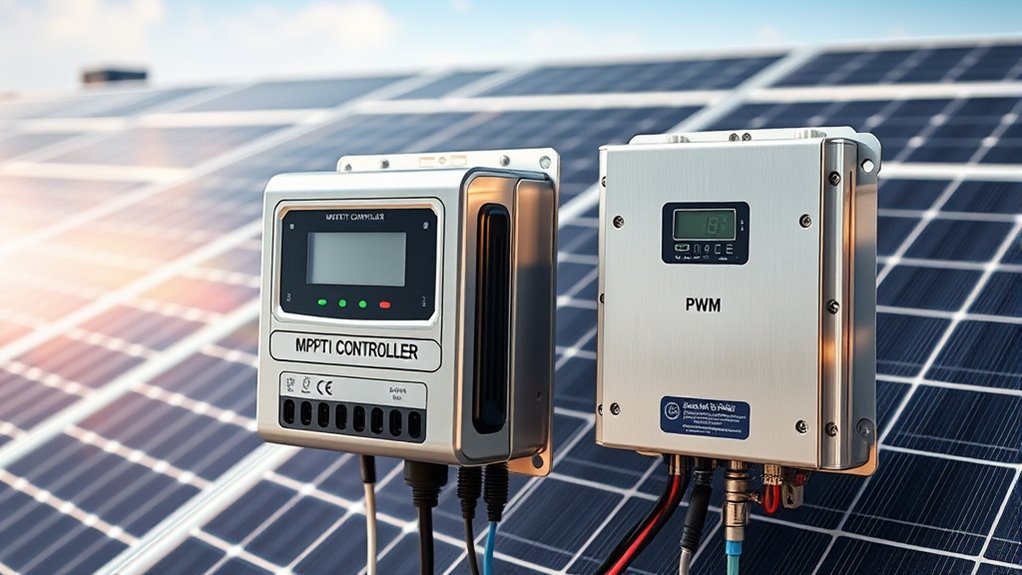
When choosing between MPPT and PWM, you’ll notice that MPPT controllers usually have a higher upfront cost. The installation process for MPPT systems can also be more complex and may require professional help. Considering these factors helps you decide which option fits your budget and skill level.
Upfront Cost Differences
The upfront costs of MPPT (Maximum Power Point Tracking) charge controllers are generally higher than those of PWM (Pulse Width Modulation) controllers, primarily due to their advanced technology and more complex components. This initial investment might seem steep, especially if you’re working within strict budget constraints. However, considering the long-term savings and efficiency gains can make the higher upfront expense worthwhile.
- Feel confident knowing you’re choosing technology that maximizes energy harvest.
- Avoid future expenses by investing in a more reliable, durable controller.
- Enjoy peace of mind with a solution that pays for itself over time through energy savings.
Installation Complexity
While MPPT controllers offer superior efficiency, they also come with increased installation complexity compared to PWM units. You’ll find wiring complexity is higher because MPPT systems often require more connections and precise wiring to optimize performance. The installation procedures for MPPT controllers can be more involved, needing careful configuration and calibration to guarantee everything runs smoothly. This might mean spending extra time on setup, especially if you’re unfamiliar with their advanced features. In contrast, PWM controllers are simpler to install, with straightforward wiring and fewer steps. If you choose MPPT, be prepared for more detailed planning and possibly professional assistance. Overall, while MPPT offers efficiency benefits, expect a more complex and potentially costlier installation process.
Impact on Battery Life and System Longevity
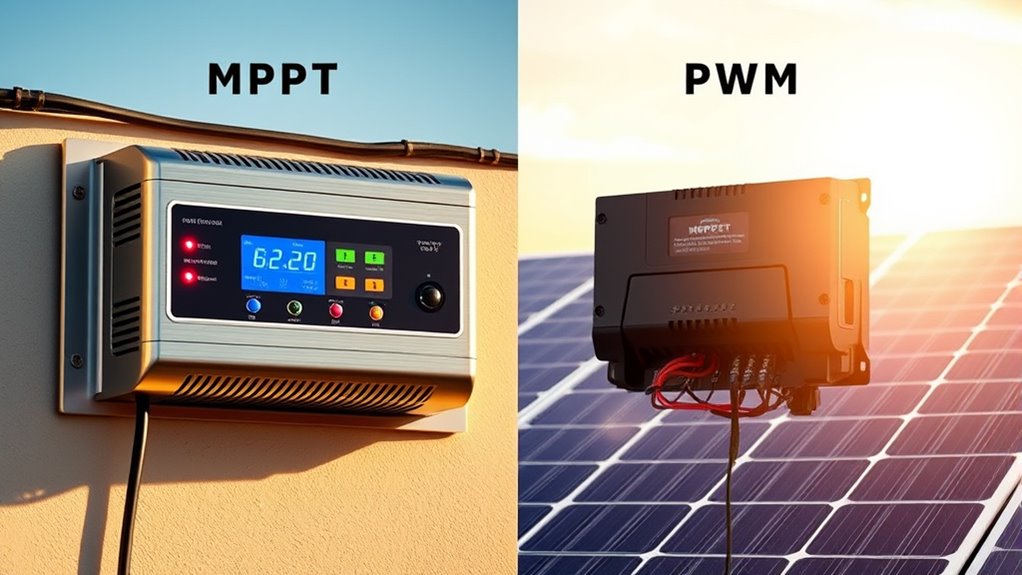
Choosing between MPPT and PWM charge controllers can substantially influence your battery’s lifespan and overall system durability. The right choice minimizes battery degradation and reduces system maintenance over time. MPPT controllers optimize charging, preventing over-voltage stress that accelerates battery wear, thereby extending battery life. Conversely, PWM controllers may cause more rapid battery degradation if not carefully managed, leading to frequent replacements. Your system’s longevity depends on how well you protect your batteries from unnecessary strain.
- Feel confident knowing your investment lasts longer and performs better.
- Avoid costly replacements and time-consuming maintenance.
- Ensure your system remains reliable through smarter, efficient charge management.
Ideal Applications for Each Controller Type
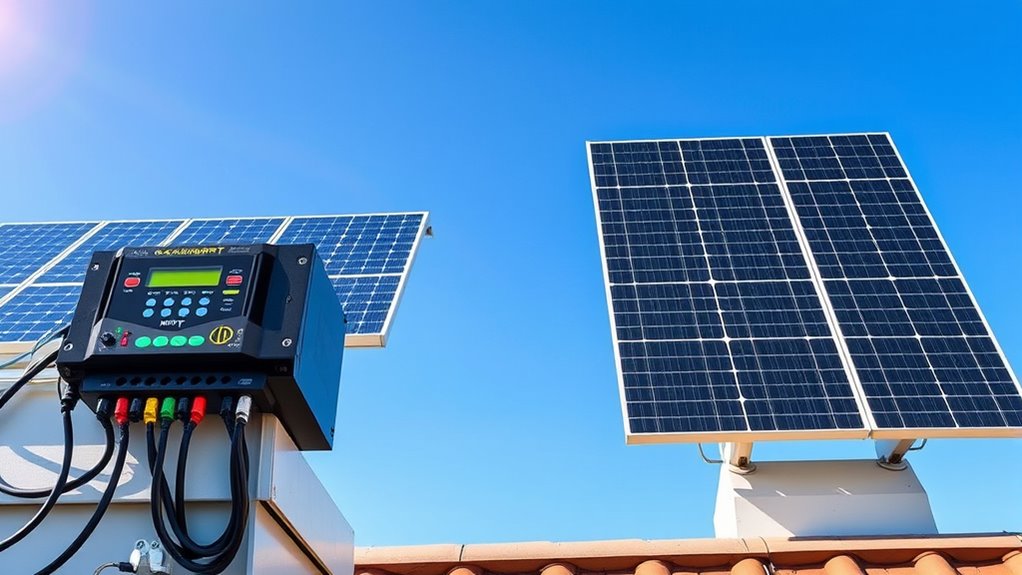
Different applications benefit from different types of charge controllers. If you’re focused on battery maintenance, especially with smaller or simple systems, PWM controllers work well due to their straightforward design and cost-effectiveness. They are ideal when system scalability isn’t a priority, such as in basic setups with limited panels and batteries. On the other hand, if you’re managing larger systems that require maximum energy harvest and flexible system expansion, MPPT controllers are the better choice. They adapt efficiently to varying sunlight conditions, maximizing power output and supporting system scalability. MPPT controllers also help maintain battery health over time, making them suitable for more complex or long-term installations. Understanding your system’s size and future growth potential guides you toward the controller that best matches your energy needs.
Making the Right Choice for Your Solar Setup

Selecting the right charge controller depends on your specific solar setup and energy goals. To make the best choice, consider factors like battery maintenance needs and shading effects. If shading frequently affects your panels, PWM controllers may struggle, while MPPT controllers adapt better, maximizing energy harvest. Think about your long-term energy independence and the importance of reliable power.
- Feel confident in your decision, knowing it supports your energy goals and protects your batteries.
- Avoid costly battery damage by choosing a controller suited for your maintenance routine.
- Maximize energy efficiency even in challenging shading conditions, ensuring your system performs at its best.
Choosing wisely guarantees your solar setup delivers consistent, reliable power while saving money and reducing stress.
Frequently Asked Questions
How Do Temperature Changes Affect MPPT and PWM Efficiency?
Temperature changes can impact both MPPT and PWM efficiency, but MPPT controllers handle temperature fluctuations better. They maintain temperature stability, reducing efficiency fluctuations caused by heat or cold. PWM controllers are more sensitive, so their efficiency drops more noticeably when temperatures vary. You’ll see better overall performance and energy savings with MPPT in environments with significant temperature shifts, making them a more reliable choice for consistent energy conversion.
Can MPPT Controllers Be Used With Off-Grid Solar Systems?
Think of MPPT controllers as skilled navigators that can steer your off-grid solar system through varying conditions. You can absolutely use MPPT controllers with off-grid setups—they’re compatible with most batteries and help maximize energy harvest. While installation might be slightly more complex than PWM, their efficiency benefits are worth it. They optimize power regardless of battery type, making them an excellent choice for reliable, self-sufficient off-grid solar systems.
Are There Environmental Factors Influencing Controller Durability?
Yes, environmental factors influence your controller’s durability. Exposure to moisture, salt, and extreme temperatures can cause corrosion, reducing lifespan. To protect your investment, choose a controller with corrosion resistance and a weatherproof design. Regularly inspect your system and guarantee proper sealing to prevent damage. By considering these factors, you ensure your controller remains reliable and efficient, even in harsh outdoor conditions.
How Does System Size Impact Controller Choice?
You might think larger systems need specialized controllers, but that’s not always true. System size impacts controller choice because bigger setups demand better system scalability and controller compatibility. MPPT controllers typically handle larger, more complex systems efficiently, adapting to varying conditions. On the other hand, PWM controllers suit smaller, simpler systems. So, assess your system’s scale carefully to guarantee your controller matches your energy needs and future growth plans.
What Maintenance Is Required for MPPT Versus PWM Controllers?
You need to regularly check your MPPT and PWM controllers to guarantee peak performance. MPPT controllers generally have a longer lifespan but might require more complex installation and maintenance due to their advanced features. PWM controllers are simpler and easier to maintain but may need replacement sooner. Both benefit from keeping connections clean and inspecting for corrosion or damage, helping extend their lifespan and ensure efficient energy transfer.
Conclusion
Choosing between MPPT and PWM controllers is like selecting the right compass for your solar journey. MPPT acts as a seasoned navigator, guiding you efficiently through changing sunlight, while PWM is a steady, reliable map for simpler terrains. Your decision shapes your system’s future—whether you chase the horizon of maximum energy or stick to the familiar path. Trust your needs, and let your choice be the guiding star that illuminates your solar voyage.
Halloween Picks
halloween
As an affiliate, we earn on qualifying purchases.