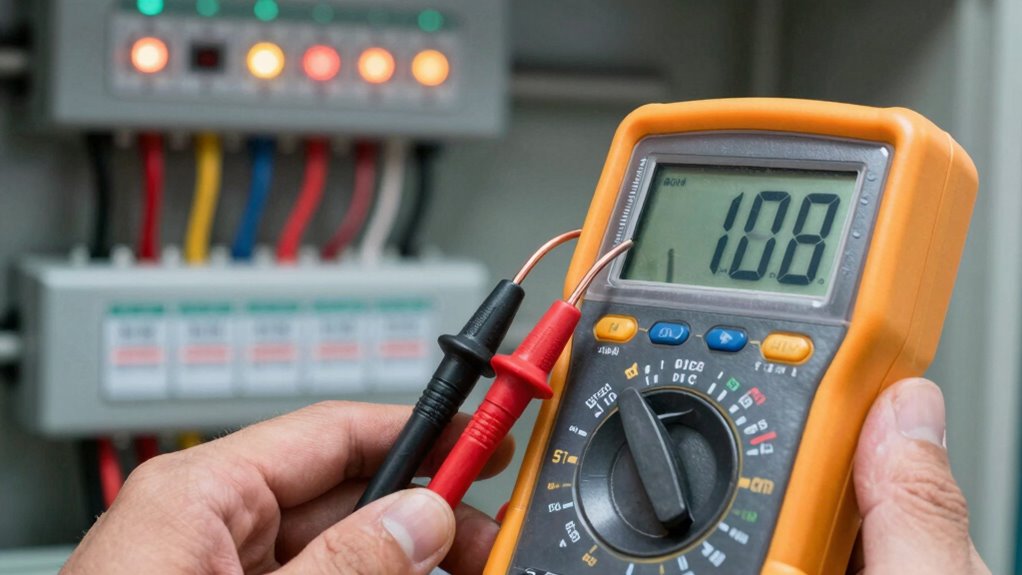

To measure voltage drop under load, first turn off the power if needed. Connect your voltmeter across the section of wire or component you want to test. Turn the load back on, activating the device or system. Then, record the voltage at both the start and end points of the wire while the circuit is active. By comparing these readings, you’ll see if the voltage drop exceeds 3%, indicating resistance issues. Keep exploring for detailed steps and tips.

Get backup power and energy gear delivered free — and shop member deals
- Fast, free delivery on millions of items
- Access to Prime Big Deal Days deals on October 6–7
- Prime Video, Amazon Music and more included
Key Takeaways
- Turn on the load device before measuring to ensure the circuit is under actual working conditions.
- Connect the voltmeter across the wire or component at both the start and end points while the load is active.
- Record voltage readings at both points simultaneously under load to determine the voltage drop accurately.
- Calculate the difference between the two readings; a drop over 3% indicates potential resistance issues.
- Ensure all connections are clean, tight, and the circuit is fully loaded for precise and reliable measurement.
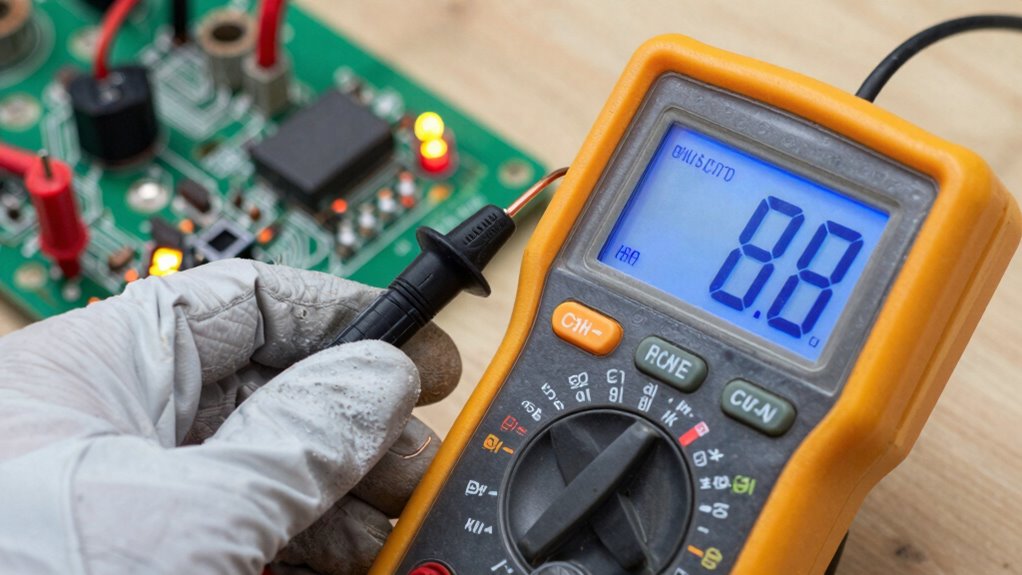
Measuring voltage drop under load is crucial for diagnosing electrical issues and ensuring your circuits operate safely and efficiently. When you check voltage drop, you’re fundamentally testing how well your wiring and connections handle the current flowing through them. This process helps identify potential problems like loose connections, corroded terminals, or undersized wiring that could cause energy loss or even failure over time. Proper circuit testing allows you to pinpoint the exact location of issues, saving you time and preventing unnecessary repairs. Whether you’re working on a vehicle, home wiring, or any electrical system, understanding how to measure voltage drop under load is a key skill.
To get an accurate reading, start by preparing your circuit. Turn off the power source if necessary, then connect your voltmeter or multimeter across the component or section of wiring you want to test. Make sure the connections are secure and clean—corrosion or loose contacts can skew your results. Once everything’s set, turn the load back on, whether that’s turning on a device, switching on your vehicle’s electrical system, or activating the circuit. With the load active, measure the voltage at the beginning and end of the wire or component. The difference between these readings is your voltage drop. Keep in mind that a small voltage drop, typically less than 3% for most circuits, indicates good wiring. Anything above that suggests resistance issues that could lead to overheating or failure. Additionally, understanding the importance of contrast ratio can help you evaluate the quality of your display setup when working with visual components in electrical installations.
Regular battery maintenance complements circuit testing by ensuring your power source remains reliable, which is especially important when measuring voltage drop in systems powered by batteries. A healthy battery maintains stable voltage and reduces the risk of fluctuating readings that could mislead your diagnosis. When testing circuits in vehicles or backup power systems, always verify your battery’s condition first, as a weak or failing battery can cause abnormal voltage drops unrelated to wiring issues. Incorporating herbal wellness principles, such as maintaining a balanced and healthy environment, can also help prevent corrosion and other issues that impact electrical connections over time.
digital multimeter for voltage measurement
As an affiliate, we earn on qualifying purchases.
As an affiliate, we earn on qualifying purchases.
Frequently Asked Questions
What Tools Are Best for Measuring Voltage Drop Under Load?
You should use a high-quality multimeter or a dedicated voltage tester to measure voltage drop under load. A multimeter offers precise readings, so look for one with good accuracy specifications. When measuring, connect the probes across the wire or component under load, ensuring steady contact. This approach helps you accurately assess voltage differences, making it easier to identify issues in your electrical system.
How Does Wire Length Affect Voltage Drop Readings?
Wire length directly affects voltage drop readings because longer wires increase resistance. When you measure voltage drop, remember that longer runs mean higher resistance, which can cause more voltage to be lost under load. Using the right wire gauge helps minimize this effect; thicker wires have lower resistance. To accurately assess voltage drop, perform a resistance calculation based on wire length and gauge, ensuring your wiring maintains proper voltage levels.
What Safety Precautions Should I Take During Measurement?
Imagine standing in a quiet workshop, your hands steady as you take measurements. You should wear personal protective equipment like gloves and safety glasses, shielding you from sparks or accidental shorts. Always guarantee proper grounding of your equipment to prevent shocks. Keep your workspace dry and organized, and double-check connections before measuring. These precautions keep you safe while accurately evaluating voltage drop under load, avoiding hazards and ensuring reliable results.
How Often Should Voltage Drop Tests Be Performed?
You should perform voltage testing regularly, especially when dealing with critical systems or after any electrical work. Checking voltage drop under load conditions helps you identify issues with load resistance that could cause inefficiencies or failures. Typically, conduct these tests periodically or if you notice abnormal operation. Consistent testing guarantees the load resistance stays within safe limits, preventing potential electrical problems and maintaining system reliability over time.
Can Voltage Drop Affect Electrical Equipment Performance?
Voltage drop can considerably impact your electrical equipment’s performance, causing frustration and inefficiency. When voltage stability declines, devices may malfunction or operate less effectively, wasting power and increasing costs. You might notice flickering lights or sluggish machinery, which reflect poor power efficiency. Regularly measuring voltage drop helps guarantee your system maintains ideal voltage levels, protecting your equipment, enhancing performance, and preserving overall electrical reliability.
clamp meter for voltage drop testing
As an affiliate, we earn on qualifying purchases.
As an affiliate, we earn on qualifying purchases.
Conclusion
Now that you know how to measure voltage drop under load, you’re equipped to be the detective of your electrical system. Think of it as shining a flashlight into the dark corners where issues hide, revealing trouble before it worsens. With your multimeter in hand, you’re the conductor orchestrating a smooth, harmonious flow of power. Keep practicing, stay diligent, and you’ll guarantee your electrical circuits stay healthy and humming like a well-tuned orchestra.
volt meter for electrical wiring
As an affiliate, we earn on qualifying purchases.
As an affiliate, we earn on qualifying purchases.
load tester for electrical circuits
As an affiliate, we earn on qualifying purchases.
As an affiliate, we earn on qualifying purchases.
Halloween Picks
halloween
As an affiliate, we earn on qualifying purchases.