Flickering lights can be caused by your wiring or external utility issues. If the flickering happens when you use certain appliances or seems random, it’s likely a wiring problem like loose connections or outdated wiring. On the other hand, if multiple lights flicker during storms or utility outages, it’s probably an external power supply issue. Understanding the signs helps you decide when to investigate further or call a professional for safety and comfort.
Key Takeaways
- Flickering lights during appliance use or voltage fluctuations often point to wiring or fixture issues inside your home.
- Utility-related flickering typically affects multiple fixtures simultaneously and occurs during known maintenance or outages.
- Sudden, irregular flickering with power surges or outages suggests external utility grid problems rather than internal wiring faults.
- Persistent flickering regardless of appliances or fixture types indicates wiring or electrical system problems within your home.
- Monitoring utility notifications and testing voltage stability can help determine if the issue is external or home-based.
Common Causes of Flickering Lights in Homes

Flickering lights in your home often happen because of simple, everyday issues. One common cause is voltage irregularities, which can cause lights to fluctuate unexpectedly. When the voltage supplied to your fixtures isn’t consistent, your lights may flicker or dim. Voltage fluctuations can be caused by various factors, including high-demand appliances or issues with your utility provider. Another factor is fixture compatibility; if your bulbs don’t match the fixture’s specifications, flickering can occur. For example, using a bulb with a wattage higher than the fixture’s limit can disrupt proper operation. Additionally, loose connections within the fixture or wiring can cause intermittent contact, leading to flickering. These issues are usually straightforward to fix once identified. Ensuring your fixtures are compatible with your bulbs and checking for stable voltage can often eliminate flickering caused by these everyday problems. Properly installed electrical components and wiring connections, along with regular maintenance, can help prevent flickering caused by wiring issues. Regularly monitoring your home’s electrical system and being attentive to unusual fluctuations can also help identify underlying problems before they lead to more serious issues.
Signs That Indicate a Local Wiring Issue
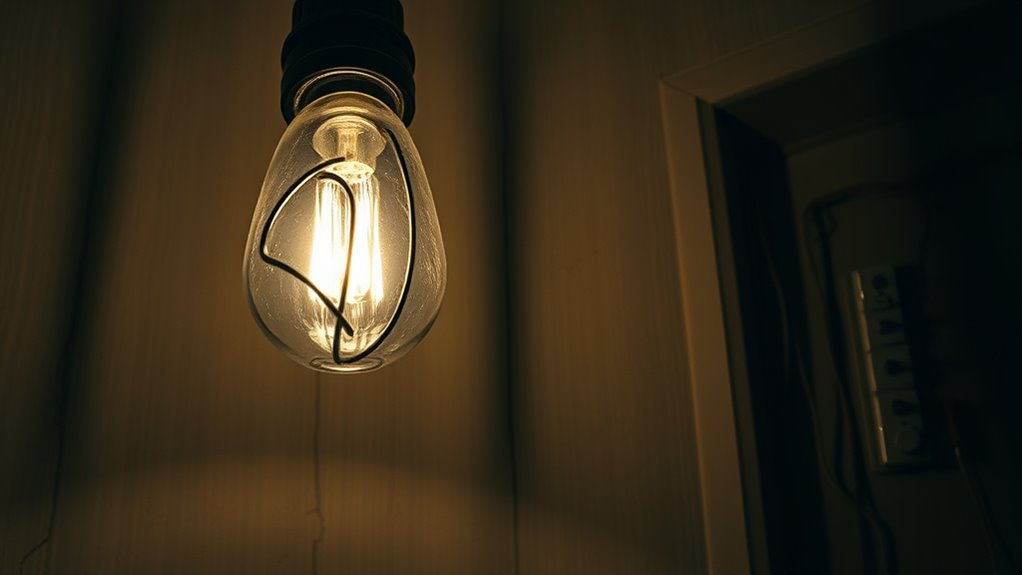
If your lights flicker whenever you use appliances or turn on multiple devices, it could signal a wiring problem. Frequent power surges or outages in your home are also warning signs that your wiring might be faulty. Recognizing these patterns early can help prevent more serious electrical issues down the line. A reliable electrical system is essential for safety and consistent performance. Additionally, monitoring air quality indicators can help identify environmental factors that may be affecting your electrical devices and overall home safety. Incorporating mindfulness techniques such as deep breathing or visualization can also help manage stress related to home maintenance concerns. Understanding the evolution of electrical safety standards can further aid in maintaining a secure home environment.
Flickering Lights During Power Use
When your lights flicker during periods of high power use, it can be a sign of a local wiring issue rather than a problem with the utility. You might notice your lighting fixtures dim or flicker whenever appliances like the air conditioner or washer turn on. This often indicates that your circuit breakers are struggling to handle the load or that wiring connections are loose. Faulty connections in your wiring can cause inconsistent power flow, leading to flickering. If the flickering coincides with heavy electrical use, it’s a sign you should inspect your wiring setup. Addressing these issues early can prevent more serious problems, like electrical fires or damage to your lighting fixtures. Consider consulting an electrician to diagnose and fix the wiring to ensure safety and reliable power.
Frequent Power Surges or Outages
Frequent power surges or outages are often signs of underlying wiring issues within your home. These problems can disrupt your lighting design, causing flickering or inconsistent brightness. When wiring isn’t properly grounded or has loose connections, power fluctuations become common, risking damage to your appliances and undermining energy conservation efforts. You might notice your lights dimming suddenly or flickering during normal use, indicating that your system isn’t delivering stable electricity. Addressing these issues promptly helps guarantee your lighting design functions smoothly and efficiently. It also prevents unnecessary energy waste caused by power interruptions. Regular inspection and maintenance of your wiring can keep surges and outages at bay, safeguarding your home’s electrical system and supporting your energy-saving goals. Additionally, understanding the role of grounding systems in electrical safety can help prevent these issues from recurring. Knowing how proper wiring practices contribute to electrical stability can further enhance your home’s safety and reliability. Ensuring your home’s electrical system adheres to safety standards can significantly reduce the risk of surges and outages. Implementing diagnostic tools can aid in identifying potential wiring problems before they lead to more serious issues. Incorporating regular maintenance can also help detect issues early, minimizing the chances of power fluctuations disrupting your home.
Indicators of External Utilities-Related Problems
Noticing flickering lights or sudden power surges often signals a problem originating outside your home. One key indicator is inconsistent power flow, which may result from issues within the power grid itself. If multiple appliances flicker simultaneously or if the flickering occurs during times of known utility maintenance, it’s likely an external problem. Utility companies sometimes perform maintenance that temporarily affects voltage stability, causing fluctuations. Additionally, frequent outages or brownouts in your area suggest external issues rather than a problem with your wiring. Monitoring local utility notifications or news can help confirm if maintenance or repairs are underway. Recognizing these signals helps you determine whether to contact your utility provider or focus on troubleshooting your electrical system. Understanding power fluctuations can help you better interpret these external indicators, especially since power grid stability directly influences your home’s electrical performance. Being aware of external utility issues ensures you respond appropriately to power irregularities.
How to Safely Check Your Electrical System
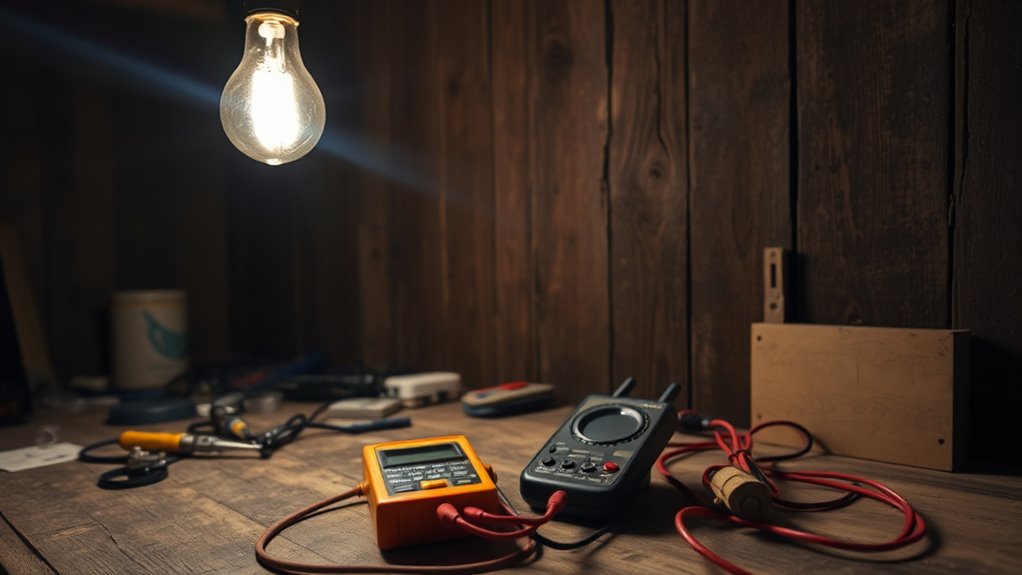
If you suspect the flickering lights are caused by an issue within your home rather than the utility, it’s important to check your electrical system carefully and safely. Start by inspecting outlets and switches for signs of loose connections or sparks. Turn off power before examining your breaker panel for circuit overloads—overloaded circuits can cause flickering. Check for grounding issues by ensuring all grounding wires are secure and intact. Use a multimeter to test voltage consistency across outlets. Avoid touching wires directly; if unsure, consider calling a professional. Here’s a quick guide to common issues:
| Issue | Signs to Look For | Action |
|---|---|---|
| Grounding issues | Shocks, flickering lights | Verify grounding connections are secure |
| Circuit overloads | Lights dimming, frequent trips | Distribute load or upgrade circuits |
| Loose wiring | Sparks, flickering, buzzing | Tighten connections or replace faulty wiring |
| Faulty switches | Intermittent operation | Replace defective switches |
| Damaged outlets | Burning smell, sparks | Replace damaged outlets |
| Wiring connections | Unusual noises or inconsistent operation | Inspect and ensure all wiring is properly secured |
When to Call a Licensed Electrician

If your lights flicker persistently or you experience sudden power outages, it’s time to call a licensed electrician. These signs can indicate serious electrical issues that demand professional attention. Don’t wait—getting expert help can prevent potential hazards and costly repairs. Additionally, persistent flickering may sometimes be related to underlying electrical problems that could benefit from an electrical inspection to ensure safety and proper functioning. Understanding the importance of Home Essentials can help you recognize when issues extend beyond simple troubleshooting. Regular seasonal checklists for electrical safety and maintenance can also help identify early warning signs before they become serious problems.
Persistent Flickering Signs
Persistent flickering lights can signal more than just a minor inconvenience; they may indicate underlying electrical issues that require professional attention. If you notice flickering that persists, it could be a sign of voltage stability problems or outdated wiring. Addressing these issues promptly helps prevent damage and safety hazards. Consider calling a licensed electrician if you observe:
- Flickering occurs when appliances turn on or off
- Lights dim or brighten unexpectedly
- Multiple fixtures flicker simultaneously
- You notice buzzing or crackling sounds
- Recent home renovations involved wiring upgrades or repairs
These signs suggest you need a professional to assess your wiring and ensure proper voltage stability. Recognizing attention to detail can also help identify counterfeit or manipulated electrical components that might contribute to flickering. Ignoring persistent flickering can lead to more serious electrical failures, so don’t delay in seeking expert help. Proper electrical inspection can identify hidden issues before they escalate, and understanding electrical safety best practices is crucial to prevent potential hazards.
Sudden Power Outages
Sudden power outages can be more than just an inconvenience; they often signal underlying electrical problems that require professional attention. If your lights go out unexpectedly, check whether your solar panels or generator backup are functioning properly. Faulty connections or overloads in these systems can trigger outages, but persistent issues may indicate wiring problems or utility grid faults. If the outage isn’t related to your backup systems, it’s time to call a licensed electrician. They can assess your electrical panel, wiring, and connections to identify hidden issues. Don’t ignore frequent outages or those that occur during storms or high-demand periods. Prompt professional inspection guarantees your system’s safety and reliability, preventing future outages and protecting your home’s electrical infrastructure.
Understanding Power Fluctuations and Their Effects
Power fluctuations occur when the voltage supplied to your home varies unexpectedly, often causing lights to flicker or appliances to behave erratically. These fluctuations can weaken voltage stability and compromise circuit integrity, leading to inconsistent performance. Understanding what causes these variations helps you identify whether the issue is with your home’s wiring or the utility.
Power fluctuations cause flickering lights and erratic appliances, signaling voltage instability in your home.
- Variations in demand during peak hours
- Faulty wiring or connections
- Utility grid instability
- Overloaded circuits
- Sudden appliance start-ups
The Impact of Appliances on Lighting Stability
Appliances can substantially impact your lighting stability, especially when they draw high amounts of current or start up unexpectedly. Large appliances like refrigerators, air conditioners, or washing machines often cause voltage dips that lead to flickering. Poor lighting design may not account for these power surges, making flicker more noticeable. Additionally, energy-efficient appliances with variable speed motors can create inconsistent power demands, further disrupting stable lighting. To reduce flickering, consider how appliances are integrated into your wiring system. Upgrading your electrical system or using dedicated circuits for high-power devices can help. Improving lighting design by choosing compatible fixtures and bulbs also minimizes flicker caused by appliance fluctuations. Focusing on energy efficiency benefits both your appliances and lighting stability, creating a more consistent and comfortable environment.
Preventative Measures to Reduce Flickering
To effectively reduce flickering, you should implement preventative measures that address both your electrical system and lighting setup. Regular lighting maintenance guarantees bulbs and fixtures are functioning properly, preventing loose connections that cause flickering. Conduct circuit inspections to identify overloaded or faulty circuits that may contribute to inconsistent lighting. Consider upgrading outdated wiring or switches to improve overall stability. Investing in dimmer switches and surge protectors can also help minimize flickering caused by power fluctuations. Additionally, keeping your electrical panel organized and free of debris reduces potential hazards.
Regular maintenance and upgrades prevent flickering and ensure safe, stable lighting.
- Schedule routine lighting maintenance
- Perform regular circuit inspections
- Upgrade old wiring and components
- Use surge protectors and dimmer switches
- Keep your electrical panel tidy
What Your Utility Company Can Do About External Power Problems
When external power issues arise, utility companies play a crucial role in addressing them quickly and effectively. They perform routine utility maintenance to identify and fix potential problems before they cause flickering or outages. When a power disturbance occurs, your utility will send outage notifications to keep you informed about the situation and estimated repair times. Utility crews work around the clock to restore power, troubleshoot lines, and repair damaged equipment. They may also upgrade infrastructure to prevent future issues. Staying alert to outage notifications ensures you’re aware of ongoing repairs and can plan accordingly. By maintaining their systems and communicating clearly, utility companies help minimize the impact of external power problems on your home and ensure your lights stay steady whenever possible.
Frequently Asked Questions
Can Flickering Lights Cause Permanent Electrical Damage?
Flickering lights can cause permanent electrical damage if they result from voltage fluctuations or circuit overloads. When voltage fluctuates, it stresses your electrical components, potentially damaging sensitive devices over time. Circuit overloads can generate excessive heat, weakening wiring and connections. If flickering persists, it’s essential to address the issue promptly by consulting an electrician to prevent long-term damage and guarantee your electrical system remains safe and reliable.
How Do I Differentiate Between Internal and External Power Issues?
Your flickering lights are trying to tell you something dramatic—either a power fluctuation or wiring issues. To tell the difference, observe if the flickering happens randomly or during specific times, indicating internal problems, or if it’s consistent regardless of your appliances, pointing to external utility issues. You can also check your circuit breaker for internal wiring problems or contact your utility for external power concerns.
Are Smart Home Devices More Susceptible to Flickering Lights?
Yes, smart home devices can make lights flicker more noticeable, especially if they’re not fully compatible or if their power draw varies. If your smart devices aren’t compatible with your lighting system, flickering might happen more frequently. To prevent this, check device compatibility before installation and make sure your electrical system can handle the added load. Upgrading your wiring or choosing compatible smart devices can help reduce flickering.
What Measures Can Prevent Flickering During Storms or Outages?
To keep your lights steady during storms or outages, you should consider installing a surge protector to shield your devices from power surges. Upgrading your wiring can also help guarantee a more reliable flow of electricity. These measures act like a calming lullaby for your electrical system, reducing flickering and protecting your home’s electronics, so you can enjoy peace of mind even when the weather gets wild.
How Often Should I Have My Home’s Electrical System Inspected?
You should have your home’s electrical system inspected at least every 3 to 5 years to guarantee electrical safety. Regular inspections help identify potential issues, like loose connections or outdated wiring, before they cause flickering or hazards. If you notice frequent flickering or other electrical problems, schedule an inspection sooner. Keeping up with inspection frequency enhances safety, prevents outages, and maintains your home’s electrical efficiency.
Conclusion
To keep your lights steady, stay alert to signs of wiring issues, monitor your appliances, and communicate with your utility company. Regular inspections, timely repairs, and proactive prevention help you avoid flickering frustrations. By understanding the causes, recognizing the signs, and knowing when to seek professional help, you take control of your home’s electrical health. Stay informed, stay prepared, and keep your lights shining bright and flicker-free.