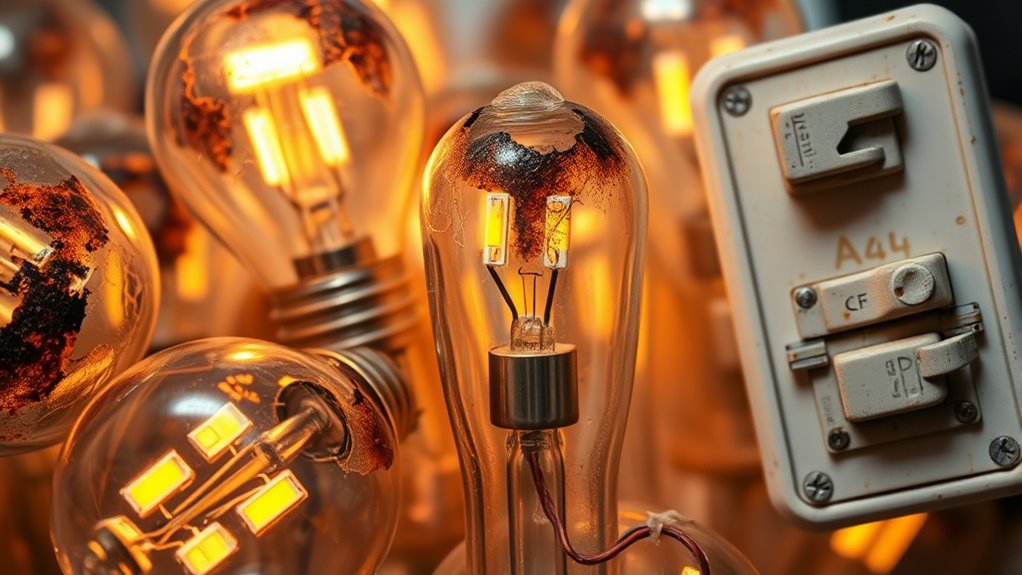

Your LED bulbs may burn out early if they overheat, since excessive heat causes internal components to degrade faster. Poor-quality drivers can cause voltage fluctuations, leading to early failure. Additionally, incompatible switches and dimmers designed for older bulbs can create flickering and stress your LEDs. To keep your bulbs lasting longer, guarantee proper heat dissipation, use high-quality drivers, and choose compatible switches. Continue exploring to find out how each factor can be managed for better longevity.

Get backup power and energy gear delivered free with Prime
- Fast, free delivery on millions of items
- Prime Video, Amazon Music and more included
- Member-only deals all year
Key Takeaways
- Excess heat from poor ventilation or lack of heat sinks accelerates internal component degradation.
- Low-quality or incompatible drivers cause voltage fluctuations, leading to premature LED failure.
- Using incompatible switches or dimmers can create electrical stress, flickering, and reduce LED lifespan.
- Environmental factors like power surges and frequent switching increase internal wear and shorten longevity.
- Degradation of phosphor coatings due to improper color temperature selection diminishes LED performance over time.
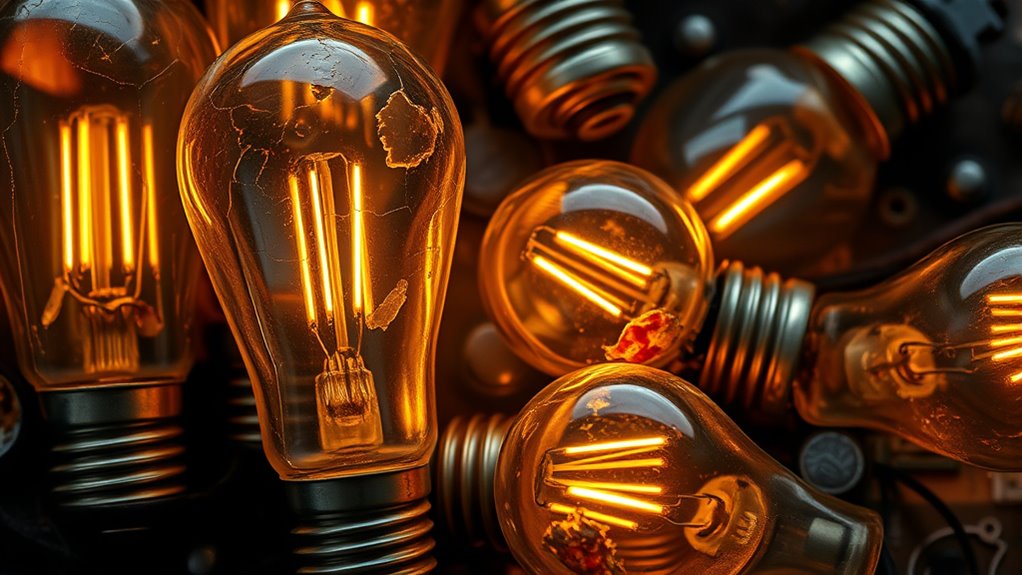
Have you ever wondered how long your LED bulbs actually last? The lifespan of an LED isn’t just about the number of hours it’s rated for; many factors can cause a bulb to die sooner than expected. One of the key elements influencing longevity is heat. LEDs are sensitive to high temperatures, which can degrade their internal components over time. If your fixture isn’t well-ventilated or if the bulb is enclosed in a tight space, heat builds up, and this excess heat accelerates wear. This is why choosing bulbs with proper heat dissipation features is crucial. Additionally, the quality of the driver — the component that supplies power to the LED — plays a significant role. Cheap or poorly designed drivers can fluctuate voltage or produce inconsistent current, leading to premature failure. When the driver fails, the LED cannot operate, regardless of how good the bulb itself is.
Switches and dimmers also impact an LED’s lifespan. Not all switches are compatible with LED technology, especially older dimmers designed for incandescent bulbs. Using incompatible dimming switches can cause flickering, buzzing, or erratic behavior, which stresses the LED and shortens its life. If you want to incorporate dimming, make sure your LED bulbs are rated for dimming compatibility. This ensures smooth operation and reduces stress on the bulb’s internal components. Also, pay attention to the color temperature. While it might seem like a minor detail, choosing the right color temperature affects how your LED performs over time. Certain temperatures, like very cool or very warm shades, can sometimes cause the phosphor coating inside the bulb to degrade faster if not properly formulated, reducing the overall lifespan.
Furthermore, the quality and consistency of electrical supply can influence how long your LEDs last. Power surges, inconsistent voltage, or frequent switching on and off can all wear down the internal parts faster. That’s why using surge protectors or ensuring your electrical system is stable can help extend your LED’s life. Proper heat management is also essential to prevent early failure and maximize lifespan. Ultimately, understanding the interplay between heat management, driver quality, switch compatibility, and color temperature helps you select bulbs that last longer. Investing in high-quality LEDs with proper heat sinks, compatible dimming options, and suitable color temperatures will save you money and frustration in the long run. Remember, your LED’s longevity isn’t just about the bulb itself but also about the environment and components surrounding it. Taking these factors into account ensures you get the most out of your lighting investment.
As an affiliate, we earn on qualifying purchases.
Frequently Asked Questions
Can Using Dimmers Shorten LED Bulb Lifespan?
Using dimmers can shorten your LED bulb’s lifespan if they’re not dimming compatible. Incompatible dimmers cause flickering and stress on the bulb’s driver, leading to early failure. Additionally, electrical surges from incompatible switches can damage LEDs over time. To guarantee longevity, always choose LED bulbs designed for dimmers and install compatible dimming switches. Proper setup reduces stress and keeps your bulbs working longer.
Do LED Bulbs Have a Recommended Maximum Switching Cycle?
Think of your LED bulb’s switching cycle as a dance partner’s tempo. Most LED bulbs have recommended maximum switching cycles, usually around 30,000 to 50,000. Exceeding these limits can wear out internal components faster, shortening their lifespan. To keep your bulbs shining longer, avoid frequent on-off cycles and stick within the manufacturer’s lifespan limits, ensuring your lighting keeps dancing smoothly for years to come.
How Does Ambient Temperature Affect LED Longevity?
Ambient temperature greatly impacts your LED bulb’s longevity. Higher temperatures cause heat stress, which accelerates thermal management issues inside the bulb. If your environment is too hot, it can lead to premature failure by damaging components like drivers and phosphor layers. To extend your LED’s lifespan, make certain proper ventilation and keep the ambient temperature within recommended ranges, helping the bulb manage heat effectively and avoid thermal stress.
Are Certain Brands More Durable Than Others?
Some brands are more durable than others because they prioritize brand reliability and product consistency. You can visualize this as a sturdy bridge built with high-quality materials versus a fragile one. Reputable brands often use better drivers and heat management, making their LEDs last longer. When choosing, look for trusted brands with positive reviews, as they typically deliver more reliable and consistent performance, reducing the likelihood of early failure.
Can Improper Installation Cause Premature LED Failure?
Yes, improper installation can cause premature LED failure. Wiring issues, like loose connections or incorrect wiring, can lead to electrical surges that damage the LED components. Additionally, if you don’t follow the manufacturer’s instructions, it increases the risk of overheating or exposing the bulb to voltage fluctuations. Always guarantee proper wiring and secure connections to extend your LED bulb’s lifespan and prevent early failure.
As an affiliate, we earn on qualifying purchases.
Conclusion
To keep your LED bulbs shining longer, remember that heat, faulty drivers, and switches are common culprits behind early failures. Did you know that poor heat management can cut an LED’s lifespan by up to 50%? By ensuring proper ventilation, using quality drivers, and switching with care, you can extend your bulbs’ life. Take these simple steps, and enjoy brighter, long-lasting lighting—saving you money and hassle in the long run.
As an affiliate, we earn on qualifying purchases.
As an affiliate, we earn on qualifying purchases.
Halloween Picks
halloween
As an affiliate, we earn on qualifying purchases.