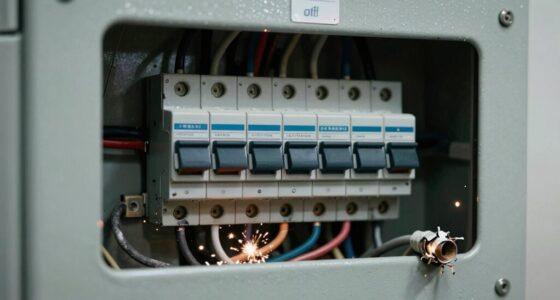
To prove false tripping from surge strips, start by unplugging all devices and resetting the strip and circuit breaker. Reconnect devices one at a time, noting if the strip trips without any load. Check the surge strip for visible damage or indicator lights. If the problem persists, test with a different surge strip or outlet. Persistent issues may stem from wiring or circuit faults—understanding these clues helps you get to the root cause.

Get backup power and energy gear delivered free — and shop member deals
- Fast, free delivery on millions of items
- Access to Prime Big Deal Days deals on October 6–7
- Prime Video, Amazon Music and more included
Key Takeaways
- Unplug all devices, reset the surge strip and circuit breaker, then reconnect devices one at a time to identify false trips.
- Check surge strip indicator lights and inspect for visible damage or wear to verify proper functioning.
- Test the surge strip with a multimeter to ensure it provides correct voltage and protection; replace if faulty.
- Use a different surge strip or outlet to determine if the issue persists, indicating a possible wiring or circuit problem.
- Consult a professional electrician if trips continue after troubleshooting, as underlying wiring or circuit issues may cause false trips.
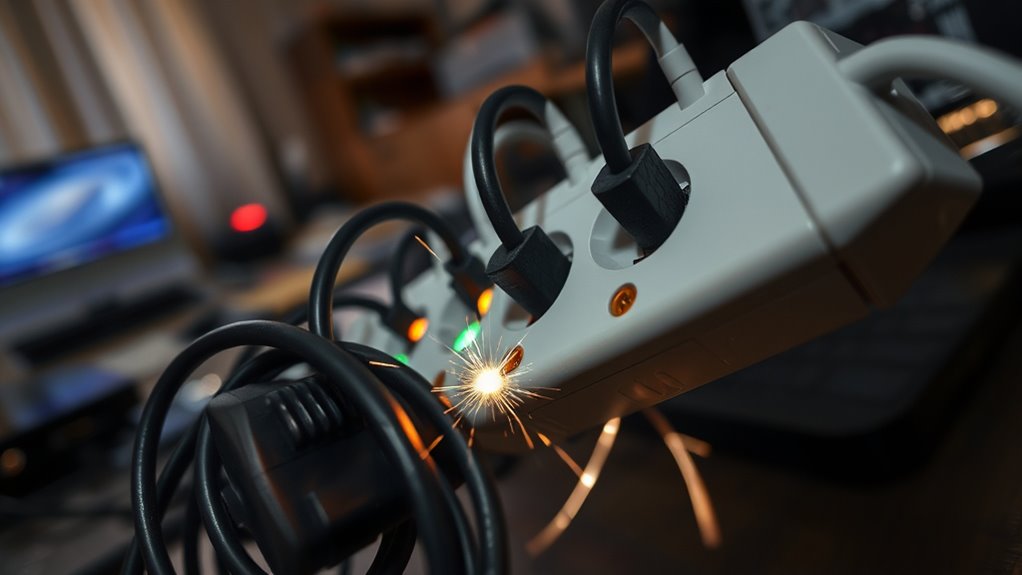
If your surge strip keeps tripping the circuit breaker, it can be frustrating and confusing. You might wonder whether the surge strip is faulty or if there’s a deeper electrical issue. Understanding surge strip safety is vital here, especially when it comes to electrical appliance compatibility. Not all devices are designed to work seamlessly with surge strips, and mismatched appliances can cause unnecessary trips. To determine if your surge strip is the culprit, start by unplugging all devices connected to it. Reset the circuit breaker and then plug in only one device at a time, checking if the breaker trips again. This process helps you identify whether a specific appliance is causing the problem or if the surge strip itself is faulty. Sometimes, surge strips trip because they aren’t compatible with certain high-power appliances. For example, heavy-duty appliances like space heaters or power tools draw more current and can overload a surge strip that isn’t rated for such loads. Always check the surge strip’s maximum load capacity, usually indicated on its label, and compare it to the power requirements of your connected devices. If your appliances exceed this limit, it’s best to connect them directly to a properly rated wall outlet or use a dedicated circuit. Ignoring electrical appliance compatibility can lead to frequent false tripping, risking damage to your devices and safety hazards.
Unplug devices, reset breaker, then reconnect one at a time to find the tripping culprit.
Another key aspect to consider is whether your surge strip is functioning properly. Surge strips are designed to protect your devices from voltage spikes, but if they’re damaged or worn out, they might trip prematurely. Look for visible signs of damage, such as scorch marks or frayed cords, which indicate it’s time to replace the surge strip. Also, verify that the surge protection features are active; many strips have indicator lights that show their status. A defective surge strip compromises safety and can cause false trips, so if you suspect this, replacing it is the safest choice. Additionally, understanding the role of vetted surge protection devices can help you select safer and more reliable options. Lastly, make certain that your electrical system is in good shape. Sometimes, frequent trips are symptoms of larger issues like faulty wiring, overloaded circuits, or a circuit breaker that’s working improperly. If unplugging devices and checking the surge strip doesn’t resolve the problem, consider consulting an electrician. They can evaluate your wiring, confirm that your electrical appliances are compatible, and ensure your home’s electrical safety. Proper surge strip safety isn’t just about the device itself but also about understanding your electrical system and the appliances you connect. By systematically troubleshooting and being mindful of appliance compatibility, you can prevent false tripping and keep your devices protected.
surge protector with indicator lights
As an affiliate, we earn on qualifying purchases.
As an affiliate, we earn on qualifying purchases.
Frequently Asked Questions
Can Surge Strips Cause Electrical Fires?
Yes, surge strips can cause electrical fires if they’re faulty or overloaded. Electrical surges can damage the strip’s internal components, increasing fire hazards. If you notice a surge strip overheating, sparking, or smelling burnt, unplug it immediately. Regularly inspecting and replacing damaged strips helps prevent fire risks. Avoid plugging high-wattage appliances into surge strips, and never overload them, as this considerably reduces the chance of an electrical fire.
How Often Should Surge Strips Be Replaced?
You should replace your surge strip every 3 to 5 years, depending on its lifespan and usage. Regularly inspect it for signs of damage, such as frayed cords or scorch marks, and replace it immediately if you notice any issues. The replacement frequency depends on how often you use it and the environment. Prioritize safety by updating your surge strip regularly to prevent potential electrical hazards.
Do All Surge Strips Have Built-In Circuit Breakers?
Think of surge strips as vigilant gatekeepers—some have built-in circuit breakers, while others don’t. Not all surge strips include these safety features, which are essential for preventing electrical overloads. Surge strip safety depends on the presence of circuit breakers that trip during overloads, protecting your devices and home. Always check your surge strip’s specifications to confirm it has this critical safety feature to avoid electrical hazards.
Can Faulty Wiring Affect Surge Strip Performance?
Faulty wiring can definitely affect surge strip performance. Wiring issues and electrical faults create inconsistent power flow, causing surge strips to trip or malfunction unexpectedly. If your surge strip keeps shutting off, check for loose connections, damaged cords, or signs of faulty wiring. Addressing these electrical faults promptly ensures your surge strip works reliably and protects your devices from power surges. Always consult a professional if you’re unsure about wiring problems.
Are There Safety Certifications for Surge Strips?
Imagine flipping a switch and knowing your surge strip meets safety certifications, guaranteeing it’s built to the surge strip standards. Yes, most surge strips carry safety certifications like UL or ETL, which verify they comply with strict safety standards. These certifications protect you from electrical hazards and ensure reliable performance. Always check for these labels before purchasing, so you can confidently power your devices, knowing they’re safe and tested.
multimeter for electrical testing
As an affiliate, we earn on qualifying purchases.
As an affiliate, we earn on qualifying purchases.
Conclusion
In the end, understanding how surge strips can false trip isn’t just about fixing a nuisance; it’s about reclaiming control over your safety. Don’t let a simple device lull you into a false sense of security—your home’s electrical health depends on your awareness. Remember, a surge strip’s trip isn’t just a glitch; it’s a warning sign. Stay vigilant, stay safe—because in electrical safety, ignorance isn’t bliss, it’s danger dressed up as convenience.
As an affiliate, we earn on qualifying purchases.
As an affiliate, we earn on qualifying purchases.
Fall Picks
fall essentials
As an affiliate, we earn on qualifying purchases.