
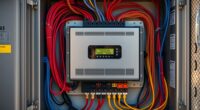
DC arc fault detection is a crucial safety technology that helps you identify dangerous high-temperature arcs caused by damaged wiring or components. It works by monitoring electrical parameters like sudden current spikes and electromagnetic signals, allowing you to respond quickly before fires or damage occur. By using sensors and automatic shutdown features, systems can prevent catastrophic failures. Staying informed about these detection methods ensures your system remains safe and reliable—if you’re interested, there’s more to discover on how this technology works.
Key Takeaways
- DC arc fault detection involves monitoring electrical anomalies like sudden current increases and electromagnetic signals.
- Specialized sensors continuously scan for arc-related signals to identify faults early.
- Inverters often include built-in systems that shut down or isolate circuits upon detecting faults.
- Early detection prevents thermal runaway, fires, and damage to batteries and connected devices.
- Advanced safety tech enables real-time alerts and automatic responses, enhancing overall system safety and reliability.
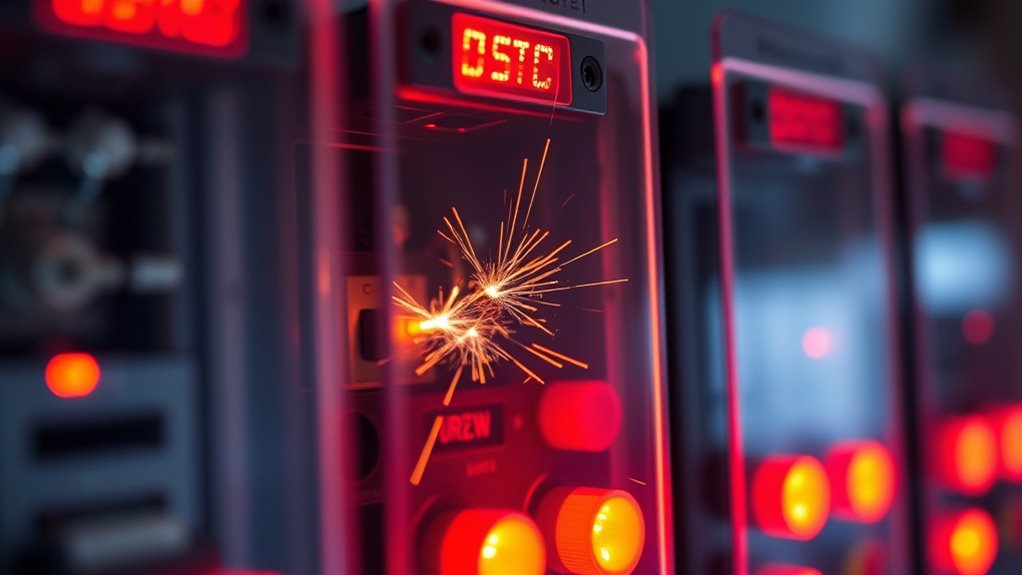
Have you ever wondered how to detect dangerous electrical faults in DC systems before they cause damage or fires? DC arc faults are a serious risk in these systems, especially with batteries and inverters playing central roles. Recognizing these faults early isn’t just about preventing inconvenience; it’s about guaranteeing safety and avoiding costly repairs. When a fault occurs, an arc can form across damaged wiring or components, releasing intense heat that can ignite surrounding materials or damage delicate electronics. That’s why advanced detection methods are essential for maintaining battery safety and inverter protection.
Detect dangerous DC arc faults early to ensure safety and prevent costly damage.
Battery safety is particularly critical because batteries store large amounts of energy, making any fault potentially catastrophic. If a DC arc fault happens in a battery bank, it can lead to thermal runaway, fires, or even explosions. Detecting such faults early means you can shut down the system before the situation escalates. Modern detection techniques focus on identifying electrical anomalies indicative of an arc, such as sudden increases in current, voltage fluctuations, or the presence of specific electromagnetic signals. These signals can be captured with specialized sensors that monitor the system constantly, alerting you immediately if something’s amiss. Implementing arc fault detection in battery setups helps prevent dangerous scenarios, giving you peace of mind that your energy storage remains safe.
Inverter protection is equally important because inverters convert DC power to AC, and faults here can cause system shutdowns or damage to connected appliances. Arc faults within inverters can produce high-temperature arcs that threaten the integrity of the device and connected infrastructure. To mitigate this risk, inverters are equipped with built-in arc fault detection systems that continuously monitor electrical parameters. When an abnormal pattern is detected—like irregular current spikes or arc-shaped electromagnetic emissions—the system can automatically trigger shutdowns or activate protective measures. This not only prevents further damage but also reduces fire hazards associated with arc faults.
Integrating these detection methods into your DC system enhances overall safety by providing real-time alerts and automatic responses. Whether you’re managing a solar power setup, a battery storage system, or any DC-powered application, prioritizing battery safety and inverter protection with arc fault detection is non-negotiable. It’s a proactive approach that minimizes risks and ensures the longevity of your system. Fundamentally, by adopting these advanced detection techniques, you’re taking essential steps toward a safer, more reliable energy infrastructure—one that can identify and respond to faults before they turn into disasters. Additionally, understanding electrical anomalies can greatly improve your ability to prevent serious incidents by addressing issues early.

iDili Arc Fault Simulator & Generator for PV System Testing, 0-600V AC/DC, 0-25A, Enclosed Safety Design (B)
- Voltage Range: 0-600V AC/DC
- Current Range: 0-25A
- Safety Design: Enclosed and isolated
As an affiliate, we earn on qualifying purchases.
As an affiliate, we earn on qualifying purchases.
Frequently Asked Questions
How Do DC Arc Faults Differ From AC Arc Faults?
DC arc faults differ from AC arc faults because DC voltage remains constant, making arc detection more difficult. You need specialized detection methods, like high-frequency analysis, to identify the persistent arcs in DC systems. Unlike AC faults, which have natural zero-crossings that help interrupt the arc, DC faults require continuous monitoring. Your goal is to promptly detect these faults to prevent damage and ensure safety in DC power systems.
What Are the Latest Innovations in Arc Fault Detection Technology?
You’ll find that the latest innovations in arc fault detection include smart sensors and AI algorithms. These advancements enable your system to identify arc faults more quickly and accurately by analyzing electrical patterns in real time. Smart sensors detect subtle changes, while AI algorithms learn and adapt to specific environments, reducing false alarms. Together, they enhance safety, ensuring your electrical system stays protected against arc faults efficiently and proactively.
Can Existing Electrical Systems Be Retrofitted With Arc Fault Detectors?
Yes, you can retrofit existing electrical systems with arc fault detectors, but you should consider retrofitting challenges like compatibility with older wiring and limited space for new devices. Additionally, cost considerations play a role, as installation and parts can add up. It’s best to consult a professional to evaluate your system’s needs and ensure proper integration, ultimately enhancing safety without unnecessary expenses.
What Are the Maintenance Requirements for DC Arc Fault Detection Systems?
You need to stay vigilant with your DC arc fault detection system. Regularly check the sensors and perform calibration to guarantee accuracy, especially if you notice any inconsistent readings. Battery maintenance is vital—keep the power supply stable and monitor for corrosion or wear. Neglecting these steps could compromise safety, leaving you unaware of developing faults. Stay proactive, and your system will serve you reliably when it matters most.
How Effective Are Current Detection Methods in Preventing Fires?
Current detection methods are highly effective in preventing fires because they improve fire prevention and detection accuracy. You can rely on these systems to quickly identify arc faults, reducing the risk of electrical fires. By continuously monitoring circuits, they alert you to potential issues early, allowing prompt action. This proactive approach considerably enhances safety, ensuring fires are prevented before they start, and giving you peace of mind in your electrical systems.

Zripool Digital Battery Tester Battery Capacity Detector For C/D/N/AA/AAA/9V 6F22 Batteries /1.55V button cell
- Battery Compatibility: Suitable for various battery types
- LCD Display: Clear screen for easy reading
- Battery Strength Indicator: Shows remaining battery capacity
As an affiliate, we earn on qualifying purchases.
As an affiliate, we earn on qualifying purchases.
Conclusion
Think of DC arc fault detection as your safety lighthouse, guiding you safely through dark, stormy waters. Just like a lighthouse warns sailors of hidden rocks, this technology spots hidden electrical dangers before they cause damage. By catching faults early, you’re steering clear of disaster and keeping your journey smooth. Embrace this safety tech as your trusty beacon, ensuring your electrical voyage remains secure and trouble-free, no matter how stormy the seas.

FI Circuit Breaker 63A 30mA 4-Pole Type B Residual Current Device with High Frequency AC and Low DC Fault Protection,IP20 Rated for Wall Box, Charging Station, Photovoltaic and Inverter System
- Current Sensitivity: Detects high frequency AC and low DC currents
- High Reliability: Flame retardant and tested for tough environments
- Safety Materials: Made from ABS with IP20 waterproof rating
As an affiliate, we earn on qualifying purchases.
As an affiliate, we earn on qualifying purchases.

Safety Technology International, Inc. STI-6400 Exit Stopper Multifunction Door Alarm, Helps Prevent Unauthorized Exits or Entries Through Emergency Doors
- Visible stop sign deterrent: Highly visible stop sign design
- Durable construction: Virtually indestructible polycarbonate housing
- Dual detection: Detects unauthorized exits and entries
As an affiliate, we earn on qualifying purchases.
As an affiliate, we earn on qualifying purchases.