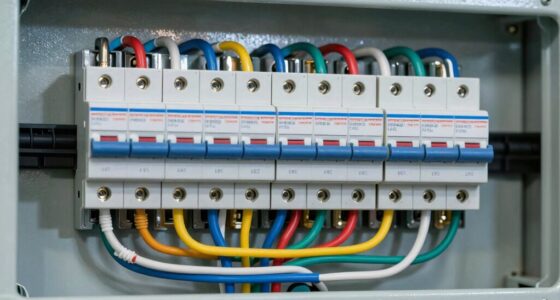
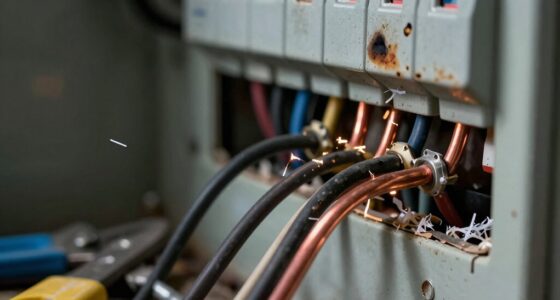
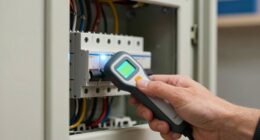
Arc fault protection detects unsafe electrical arcing caused by damaged insulation or loose connections in bedroom circuits, preventing potential fires before they start. When arcing occurs, the system quickly senses abnormal current flow and shuts off power to stop sparks from igniting nearby materials. This layered safety approach helps keep you and your home protected from hidden fire risks. To understand how these devices work and improve your home’s safety, keep exploring the details.
Key Takeaways
- Arc fault protection devices detect abnormal electrical arcs that could ignite fires in bedrooms.
- AFCIs shut off power immediately when arc faults are identified, preventing fire hazards.
- Proper circuit breaker coordination ensures only the affected circuit trips, maintaining overall safety.
- Regular maintenance and inspections help identify potential wiring issues that could cause arc faults.
- Combining AFCIs with surge suppression creates layered safety against electrical faults and surges.

Arc faults pose a significant risk because they can ignite fires unnoticed until damage becomes severe. These faults occur when electrical currents jump across gaps or damaged insulation, creating sparks that can smolder quietly behind walls or beneath floors. In bedrooms, where you often have various devices plugged in and cords running in tight spaces, the danger is even greater. That’s why arc fault protection is essential—it detects these dangerous arcs early, preventing potential fires before they start.
To effectively safeguard your bedroom, arc fault circuit interrupters (AFCIs) are indispensable. They monitor the electrical current for signs of arcing and shut off power immediately when they detect abnormal activity. But simply installing AFCIs isn’t enough; understanding how they work in harmony with the rest of your electrical system is key. Circuit breaker coordination guarantees that if a fault occurs, the right breaker trips without causing unnecessary power outages to other parts of your home. Proper coordination minimizes inconvenience while maximizing safety, especially in a bedroom where comfort and uninterrupted sleep matter.
Surge suppression also plays an important role in protecting against electrical faults. While surge protectors primarily defend your devices from voltage spikes, they can also prevent some types of arcing caused by power surges. Combining surge suppression with arc fault detection creates a layered defense, ensuring that transient voltage spikes don’t lead to dangerous arcs or damage your wiring over time. When these systems work together, they help maintain a stable, safe environment and reduce the risk of fires caused by electrical anomalies. Additionally, advancements in molecular-scale circuits and nanotech fabrication are paving the way for more precise and reliable fault detection systems in the future.
You should also consider how your bedroom’s wiring is installed and maintained. Proper circuit breaker coordination involves selecting the right breakers with appropriate trip characteristics and ensuring they’re correctly rated for your wiring. This setup guarantees that in the event of an arc fault, only the affected circuit trips, leaving the rest of your home powered and safe. Regular inspections and maintenance are equally important—they help identify potential issues before they develop into hazardous conditions.
In the end, the safety logic behind arc fault protection combines advanced detection technology, careful circuit breaker coordination, and surge suppression strategies. This integrated approach keeps you safe by catching faults early, preventing fires, and ensuring your bedroom remains a secure, comfortable space. By understanding and implementing these protective measures, you’re actively reducing risks and safeguarding your home and loved ones from electrical hazards.
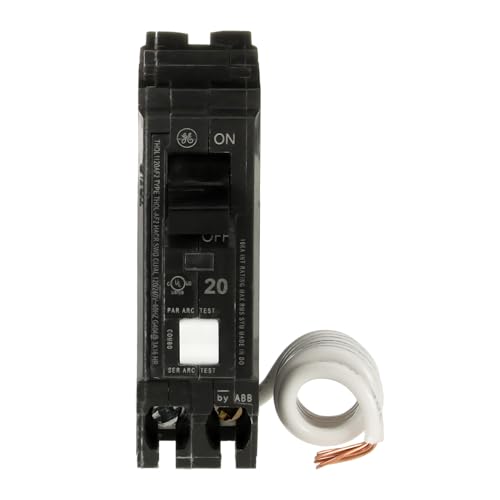
ABB Q-Line THQL1120AFP2 20A Single Pole Arc Fault Combination Circuit Breaker • 20 Amp Single Pole 120 VAC AFCI Breaker • Arc Fault Circuit Interrupter • Plug-in Mount Type
SUPERIOR ARC FAULT PROTECTION – The ABB THQL1120AFP2 AFCI Breaker provides advanced protection against electrical fires caused by…
As an affiliate, we earn on qualifying purchases.
As an affiliate, we earn on qualifying purchases.
Frequently Asked Questions
How Does Arc Fault Protection Differentiate Between Normal and Dangerous Arcs?
Arc fault detection uses sophisticated algorithms to distinguish between normal electrical noise and dangerous arcs. It filters electrical noise to prevent false trips, focusing on the signature of dangerous arcs, which generate specific current patterns. When the system detects these patterns amidst filtered noise, it triggers protection. This way, the device effectively prevents electrical fires while avoiding nuisance trips caused by harmless electrical activity.
What Are the Common Causes of Arc Faults in Bedrooms?
Think of arc faults like sneaky shadows in your bedroom’s electrical world. Common causes include wiring issues, such as loose connections or damaged insulation, and appliance malfunctions that create sparks. These faults often happen where wires are worn or frayed, or when appliances aren’t functioning properly. Staying vigilant about wiring health and replacing faulty appliances helps prevent dangerous arcs, keeping your sanctuary safe and sound.
Can Arc Fault Protection Prevent All Electrical Fires?
Arc fault protection greatly reduces the risk of electrical fires, but it can’t prevent all of them. Factors like electrical vandalism or damage can bypass safeguards, and improper appliance compatibility might cause faults that aren’t detected. While these devices catch most arc faults caused by worn wiring or loose connections, staying vigilant and maintaining your electrical system, including secure outlets and compatible appliances, is essential for thorough safety.
How Often Should Arc Fault Circuit Interrupters (AFCIS) Be Tested?
You should test your AFCIs at least once a month to verify they’re functioning properly. Regular testing is essential for maintaining safety and extending the device’s lifespan. Incorporate AFCI tests into your routine maintenance schedule, just like checking smoke detectors. Coincidentally, timely testing helps prevent potential electrical fires, making your home safer. Remember, consistent attention keeps your protections reliable and your family secure.
Are There Specific Regulations for Installing Arc Fault Protection in Bedrooms?
Yes, there are specific regulations for installing arc fault protection in bedrooms. You need to follow local electrical wiring codes and safety standards, such as the National Electrical Code (NEC), which requires AFCIs in bedrooms to prevent fire hazards from electrical arcs. Ensuring proper installation not only complies with these safety standards but also enhances your home’s safety by reducing the risk of electrical fires caused by arc faults.

AC SPD 3P 30kA~60kA B ~385VAC House Surge Protector Protective Low-Voltage Arrester Device
Professional arc fault protection, building a strong barrier for electrical safety: Arc fault circuit breakers (AFCI) use professional…
As an affiliate, we earn on qualifying purchases.
As an affiliate, we earn on qualifying purchases.
Conclusion
By understanding the safety logic behind arc fault protection, you can feel confident that your bedroom is safer from electrical fires. Think of it as having a vigilant guard, ready to detect even the tiniest sparks before they turn into danger. Some might worry about false trips, but modern devices are smart enough to distinguish real threats from harmless sparks. With this protection in place, you create a safer, more secure space for everyone in your home.

AstroAI Circuit Breaker Finder with GFCI Outlet Tester, Electrical Tester Tool for Home/Workshop Circuit Tracing, Quickly Locates Breakers with Indicators
Quick & Accurate Circuit Targeting: This digital receiver offers precise detection to quickly locate breakers, effectively filtering out…
As an affiliate, we earn on qualifying purchases.
As an affiliate, we earn on qualifying purchases.

Boeray 22FT Fiberglass Running Electrical Wire Cable Pulling Fish Tape kit in a Carrying Case Through Wall Cable Snake Rods Electrical Tools Kit with Different Attachments
【High Flexibility】Material: Fiberglass. Fiberglass better than plated carbon steel, our wire puller running tools will not break when…
As an affiliate, we earn on qualifying purchases.
As an affiliate, we earn on qualifying purchases.