Some appliances need more startup power because they have motors or compressors that require extra energy to overcome inertia and start moving. When you first plug them in, they draw a big surge of electricity, often more than during normal use. This initial spike can strain your system and cause issues if it isn’t prepared. If you want to understand how to manage these surges and protect your appliances, there’s more to discover ahead.
Key Takeaways
- Appliances with motors or compressors require extra energy to overcome inertia during startup.
- Initial power surges occur when devices are plugged in, demanding higher current temporarily.
- Internal components like motors and capacitors face stress, increasing power needs at startup.
- High startup power is needed to initiate moving parts that draw more current than during steady operation.
- Proper electrical planning and surge protection help manage these increased power demands effectively.
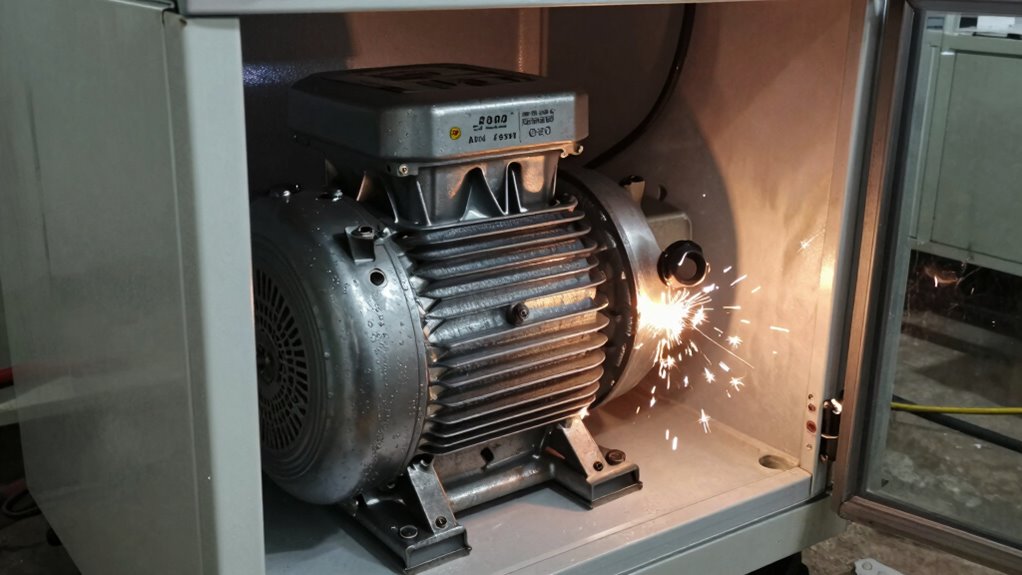
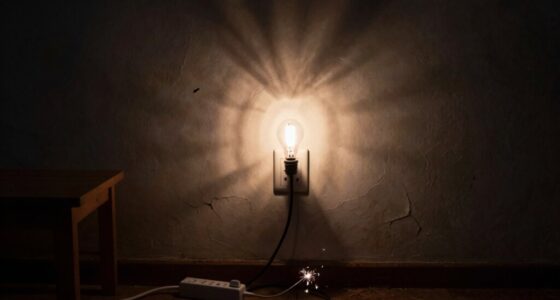
Many appliances require more startup power than they do during regular operation, and understanding why can help you prevent electrical issues and protect your devices. When you plug in a device and see a sudden spike in your circuit’s demand, that’s often due to the initial power surge needed to get the appliance going. This surge happens because many devices, especially those with motors or compressors, need extra energy to overcome inertia and start moving parts. For example, refrigerators, air conditioners, and washing machines all draw considerably more power at startup than during steady use. If your electrical system isn’t prepared for these surges, it can lead to problems like blown fuses, tripped circuit breakers, or even long-term damage to your appliances.
Appliances need more startup power, risking electrical issues and damage if your system isn’t prepared.
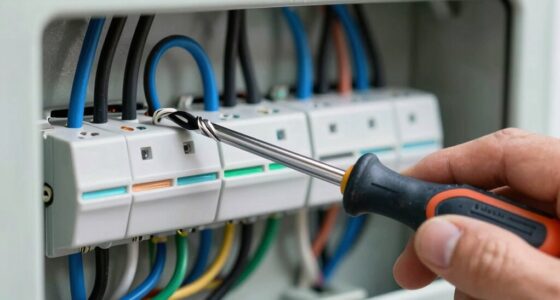
Power surges during startup aren’t just a temporary inconvenience—they can also impact your appliance’s lifespan. Repeatedly experiencing these high inrush currents can wear out components faster, leading to early failures or the need for costly repairs. Over time, the stress from power surges can weaken internal parts, such as motors and capacitors, reducing the appliance’s overall durability. To minimize this risk, it’s crucial to guarantee your electrical system can handle these surges. Using surge protectors or installing dedicated circuits for high-demand appliances can help shield your devices from damaging spikes. Proper wiring and regular maintenance also assure that your system responds effectively to startup demands, especially when electrical load capacity is considered. Additionally, understanding power surge management techniques can further enhance your system’s resilience. Recognizing the importance of electrical system capacity can help you better plan and upgrade your home’s wiring for safety.
Understanding why some appliances need more startup power helps you manage your electrical load better and avoid unnecessary issues. For instance, if you notice your circuit frequently trips when you turn on heavy appliances, it might be a sign that your system isn’t capable of handling the initial surge. Upgrading your wiring or adding surge protection can prevent these interruptions and extend the lifespan of your appliances. Additionally, being aware of these power demands can influence how you plan your home’s electrical setup, especially if you’re installing new appliances. It’s always a good idea to consult an electrician if you’re unsure about your system’s capacity or to assure your electrical panel can support your needs.
In essence, recognizing that appliances need more startup power than they do during normal operation is key to maintaining a safe, efficient home. Protecting against power surges and understanding their impact on your appliances’ lifespan helps you avoid costly repairs and replacements. Taking proactive steps now can guarantee your appliances are safeguarded and ensure they perform reliably for years to come. Ensuring your home’s electrical system is properly rated for startup power is crucial for long-term appliance health. Additionally, understanding the initial power surge can help you better plan your electrical infrastructure and prevent potential hazards.

CCCEI Heavy Duty Surge Protector Power Strip 20 Amp Individual Switches. 6FT 12 Gauge Extension Cord with Multiple Outlets. Kitchen, Garage, Shop, Industrial Wall Mount Electric Extender, Yellow.
Heavy duty power strip 20 amp with 4 outlets and individual switches, 5-20R, 6-20R and come with standard…
As an affiliate, we earn on qualifying purchases.
As an affiliate, we earn on qualifying purchases.
Frequently Asked Questions
How Can I Determine an Appliance’s Startup Power Requirements?
To determine an appliance’s startup power requirements, check its power consumption and appliance ratings on the label or user manual. Look for both running wattage and surge or startup wattage. Appliance ratings often list this info, but if not, search online or contact the manufacturer. Knowing these values helps you guarantee your power setup can handle the initial surge, preventing overloads or equipment damage.
Do All Appliances Have High Startup Power Needs?
In the age of dial-up internet, you’d notice power fluctuations when high-demand appliances start up, and not all appliances have such needs. Some, like refrigerators or air conditioners, require more startup power, impacting appliance lifespan and causing power fluctuations. Smaller devices like chargers or LED lights generally don’t. Always check an appliance’s startup power requirements to prevent overloads, ensuring your system handles the initial surge and keeps everything running smoothly.
Can Upgrading My Circuit Breaker Prevent Startup Power Issues?
Upgrading your circuit breaker can help prevent startup power issues if your current breaker isn’t compatible with your appliance’s power needs. Make certain the new circuit breaker matches the electrical panel’s compatibility and has a higher amperage rating if necessary. However, if your panel is outdated or undersized, an electrical panel upgrade might be needed to support your appliances’ startup demands and prevent tripping or damage.
What Safety Precautions Should I Take With High Startup Power Appliances?
You should always guarantee proper electrical grounding and install surge protection when using high startup power appliances. Keep the appliance away from water and avoid overloading circuits. Regularly inspect cords and connections for damage. Use a dedicated circuit if possible, and never bypass safety devices. These precautions help prevent electrical shocks, damage, and fire hazards, keeping you safe while operating demanding appliances.
Are There Energy-Efficient Appliances With High Startup Power?
Yes, some energy-efficient appliances still have high startup power, but they’re designed to minimize energy consumption during operation. These appliances use advanced technology to boost efficiency while handling the initial power surge. While their startup power might seem huge, their overall appliance efficiency and energy consumption remain low, saving you money in the long run. So, you can enjoy high-performance appliances without sacrificing energy savings.

Heavy-Duty 20A 4400W Surge Protector for Appliances, Smart Circuit Plug with Outlet Saver & Power Strip for Refrigerator, Air Conditioner, High-Power Devices, Overload & Voltage Protection 140 Joule
【Surge & Lightning Protection】 Adjustable under-voltage (170V–197V) and over-voltage (265V) safeguards keep appliances safe from high/low voltage, brownouts,…
As an affiliate, we earn on qualifying purchases.
As an affiliate, we earn on qualifying purchases.
Conclusion
Understanding why some appliances need more startup power is like knowing why a rocket needs extra fuel to lift off—it’s all about overcoming initial resistance. Once they’re up and running, they settle into their steady state, much like a rocket cruising through space. So, next time your appliance seems to strain at the start, remember it’s just doing its own little launch, demanding a bit more energy to get going. It’s a power performance, after all!

Heavy Duty 20-Amp 2400-Watt Appliance Surge Protector Smart Circuit Plug with Outlet Saver Power Cord
🛡️ PROTECTS Refrigerators (up to 32 CU ft.), Freezers (up to 25 CU ft.), Air Conditioners (up to…
As an affiliate, we earn on qualifying purchases.
As an affiliate, we earn on qualifying purchases.
CCCEI Heavy Duty Surge Protector Power Strip 20 Amp Individual Switches. 6FT 12 Gauge Extension Cord with Multiple Outlets. Kitchen, Garage, Shop, Industrial Wall Mount Electric Extender, Yellow.
Heavy duty power strip 20 amp with 4 outlets and individual switches, 5-20R, 6-20R and come with standard…
As an affiliate, we earn on qualifying purchases.
As an affiliate, we earn on qualifying purchases.