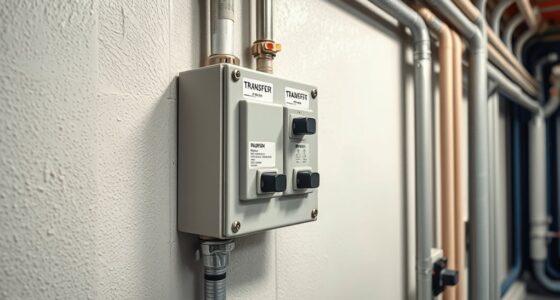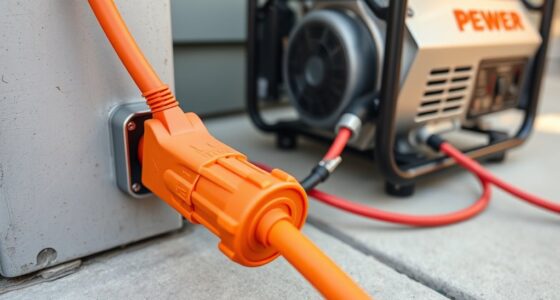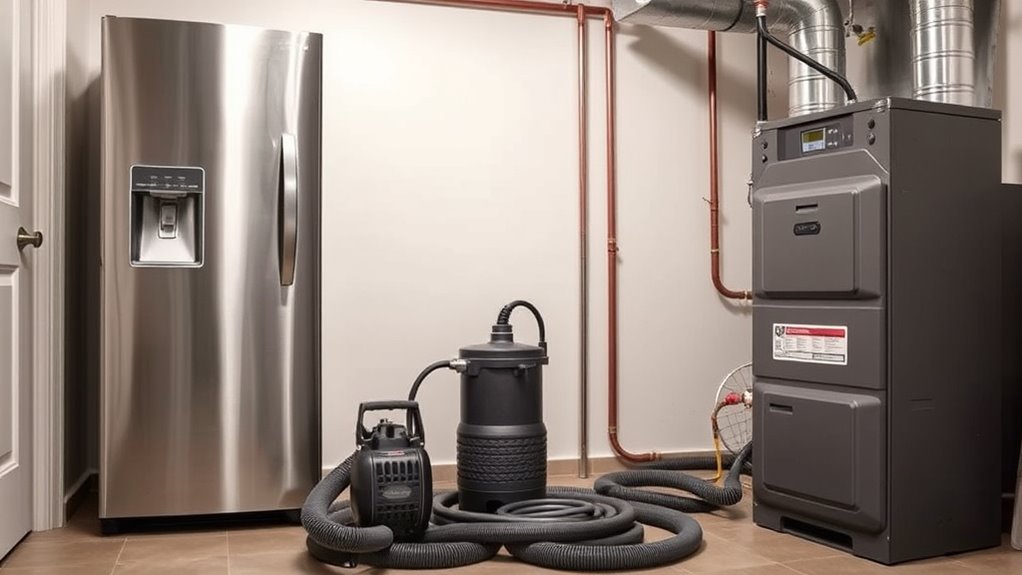

To keep your home safe during power outages, you should prioritize backups for your sump pump, refrigerator, and furnace. A sump pump prevents basement flooding, so backup power guarantees it runs during storms. Your refrigerator needs protection to preserve food and prevent waste if the outage lasts long. The furnace is essential in cold weather to maintain warmth and safety. Understanding when each system needs backup helps you stay prepared—learn more to secure your home efficiently.
Key Takeaways
- Refrigerators require backup power during outages to prevent food spoilage and maintain safe temperatures.
- Sump pumps need reliable backups like batteries or generators to prevent basement flooding during power failures.
- Furnaces should have backup sources to ensure heating safety and comfort during extended outages, especially in cold climates.
- Regular maintenance and monitoring of backup systems are essential for all appliances to ensure functionality during emergencies.
- Prioritize backups based on appliance importance, climate conditions, and household vulnerability to maximize safety and minimize damage.
The Critical Role of Sump Pumps During Power Outages

During a power outage, sump pumps become vital for preventing basement flooding and water damage. Without electricity, your sump pump can’t operate, increasing the risk of sump pump failure during heavy rains or rising groundwater levels. To avoid this, having backup power sources is essential. Battery backups or generators ensure your sump pump continues working even when the main power is out. This prevents water from accumulating in your basement, protecting your home’s foundation and belongings. Regularly testing your backup systems and maintaining your primary sump pump can help prevent failures during emergencies. Remember, relying solely on your main sump pump leaves you vulnerable to costly water damage if the power goes out unexpectedly. Proper planning ensures your basement stays dry when it matters most. Additionally, understanding the noise levels of modern heat pumps can help you choose quieter systems that won’t disturb your household if you decide to upgrade your home’s heating solutions. Implementing advanced monitoring technology can further safeguard against unexpected failures by alerting you to issues before they escalate. Incorporating backup power options such as portable generators or renewable energy solutions can provide additional peace of mind during extended outages. Moreover, exploring reliable pump brands can help ensure you select dependable equipment that withstands power interruptions and heavy usage. Staying informed about emergency preparedness strategies can also enhance your home’s resilience during outages and severe weather events.
Assessing the Urgency of Backing Up Your Refrigerator

Just like sump pumps protect your basement from flooding during power outages, your refrigerator plays a key role in preserving your food safety and reducing waste. If a power outage lasts several hours, your food storage could be at risk without backup. Temperature stability is vital; even a slight rise can spoil perishable items. Assess how long outages typically last in your area and whether your fridge relies on a steady power supply. If outages are frequent or long, backing up your refrigerator becomes a priority. Consider options like generators or battery backups to guarantee your food remains at safe temperatures. Staying proactive helps prevent food spoilage, saves money, and keeps your household safe from foodborne illnesses. Automation in Business technologies can also assist in monitoring your refrigerator’s performance remotely, alerting you to potential issues before they compromise your food. Regular maintenance, such as checking the filter replacement schedule, can also ensure your fridge operates efficiently during power disruptions. Additionally, understanding the power sources that support your appliances can help you plan more effectively for unexpected outages, and exploring backup power solutions can provide added peace of mind. Modern advancements in AI Security are increasingly used to enhance appliance safety and reliability, offering smarter backup options.
When to Prioritize Furnace Backup for Safety and Comfort

When your furnace fails during cold weather, it can quickly threaten your safety and comfort. Prioritize backup if your furnace shows signs of needing maintenance or if a storm or power outage is imminent. Regular furnace maintenance helps prevent unexpected breakdowns, but if your system is old or unreliable, having a backup plan becomes critical. Emergency preparedness means knowing when to act quickly—such as installing a generator or space heater—to keep your home warm. If your home is situated in a particularly cold climate, climate considerations should influence your backup strategy to ensure consistent heat. If your or your family are vulnerable, like infants or seniors, prioritizing furnace backup becomes even more urgent. Ensuring you have a reliable heat source during winter not only keeps your home safe but also maintains your peace of mind. Business – Greek Sceptic emphasizes the importance of diversification and strategic planning, which can be applied to your home safety measures as well. Act now to protect your comfort and safety, especially considering the renewable energy options like solar-powered heating solutions that can supplement traditional systems during outages. To optimize your preparedness, consider incorporating space-saving heating alternatives that can be easily stored or deployed when necessary. Developing a comprehensive backup plan can further ensure continuous heat during emergencies.
Frequently Asked Questions
How Long Can My Sump Pump Operate Without Power?
Your sump pump can run roughly 30 minutes to an hour on backup power, but it depends on your generator maintenance and the battery lifespan. Regularly maintaining your generator guarantees it runs efficiently when needed. Keep an eye on your backup battery’s health, as a declining battery lifespan reduces runtime. To prevent flooding, consider upgrading to a higher-capacity battery or backup system, and always test your setup periodically.
What Are the Signs My Refrigerator Needs a Backup System?
If your refrigerator struggles with power outages or inconsistent energy efficiency, it might need a backup system. Look for signs like frequent cycling, temperature fluctuations, or excessive noise, which indicate it isn’t maintaining proper cooling. Regular maintenance tips, such as cleaning coils and checking seals, can help. A backup power source guarantees your fridge stays operational during outages, protecting your food and reducing stress during emergencies.
Is a Furnace Backup Necessary in Mild Climates?
You probably think a furnace backup isn’t necessary in a mild climate—after all, who needs warmth when the weather’s gentle? Ironically, even in mild climates, a backup can save you from sudden cold snaps or power outages. While not always essential, having one offers peace of mind. So, consider your comfort needs and local weather patterns—sometimes, a backup isn’t just a luxury, but a smart safeguard.
Can a Backup System Prevent Food Spoilage During Outages?
A backup system can help prevent food spoilage during power outages by maintaining a consistent temperature in your refrigerator or freezer. You’ll guarantee food safety, avoiding the risk of bacteria growth and spoilage. During outages, backup power keeps your food cold, giving you peace of mind. Investing in a generator or battery backup is a smart move, especially if outages are frequent or prolonged, to protect your perishable items effectively.
What Are the Costs Associated With Installing Backup Backups?
You might wonder about the costs involved in installing backup systems. The costs vary widely depending on your needs, with a detailed cost comparison revealing options from simple portable generators to advanced automatic backups. Installation requirements differ too; some setups demand professional wiring, while others are plug-and-play. Expect to spend from a few hundred dollars for basic solutions to several thousand for extensive, reliable backups that keep your essentials running smoothly.
Conclusion
Ultimately, understanding what needs backup helps you stay safe and secure. Whether it’s safeguarding your sump pump, securing your refrigerator, or supporting your furnace, prioritize what’s most pressing. Planning proactively prevents problems and keeps your household happy and healthy. Don’t delay—decide, designate, and defend your devices. With a little preparation, you’ll weather any power outage without panic. Protect, prepare, and peace of mind will promptly follow.