When considering portable generator noise, anything above 60-70 decibels can become disruptive, especially if it affects your peace or neighbors’ comfort. Noise levels over 85 decibels at close range may even violate local regulations and cause hearing damage. To keep noise manageable, opt for models with sound reduction features and position your generator away from living spaces. If you want practical tips to limit noise further, you’ll find useful advice below.
Key Takeaways
- Noise levels above 60-70 decibels may disturb nearby residents and violate local noise regulations.
- Check local ordinances for maximum allowable noise levels during specific times or in certain zones.
- Consider generator manufacturers’ noise specifications and aim for models with lower decibel ratings.
- Use soundproof enclosures and strategic placement to keep noise levels within acceptable limits.
- Regular maintenance and proper setup help maintain quieter operation and prevent excessive noise.

Have you ever been annoyed by the loud noise of a portable generator? If so, you’re not alone. Many people find the constant droning of a generator disruptive, especially when trying to relax or get work done. Fortunately, there are ways to manage and reduce that noise, and understanding noise mitigation and soundproofing techniques can make a big difference. These methods help you enjoy the benefits of your generator without disturbing your surroundings or neighbors.
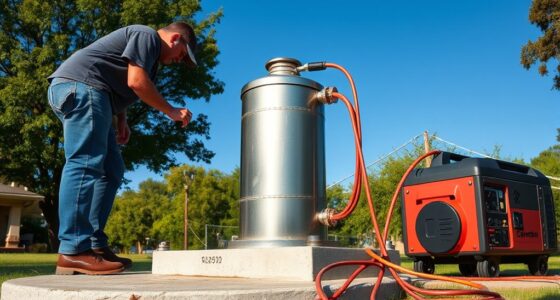
Noise mitigation involves strategies to lower the overall sound level emitted by your generator. One effective approach is choosing a quieter model. Modern generators are often designed with noise reduction in mind, incorporating mufflers and sound-absorbing materials. But if you already own a noisy unit, soundproofing techniques can come to the rescue. You can build or buy sound enclosures that fit around your generator, which act as barriers to contain and absorb sound waves. These enclosures are often made from materials like mass-loaded vinyl, foam panels, or even dense plywood. When properly constructed, they substantially cut down the noise that escapes, making the operation much less intrusive.
Another simple soundproofing technique involves placing your generator on a vibration-absorbing pad or mat. Vibration can amplify noise, so dampening it reduces the overall sound level. Positioning the generator away from living spaces and using natural barriers like fences, bushes, or walls can also help deflect sound waves. If you’re setting up in a yard or outdoor area, creating a buffer zone between the generator and your home can make a noticeable difference.
Additionally, regular maintenance plays a role in noise control. A well-maintained generator runs more smoothly and quietly. Tightening loose parts, changing worn-out mufflers, and ensuring proper lubrication can prevent excess noise caused by mechanical issues. Using soundproofing techniques in combination with good maintenance practices dramatically enhances your ability to operate your generator without causing a noise nuisance.
Incorporating natural barriers such as trees and shrubs can further absorb and deflect sound, enhancing your noise mitigation efforts. Ultimately, managing portable generator noise isn’t just about comfort; it’s also about respecting your neighbors and local noise regulations. By applying noise mitigation strategies and soundproofing techniques, you can keep your power source functional and quiet. It’s a smart investment that allows you to enjoy the convenience of portable power without the unwanted soundtrack of loud, disruptive noise. With a little effort, your generator can become a discreet, effective tool rather than a source of annoyance.
Frequently Asked Questions
How Can I Measure Decibel Levels of My Generator Accurately?
To measure your generator’s sound level accurately, you should use proper measurement tools like a digital sound level meter. Place the meter at a standard distance, usually 10 or 25 feet from the generator, and make certain you’re in a quiet environment. Keep the meter steady and record the readings. This way, you’ll get an accurate sound level, helping you determine if your generator’s noise is within acceptable limits.
Are There Specific Noise Regulations for Portable Generators?
Many municipalities mandate maximum decibel limits for portable generators, typically ranging from 60 to 75 dB, depending on local laws. You should check your local noise regulations before operating your generator. Regular generator maintenance keeps it running smoothly and reduces noise. Implement noise mitigation strategies like installing sound barriers or using mufflers to stay compliant and keep your environment peaceful. Always stay informed about specific noise regulations in your area.
What Are the Health Impacts of Prolonged Generator Noise Exposure?
Prolonged exposure to generator noise can harm your health, leading to noise-induced hearing loss over time. It can also cause sleep disturbance, making it hard for you to rest properly. Constant loud noise may increase stress levels and impact your overall well-being. To protect yourself, limit exposure, use hearing protection, and keep the generator at a reasonable distance from your living area.
Can Noise-Canceling Technology Reduce Generator Sound?
Imagine trying to whisper in a noisy room—that’s what noise-canceling tech aims to do for your generator. While it can’t completely silence the noise, it can markedly reduce it. You should consider soundproof enclosures and muffler upgrades, which work hand-in-hand with noise-canceling devices to keep the sound at bay. Together, these solutions make your generator quieter, helping you enjoy peace without sacrificing power.
How Does Terrain Affect Noise Propagation From Generators?
Terrain influence markedly affects how noise from your portable generator propagates. Hilly or uneven terrain can enhance sound attenuation, helping to reduce noise levels at a distance. Conversely, flat, open areas allow sound to travel farther and remain louder. To minimize noise disturbance, position your generator on elevated ground or behind natural barriers, leveraging terrain influence to your advantage and controlling sound propagation.
Conclusion
So, next time your portable generator roars into action, remember—it’s the soundtrack of modern convenience. While you enjoy the power, your neighbors might be dreaming of silence and peace. Ironically, the very device that keeps your lights on can turn your quiet neighborhood into a temporary battlefield of noise. Perhaps the true power lies not just in the generator’s wattage, but in knowing when to turn it down before your quiet evening becomes an unintended symphony of annoyance.