
To prevent hard starts, begin by adding a quality fuel stabilizer to your generator’s tank and running it for a few minutes to circulate it. Check and clean the battery, ensuring it’s fully charged and free of corrosion. Inspect spark plugs, change to winter-grade oil if needed, and store the generator in a dry, sheltered spot. Regularly start the unit during cold weather to keep parts lubricated. If you want more tips, you’ll find helpful details ahead.
Key Takeaways
- Use a fuel stabilizer and run the generator briefly to ensure fuel quality and prevent carburetor clogging.
- Inspect and clean the battery, then keep it fully charged to ensure reliable startup in cold weather.
- Change to winter-grade oil and replace worn spark plugs to enhance cold-start performance.
- Store the generator in a dry, sheltered location and perform regular startups to keep parts lubricated.
- Perform comprehensive maintenance before winter to prevent hard starts and maintain optimal generator function.
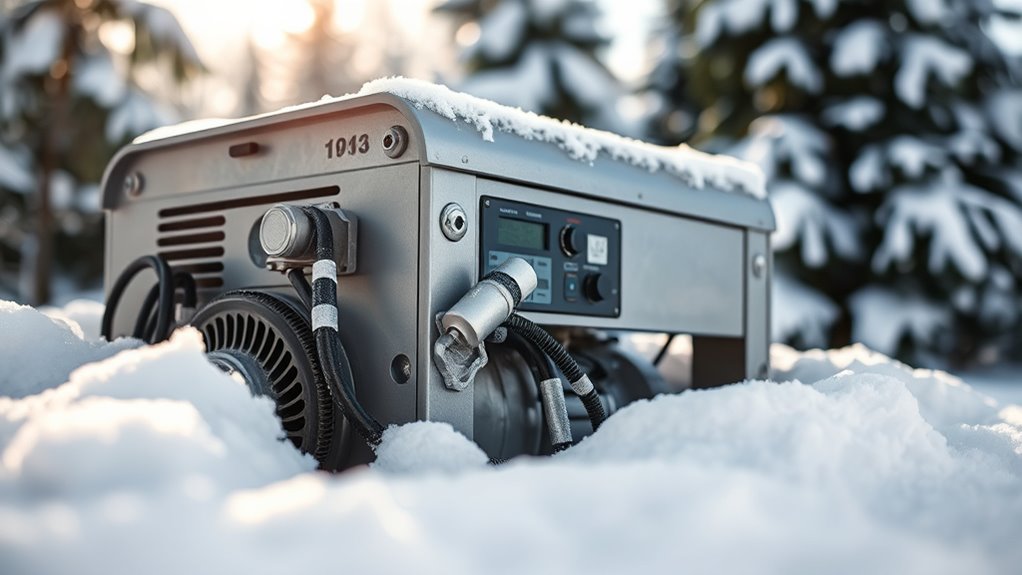
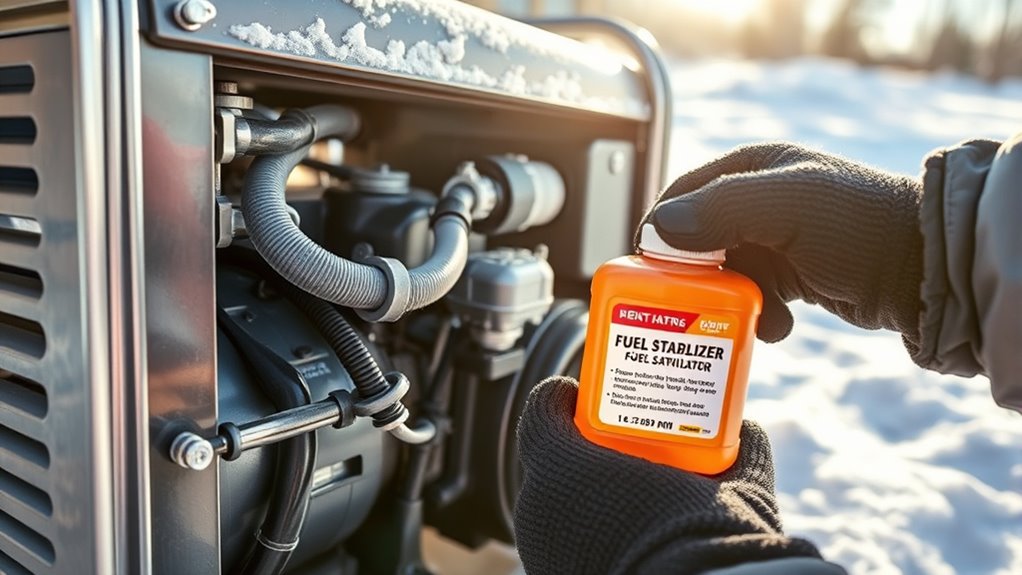
As winter approaches, it’s vital to prepare your generator for the cold weather to guarantee it operates reliably when you need it most. Cold temperatures can cause a range of issues, from sluggish starts to complete failures, so taking proactive steps is essential. One of the first things you should do is confirm your fuel system is winter-ready. Fuel stabilizers are a simple yet effective addition to your routine. Add a quality fuel stabilizer to your generator’s tank if you’re storing fuel for extended periods or if it’s been a while since your last fill-up. This prevents fuel from degrading or varnishing, which can clog carburetors and fuel lines, making the engine harder to start when you need it. Stabilized fuel also helps guarantee smooth operation during power outages, especially in cold weather when starting can be more challenging. Remember to run the generator for a few minutes after adding stabilizer to circulate it through the system thoroughly. Additionally, consider the quality of your fuel to ensure optimal performance in winter conditions.
Battery maintenance is equally important. Cold weather can considerably reduce your battery’s capacity, making it harder for your generator to start. Before winter hits, inspect your battery for corrosion, loose connections, or leaks. Clean the terminals with a wire brush and tighten any loose connections to confirm a good electrical flow. If your battery is old or weak, consider replacing it before winter strikes. A fully charged, well-maintained battery is vital because cold temperatures diminish its ability to deliver the necessary power during startup. To keep your battery in top shape, periodically check the charge level and keep it topped up with a trickle charger if you’re storing your generator for an extended period. This prevents it from discharging completely, which can freeze or damage the battery.
In addition to fuel stabilizers and battery maintenance, consider other winterizing tips like inspecting spark plugs, changing oil to a winter grade if recommended, and ensuring your generator is stored in a dry, sheltered location. Starting your generator regularly during the winter months also helps keep all parts lubricated and prevents components from seizing up. By taking these simple steps—adding fuel stabilizers, maintaining your battery, and performing general upkeep—you can avoid hard starts and guarantee your generator is ready to provide reliable power when winter weather hits. Proper fuel quality, maintenance, and storage not only extends your generator’s lifespan but also gives you peace of mind during the coldest months, knowing it will perform flawlessly when you need it most.

STA-BIL 360 Marine Ethanol Treatment and Fuel Stabilizer – Prevents Corrosion – Helps Clean Fuel System For Improved In-Season Performance – Treats Up To 80 Gallons, 8 fl. oz. (22260)
FUEL SYSTEM CLEANER: Cleanses the entire fuel system using PEA additives, including fuel injectors, lines, & fuel pumps….
As an affiliate, we earn on qualifying purchases.
As an affiliate, we earn on qualifying purchases.
Frequently Asked Questions
How Often Should I Perform Maintenance on My Generator During Winter?
You should perform maintenance on your generator every 1 to 3 months during winter. Check the battery to verify it’s charged and clean, and change the oil if it’s been a while. Regular oil changes help prevent engine issues, while a battery check ensures reliable starts. By staying proactive, you’ll keep your generator in top shape, ready to power your home when needed, even in the coldest months.
Can I Use Regular Gasoline in My Generator During Cold Weather?
Imagine your generator as a trusted friend facing winter’s icy grip—you wouldn’t feed it spoiled food, right? Using regular gasoline during cold weather isn’t ideal because poor gasoline quality can cause hard starts. Instead, add fuel additives designed for winter, which improve cold-weather performance and prevent gelling. This guarantees your generator runs smoothly, keeping your home safe and warm even in the chilliest months.
What Are the Signs of a Hard Start in Winter?
When your generator has a cold engine and slow cranking, it’s a sign of a hard start in winter. You might notice longer startup times or that it struggles to turn over initially. These issues happen because cold temperatures thicken the oil and reduce battery efficiency. If you see these signs, it’s time to take extra steps like warming the engine or checking your battery and oil to make certain reliable starts.
Is It Necessary to Drain the Fuel Tank Before Winter Storage?
You don’t need to drain the fuel tank before winter storage if you use fuel stabilization. Stabilizer keeps the fuel fresh and prevents gumming, so your generator runs smoothly when you start it again. However, if you prefer, you can drain the tank to avoid potential issues like fuel degradation. Just make certain you follow your manufacturer’s instructions and add stabilizer if you decide to keep fuel in the tank.
How Do I Troubleshoot if My Generator Doesn’T Start After Winterization?
Irony strikes—your generator won’t start after winterizing, even though you did everything right. First, check the fuel system; stale or gummed fuel can cause issues. Next, test your battery health—weak batteries often lead to hard starts. Make certain connections are tight and clean. If problems persist, inspect the spark plug and carburetor. Sometimes, a simple troubleshooting step saves the day and gets your generator running again.

NOCO GENIUS1: 1A 6V/12V Smart Battery Charger – Automatic Maintainer, Trickle Charger & Desulfator with Overcharge Protection & Temperature Compensation – for Lead-Acid & Lithium Batteries
MEET THE GENIUS1 — Similar to our G750, just better. It's 35% smaller and delivers over 35% more…
As an affiliate, we earn on qualifying purchases.
As an affiliate, we earn on qualifying purchases.
Conclusion
By winterizing your generator, you’re fundamentally giving it a warm blanket before the icy grip of winter takes hold. Think of it as tuning a finely crafted instrument—preventing hard starts keeps your power flowing smoothly through the coldest nights. When you take these simple steps, you’re ensuring your generator stays a loyal guardian, ready to spring to life like a phoenix rising from the frost. Stay prepared, and let winter’s chill never catch you off guard.

Hot Shot's Secret RV Gas Generator Engine Oil 10W30 1 Quart Bottle 32 Ounce
Reduces Wear up to 47% More than the Leading Competitor
As an affiliate, we earn on qualifying purchases.
As an affiliate, we earn on qualifying purchases.

Alamia,Inc. Genuine Honda OEM Parts, Maintenance Tune Up Kit, Air Filters, Engine Oil, Spark Plug, Fits Honda EU2000i, EU2200i Series Generators
Honda Genuine Parts, Fits Eu2000, Eu2000 Companion, Eu2000 Camo. Eu2200i Series
As an affiliate, we earn on qualifying purchases.
As an affiliate, we earn on qualifying purchases.