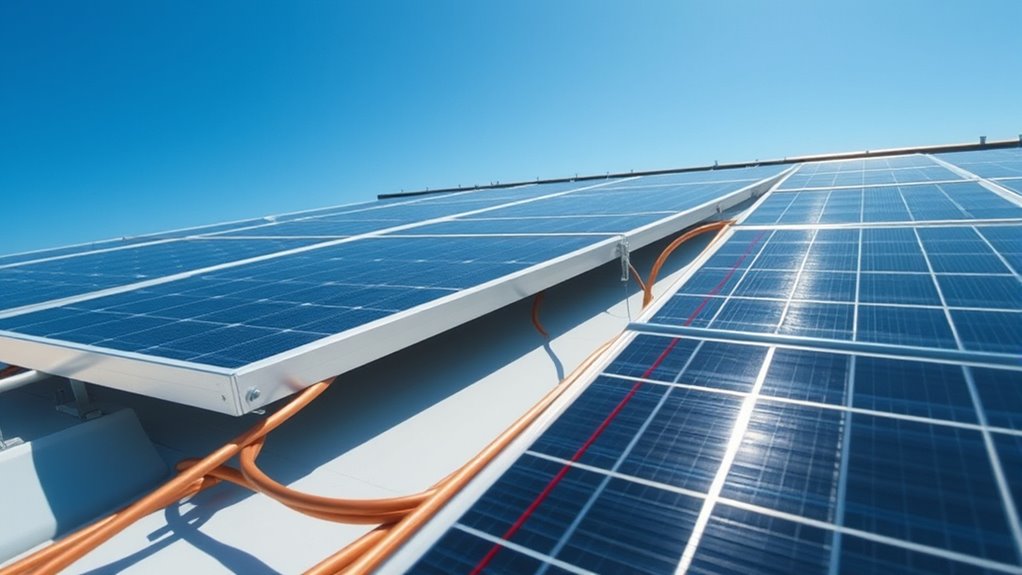
To keep voltage drop in PV home runs low, select the correct wire gauge based on your system’s current and run length. Use thicker wires to reduce resistance and prevent excessive voltage loss over distance. Always follow manufacturer guidelines or consult a professional to guarantee proper sizing and safety. Monitoring and maintaining proper wiring helps maximize efficiency, protect equipment, and improve energy output. Continue exploring to learn practical tips for optimizing your setup effectively.
Key Takeaways
- Use appropriately sized wiring to minimize resistance and keep voltage drop below 3%.
- Shorten wire runs whenever possible to reduce resistance and voltage loss.
- Select high-quality, low-resistance cables suited for PV systems and long distances.
- Calculate expected current and run length to determine the correct wire gauge for low voltage drop.
- Regularly inspect and maintain wiring to ensure connections are secure and within recommended specifications.
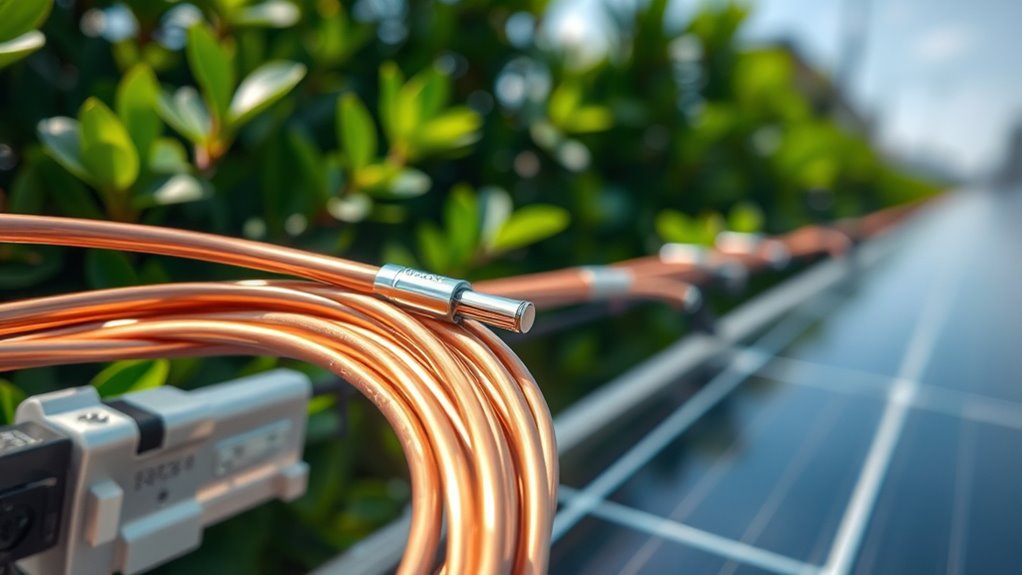
When designing a photovoltaic (PV) system, understanding voltage drop in home runs is vital to guarantee ideal performance. Voltage drop occurs when electrical current travels through the wiring from your solar panels to the inverter or charge controller. If this drop is too high, it can reduce the voltage reaching your equipment, leading to decreased system efficiency and potential performance issues. To prevent this, proper wire sizing is essential. Selecting the correct wire gauge ensures that the current flows efficiently, minimizing voltage loss along the run. Thinner wires may seem cheaper or easier to install initially, but they can cause significant voltage drops over distance, especially in larger systems. By choosing appropriately sized conductors, you can maintain voltage levels within the recommended range, guaranteeing your system operates at peak efficiency.
Proper wire sizing minimizes voltage drop and maximizes PV system efficiency.
The key to effective wire sizing lies in understanding the current your system will carry and the length of the home runs. Longer distances increase resistance, which in turn causes more voltage drop. Hence, you should always calculate the expected current and consider the total run length when selecting wire gauge. Using too small a wire gauge can lead to excessive voltage loss, which diminishes the power available to your appliances and reduces overall system performance. Conversely, oversizing the wire may add initial costs but can be justified by improved efficiency and longevity of your equipment. In addition to wire size, consider the type of wire insulation and its temperature ratings, as these factors also influence resistance and safety.
Keeping voltage drop low is not just about choosing the right wire size; it’s about guaranteeing your entire PV system functions at its best. When voltage drops are kept within acceptable limits—usually less than 3% for most applications—you maximize energy transfer and reduce potential stress on your system components. This translates into better energy yields and longer-lasting equipment. Regularly inspecting home runs and verifying that wiring matches the recommended specifications can help you catch issues early. If you’re unsure about proper wire sizing, consulting manufacturer guidelines or working with a professional installer can save you money and headaches down the line.
Additionally, understanding the role of cable material can influence resistance and ultimately impact voltage drop, making material choice another important consideration. Ultimately, paying attention to wire sizing and controlling voltage drop in your PV home runs is a straightforward way to enhance your system’s efficiency. Properly sized conductors ensure minimal power loss, allowing your solar setup to deliver maximum output. When voltage drops are kept low, your investment in solar energy pays off more quickly through higher energy production and reliable operation. Don’t overlook this vital aspect of system design—small adjustments now can lead to significant improvements in performance and long-term savings.
PV wire gauge calculator
As an affiliate, we earn on qualifying purchases.
As an affiliate, we earn on qualifying purchases.
Frequently Asked Questions
How Does Temperature Affect Voltage Drop in PV Home Runs?
Temperature increases cause voltage drop in your PV home runs to rise due to thermal expansion, which can loosen connections and increase resistance. Higher temperatures also accelerate insulation degradation, further raising resistance and voltage drop. Conversely, cooler temperatures help maintain tighter connections and better insulation, reducing voltage drop. You should monitor temperature effects closely and choose materials that withstand thermal expansion to keep voltage drop low and system efficiency high.
What Are the Best Wire Types to Minimize Voltage Drop?
You should choose thick wire gauges like 10 or 12 AWG to minimize voltage drop, especially over long runs. Copper conductors are ideal because they have high conductivity and lower resistance compared to aluminum. Using the right wire gauge and copper material guarantees your PV system maintains peak voltage levels, reducing energy loss and improving overall efficiency. Always verify local codes and manufacturer recommendations for the best results.
How Often Should I Inspect PV Wiring for Voltage Drop Issues?
You should inspect your PV wiring at least once a year, as studies show that regular maintenance can reduce system inefficiencies by up to 15%. Following a consistent maintenance schedule, including wiring inspections, helps catch voltage drop issues early. If you notice any signs of damage or performance drops, increase inspection frequency. Keeping an eye on wiring guarantees your system remains efficient and prevents costly repairs down the line.
Can Improper Grounding Influence Voltage Drop in PV Systems?
Yes, improper grounding can increase voltage drop in your PV system. Ensuring proper grounding safety not only prevents electrical hazards but also maintains system efficiency. Good grounding helps protect against lightning strikes, which can cause voltage fluctuations. When your system is correctly grounded, it reduces resistance and keeps voltage drop low, improving overall performance and safety. Regular inspections of grounding connections are essential for ideal system operation.
What Are the Cost Implications of Reducing Voltage Drop?
Reducing voltage drop is like sealing a leak in your savings pond—you keep more money flowing. While it may increase initial installation costs, you’ll enjoy significant long-term cost savings through improved system efficiency and reduced energy losses. Investing a bit more upfront pays off over time, lowering your operational expenses and maximizing your solar investment. So, balancing installation costs with the benefits of lower voltage drop is a smart financial move.

ECO-WORTHY Solar Crimper Tool Kit 13 PCS Solar Tools – a Crimper, 10 Pairs of Solar Connectors, 2 Pairs of Solar Connector Spanner Wrench for Solar Panel Cable Assembly and Installation
Full Tool Kit: Contain 1 pair of wire crimper, 10 pairs of solar panel connectors, 2 pairs of…
As an affiliate, we earn on qualifying purchases.
As an affiliate, we earn on qualifying purchases.
Conclusion
Keep voltage drop low in your PV home runs to guarantee your system runs efficiently. Think of it like a clear highway versus a traffic jam—your energy flows smoothly when resistance stays minimal. Ignoring voltage drop risks lost power and decreased performance, just as blocked roads cause delays. By managing voltage drop, you maximize your solar investment and enjoy reliable energy, proving that small adjustments can make a big difference in your system’s success.
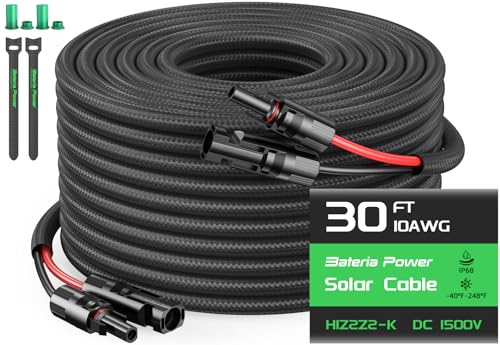
10AWG 30FT Solar Panel Extension Cable, Flame Retardant Protective Sleeving,Bateria Power Twin Wire 10 Gauge Solar Cable with IP68 Female & Male Waterproof Connectors, Dust Caps for Home, RV
【Enhanced Solar Cable with Protective Sleeving】Our solar cables feature heavy-duty flame-retardant sleeving for superior abrasion resistance against dragging,…
As an affiliate, we earn on qualifying purchases.
As an affiliate, we earn on qualifying purchases.

Amp Watt Meter Power Analyzer For Solar Panels Or Wind Turbines System, 150A 200A Aircraft Power Meter Tester Backlight Digital LCD Screen for RC Solar Voltage Current Power (200A)
Comprehensive Measurement Capabilities: This multi-functional watt meter power analyzer accurately measures voltage, current (amp meter), power, discharge capacity,…
As an affiliate, we earn on qualifying purchases.
As an affiliate, we earn on qualifying purchases.