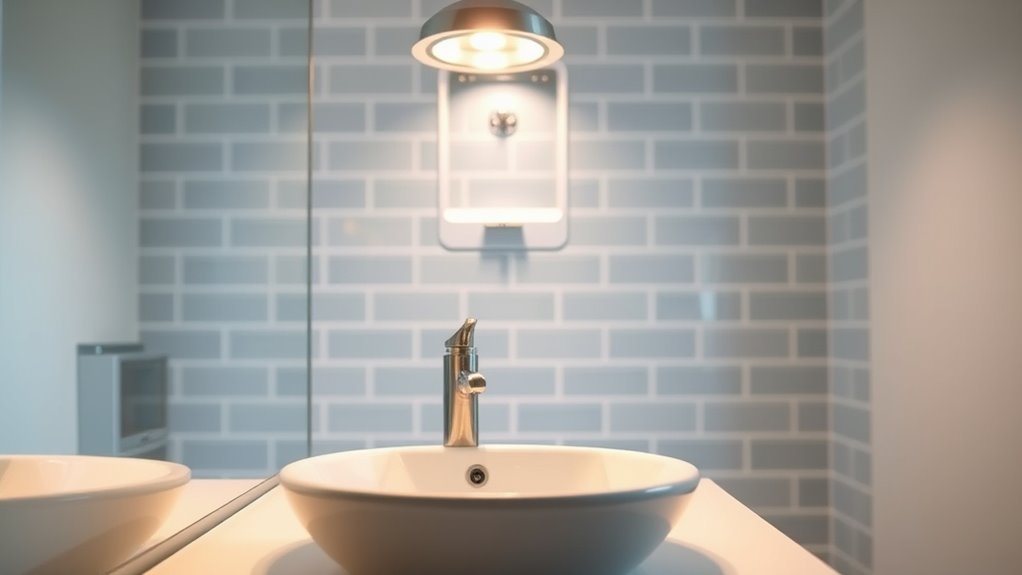

To guarantee shock-safe placement, you should install waterproof fixtures in Zones 0, 1, and 2, which are closest to water sources, with appropriate IP ratings like IP65 or IP67. In these zones, avoid using standard lighting to prevent electrical hazards. Instead, focus on waterproof, moisture-resistant fixtures designed for wet areas. For Zone 3, regular fixtures are safe. If you keep exploring, you’ll discover how to optimize safety and lighting effectiveness in your bathroom.
Key Takeaways
- Install waterproof fixtures with high IP ratings (IP65/IP67) in Zones 0, 1, and 2 to prevent water ingress and electrical shocks.
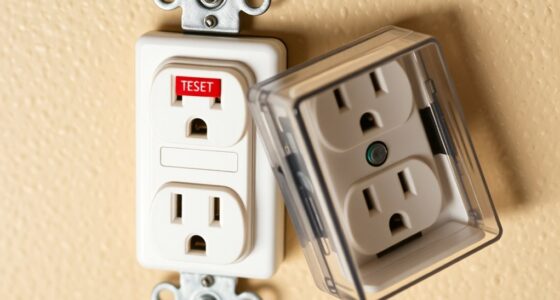
- Keep electrical connections and switches outside water zones or use waterproof enclosures to avoid shock hazards.
- Ensure fixtures are properly rated for each zone’s specific safety requirements based on proximity to water sources.
- Use zone-appropriate lighting controls, such as damp-rated dimmer switches, in Zones 2 and 3 for safe operation.
- Follow local electrical codes and standards to ensure shock-safe placement and compliance in bathroom lighting design.
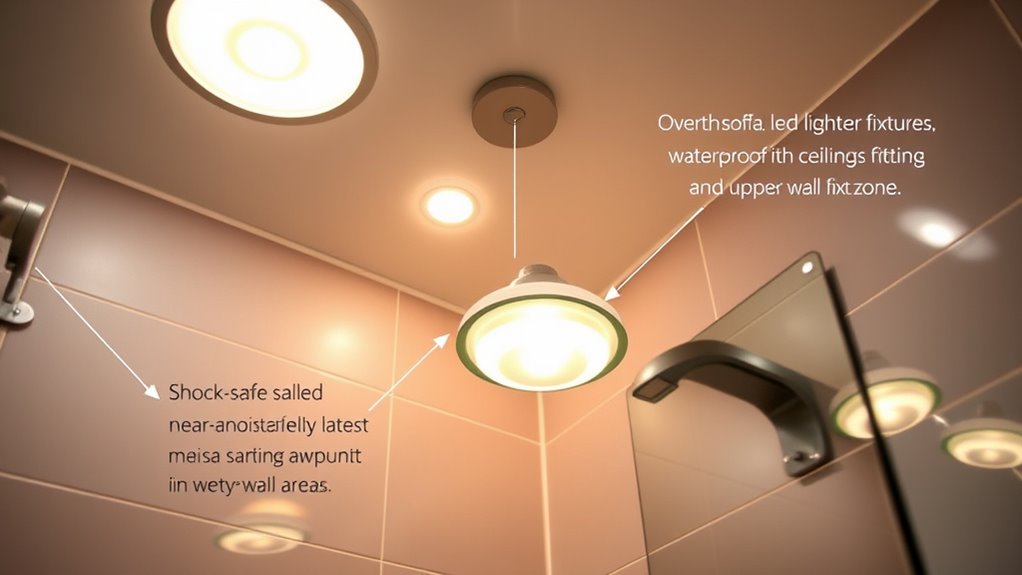
When planning bathroom lighting, understanding the concept of lighting zones is essential for safety and functionality. You need to think carefully about where the lights will go, especially since bathrooms are wet environments. Proper zoning helps prevent electrical accidents and ensures each area gets the right type of lighting. The bathroom is divided into different zones based on how close they are to water sources like sinks, bathtubs, and showers. Zone 0 is inside the bathtub or shower tray, where only waterproof fixtures rated for immersion should be installed. Zone 1 surrounds the shower or tub, extending a few inches outward, where waterproof fixtures are also necessary to handle high moisture levels. Zone 2 covers the area just outside the shower or tub, typically a few feet from the water source, where moisture-resistant fixtures are recommended. Beyond Zone 2 is Zone 3, which encompasses the rest of the bathroom, where standard lighting fixtures are usually safe.
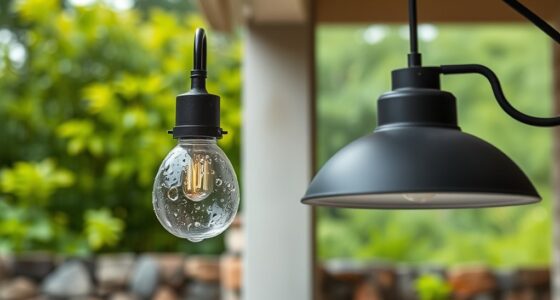
To ensure safety in each zone, you should opt for waterproof fixtures in Zones 0, 1, and 2. These fixtures are specially designed to resist water ingress, reducing the risk of electrical shock. When selecting fixtures, check their IP (Ingress Protection) ratings—higher ratings like IP65 or IP67 are ideal for wetter zones. Installing waterproof fixtures in the appropriate zones is a key step to prevent accidents and make your bathroom safer.
In terms of lighting controls, dimmer switches can be incredibly useful, especially in zones where adjustable lighting enhances comfort. For example, in Zone 2 or even Zone 3, a dimmer allows you to set the lighting to a softer level when you’re winding down or need a more relaxed atmosphere. Just make sure that the dimmer switch you choose is compatible with the fixtures and suitable for bathroom use. Some dimmers are designed specifically for LED or incandescent lights, and they should be rated for damp or wet environments if installed near water sources. Additionally, understanding the importance of projector resolution can help in designing a home cinema setup that complements your lighting scheme for optimal viewing comfort.
waterproof bathroom light fixtures IP65
As an affiliate, we earn on qualifying purchases.
As an affiliate, we earn on qualifying purchases.
Frequently Asked Questions
Can I Install Smart Lighting in All Bathroom Zones?
Yes, you can install smart lighting in all bathroom zones if you choose moisture-resistant fixtures and guarantee electrical code compliance. Make sure the smart lights are rated for damp or wet locations, especially in zones near water sources. Properly following safety standards and using fixtures designed for bathroom environments helps prevent electrical hazards, allowing you to enjoy smart lighting throughout your bathroom without risking safety.
Are LED Lights Suitable for Bathroom Lighting Zones?
Yes, LED lights are suitable for bathroom lighting zones because of their LED safety features and moisture resistance. You’ll benefit from their energy efficiency, long lifespan, and ability to withstand humid environments. Just make certain you choose LED fixtures specifically rated for bathroom zones, so they meet safety standards. With proper installation, LED lighting provides a safe, reliable, and bright solution for your bathroom, enhancing both style and functionality.
How Often Should Bathroom Lighting Fixtures Be Replaced?
You should replace bathroom lighting fixtures when they show signs of damage, flickering, or reduced brightness, typically every 5 to 10 years. Regular fixture maintenance extends the lighting lifespan and guarantees safety, especially in zones with higher moisture. Keep an eye on moisture buildup and corrosion, and don’t wait too long to upgrade fixtures, as aging lights can become safety hazards. Proper maintenance keeps your bathroom safe and well-lit.
Is It Necessary to Use Waterproof Switches in Zone 1?
Yes, you should use waterproof switches in Zone 1 to guarantee electrical safety. Water and humidity are prevalent in this area, increasing the risk of electrical shock. Waterproof switches are specially designed to prevent moisture from entering and causing faults. By installing these switches, you protect yourself and your home from potential hazards, complying with safety standards and reducing the risk of electrical accidents in the bathroom’s wet zone.
Can I Use Dimmable Lights in Zone 2 Areas?
Yes, you can use dimmable fixtures in zone 2 areas, but you need to prioritize safety and proper placement. Dimmable fixtures with appropriate waterproofing and IP ratings guarantee safe lighting control without risking shock hazards. Carefully select fixtures designed for humid environments, and install switches and dimmers in safe, shock-safe zones. Proper planning and precise placement protect you while providing versatile, adjustable illumination for your bathroom’s zone 2 spaces.
shower zone lighting waterproof LED
As an affiliate, we earn on qualifying purchases.
As an affiliate, we earn on qualifying purchases.
Conclusion
Remember, properly zoning your bathroom lighting is like planting a safety net beneath your everyday routine. When you keep your lights shock-safe and well-placed, you create a sanctuary where water and electricity dance safely, never collide. Think of it as choreographing a graceful ballet, where each light has its perfect place, preventing accidents before they happen. By respecting these zones, you turn your bathroom into a shining beacon of safety—bright, secure, and ready for anything.
damp rated dimmer switch for bathroom
As an affiliate, we earn on qualifying purchases.
As an affiliate, we earn on qualifying purchases.
waterproof enclosures for electrical switches
As an affiliate, we earn on qualifying purchases.
As an affiliate, we earn on qualifying purchases.